YouTube Transcript Downloader and AI Video Summaries
Paste a YouTube video URL to extract its English transcript, download the subtitles as text, or create a concise AI summary.
1. Paste link
Enter a YouTube video URL.
2. Find subtitles
Automatic English subtitles are detected.
3. Download
Save clean subtitles as a TXT file.
Recent summaries
4303 videos · Page 114 of 144
Sean Carroll: Quantum Mechanics and the Many-Worlds Interpretation | Lex Fridman Podcast #47
Lex Fridman
In this continuation of his conversation with Lex Fridman, theoretical physicist Sean Carroll delves into classical mechanics and its historical evolution from Aristotelian teleology to Newton's laws. He explains how Isaac Newton initially struggled with "action at a distance," the concept that gravity acted across empty space without contact, which he left for future generations to solve.…
EN
Jul 30

Sean Carroll: Difference Between Math and Physics | AI Podcast Clips
Lex Fridman
Sean Carroll draws a fundamental distinction between mathematics and physics, characterizing math as the study of the logical structure inherent in all possible worlds, whereas physics is concerned specifically with our actual world. He acknowledges that this boundary can appear blurred when discussing interpretations of quantum mechanics or other complex realities, but he maintains that reality consists of specific rules rather than every conceivable thing occurring simultaneously.…
EN
Jul 30

Sean Carroll: What is Quantum Mechanics?
Lex Fridman
Sean Carroll introduces quantum mechanics as a paradigm-shifting theory in physics that emerged in the early 20th century to replace classical mechanics, though it did so with profound and still-debated implications. In the framework of classical mechanics, an object is defined by specific properties such as location and velocity; if these parameters are known for every entity in the universe, one can predict future behavior with certainty.…
EN
Jul 30

Sean Carroll: Capacity of the Human Mind to Understand Physics
Lex Fridman
The discussion begins with an examination of Isaac Newton's classical mechanics and his specific concerns regarding gravity, particularly the concept of action at a distance. While Newton could accurately predict planetary trajectories using his laws, he found it philosophically troubling that the Earth should exert or feel gravitational force from the Sun across 93 million miles without any visible medium connecting them.…
EN
Jul 30

Sean Carroll: What is an Atom?
Lex Fridman
The concept of the atom traces its linguistic roots to ancient Greece, yet it was chemists in the 1800s who first provided experimental evidence for their existence through the study of tin oxides.…
EN
Jul 30

Sean Carroll: Perception vs Reality
Lex Fridman
Sean Carroll explores a fundamental philosophical distinction in quantum mechanics between the world as it objectively exists and the world as we observe it through human perception. He begins by narrowing the scope to our everyday experience, questioning how large the gap is between reality outside our minds and what our sensory systems allow us to perceive.…
EN
Jul 30

Sean Carroll: Many-Worlds Interpretation of Quantum Mechanics
Lex Fridman
Sean Carroll argues against the textbook definition of quantum mechanics, which posits a fundamental distinction between what is observed and what is real, suggesting instead that measurement and observers do not play a special role in ultimate physical laws. His preferred framework is Hugh Everett III's Many-Worlds Interpretation (MWI), proposed in the 1950s at Princeton University, which asserts that an observer is merely another quantum system obeying the Schrödinger equation without any unique status.…
EN
Jul 30

Sean Carroll: Arrow of Time
Lex Fridman
In this discussion, Sean Carroll addresses the concept of the arrow of time within the framework of Many Worlds quantum mechanics and standard thermodynamics. He clarifies that while there is an implied arrow of time in both interpretations, it arises from specific initial conditions rather than being built into fundamental physical laws.…
EN
Jul 30

Sean Carroll: Hilbert Space and Infinity
Lex Fridman
Sean Carroll begins by clarifying a fundamental distinction between our everyday understanding of space and its mathematical definition in physics. While most people conceive of space as the three-dimensional world containing objects or outer space, mathematicians utilize "space" to describe any abstract collection of elements representing possibilities, such as momentum space.…
EN
Jul 30

Bjarne Stroustrup: C++ | Lex Fridman Podcast #48
Lex Fridman
Bjarne Stroustrup, the creator of C++, recounts his journey from learning Algol 60 in university to discovering Simula and its pioneering concepts of inheritance and runtime polymorphism. He emphasizes that while object-oriented programming is a significant part of modern languages like Java or Python, it was not always obvious; many early attempts failed because they lacked flexibility.…
EN
Jul 30

Bjarne Stroustrup: Constructors, Destructors, and Resource Acquisition Is Initialization (RAII)
Lex Fridman
In this discussion, Bjarne Stroustrup reflects on the enduring elegance of C++ features introduced at its inception, particularly highlighting constructors and destructors as some of the most beautiful aspects of the language. He notes that while many new features arrived with C++11, these foundational concepts remain central to what makes C++ unique.…
EN
Jul 30

Sean Carroll: Mindscape Podcast
Lex Fridman
Sean Carroll's podcast, *Mindscape*, serves a dual purpose: it acts as an educational platform for explaining physics and philosophy while simultaneously exploring questions far beyond his specific expertise to investigate broader human experiences. Carroll emphasizes that he often learns more from interviews unrelated to science than those within his field of study.…
EN
Jul 30

Bjarne Stroustrup: C++ Implementations - Clang, GCC, Microsoft, and EDG
Lex Fridman
Bjarne Stroustrup explains that the existence of multiple C++ implementations, including GCC, Clang, Microsoft Visual C++, and EDG (Eclipse Development Group), was not a deliberate design choice but rather an inevitable reflection of the computing landscape when he created the language.…
EN
Jul 30

Bjarne Stroustrup: Deep Learning, Software 2.0, and Fuzzy Programming
Lex Fridman
In this discussion, Bjarne Stroustrup addresses the growing intersection of traditional software engineering and machine learning, specifically deep learning systems that function through training on data to produce outputs from inputs.…
EN
Jul 30

Bjarne Stroustrup: Learn More than One Programming Language
Lex Fridman
Bjarne Stroustrup emphasizes that professional programmers should be proficient in at least five different languages to avoid becoming a monolingual thinker who views their own cultural perspective as universal. He notes that while he knew approximately twenty-five languages during his work on C++, the critical factor is not merely reaching an arbitrary number but understanding how learning foreign cultures and paradigms improves one's ability to think, design, and program effectively.…
EN
Jul 30

Bjarne Stroustrup: Simplification is the Key to Reliability and Efficiency in Code
Lex Fridman
Bjarne Stroustrup, the creator of C++, emphasizes that simplification serves as the fundamental key to achieving both reliability and efficiency in software development. His inspiration for object-oriented programming stemmed from a deep connection with the C language while maintaining an unwavering focus on performance and dependability.…
EN
Jul 30

Bjarne Stroustrup: Recognizing Beautiful Code
Lex Fridman
Bjarne Stroustrup addresses the challenge of achieving what he terms an "Einstein level simplification" in software development, questioning whether code quality can be strictly regulated or if it requires a unique spark of inspiration. He acknowledges that while experienced developers can often identify when code is messy or "smells," recognizing true beauty and elegance is significantly harder because such qualities may stem from innovative approaches that are not immediately obvious to the average observer.…
EN
Jul 30

Sean Carroll: What is Quantum Entanglement?
Lex Fridman
Sean Carroll begins by addressing the concept of quantum entanglement, framing it within the standard textbook interpretation of quantum mechanics where a single wave function describes an entire system rather than individual particles separately. In this framework, for two electrons, there exists one unified wave function that dictates the probability of observing both particles simultaneously in specific locations.…
EN
Jul 30

Bjarne Stroustrup: C++ Concepts - Constraints on Template Parameters
Lex Fridman
Bjarne Stroustrup introduces C++ concepts, a mechanism designed to place constraints on template parameters and ensure that generic code operates correctly at compile time. Although the idea was not present in earlier versions of the language, functional prototypes developed by Gabriel Dos Reis, Andrei Alexandrescu, and others have been available for several years. These implementations are now part of C++20 and supported by major compilers including Clang, GCC, and Microsoft Visual Studio.…
EN
Jul 30

Michio Kaku: Would Aliens Destroy Us? | AI Podcast Clips
Lex Fridman
In this segment of his discussion on extraterrestrial contact, physicist Michio Kaku addresses whether alien species would be more likely to friend or destroy humanity upon making first contact. He posits that for the most part, advanced civilizations will simply ignore us rather than engage with hostility or benevolence.…
EN
Jul 30

Elon Musk: Neuralink, AI, Autopilot, and the Pale Blue Dot | Lex Fridman Podcast #49
Lex Fridman
In this extensive conversation, Elon Musk addresses fundamental questions regarding consciousness and artificial intelligence (AI), arguing from a scientific perspective that true superintelligence requires self-awareness. While acknowledging philosophical debates about whether consciousness permeates all matter or is unique to humans, Musk posits that for an AI system to outthink humanity in every way, it must possess consciousness and self-awareness.…
EN
Jul 30

Elon Musk: Pale Blue Dot and Beyond
Lex Fridman
The discussion opens with a profound reflection on the temporal scale of our existence, noting that while the universe is approximately 13.8 billion years old and Earth has been habitable for about four-and-a-half billion years, human consciousness only emerged roughly ten million years ago. The dialogue highlights an inevitable future where the Sun will expand, likely evaporating oceans and rendering life impossible on Earth within a few billion years.…
EN
Jul 30

Elon Musk: Regulation of AI Safety
Lex Fridman
In a discussion regarding existential threats posed by artificial intelligence, Elon Musk identifies three potential paths for humanity to navigate this challenge: scaling up AI safety research and beneficial high-level inquiry, accelerating the transition into becoming a multiplanetary species, or merging with AI to ride its wave of increasing intelligence.…
EN
Jul 30

Elon Musk: Limbic System, Cerebral Cortex, and a Tertiary Layer of Digital Super-Intelligence
Lex Fridman
Elon Musk presents a compelling analogy for human cognition, describing our current mental architecture as essentially a biological computer with a monkey brain at its core. He argues that humans do not currently operate on two distinct layers but rather possess several overlapping systems: the limbic system and the cerebral cortex.…
EN
Jul 30

Elon Musk: Smart Summon, AutoPark, and Tesla Autopilot
Lex Fridman
Elon Musk highlights a significant milestone in robotics and artificial intelligence with the introduction of Smart Summon, which he believes will soon be complemented by AutoPark capable of navigating complex parking lots. He argues that these features represent more than just technological conveniences; they possess the potential to fundamentally alter how civilization perceives AI and robotics.…
EN
Jul 30

Elon Musk: So You're Saying There's a Chance - Neuralink and Merging with AI
Lex Fridman
Elon Musk outlines a two-stage vision for Neuralink, beginning with immediate medical applications and culminating in long-term existential security. Initially, he acknowledges that there is already significant potential to address critical damage to the brain or spinal cord through trace amounts of good technology. These early interventions aim to improve the quality of life for individuals suffering from neurological injuries, serving as essential steps along the path toward more advanced capabilities.…
EN
Jul 30

Elon Musk: Brain Computer Interfaces - Machine Learning and Neuroplasticity
Lex Fridman
The provided text appears to be a corrupted or incomplete audio transcription containing fragmented words, background noise indicators like "[Music]," and non-coherent strings of letters that do not form meaningful sentences related to Elon Musk, brain-computer interfaces, machine learning, or neuroplasticity. Consequently, there are no substantive arguments, facts, examples, dates, technical terms, names beyond the title reference, or conclusions present in this specific transcript segment to summarize.…
EN
Jul 30

Elon Musk: Perception vs Control - What's Harder?
Lex Fridman
In this discussion regarding autonomous systems, Elon Musk addresses a fundamental question in machine learning: whether perception or action presents the greater challenge for solving complex problems like self-driving cars. He argues that once an agent can perfectly perceive its environment and formulate a plan to interact with all surrounding entities, the subsequent control mechanisms become relatively straightforward by comparison.…
EN
Jul 30

Elon Musk: Understanding the Human Brain at Neuralink
Lex Fridman
Elon Musk emphasizes that our current understanding of the human brain remains extremely limited, noting that existing data provides a very narrow view of how the mind and brain function together. He argues that while we have made progress in observing general activity, true comprehension requires moving beyond superficial observations to grasp the intricate mechanisms occurring within neural networks.…
EN
Jul 30
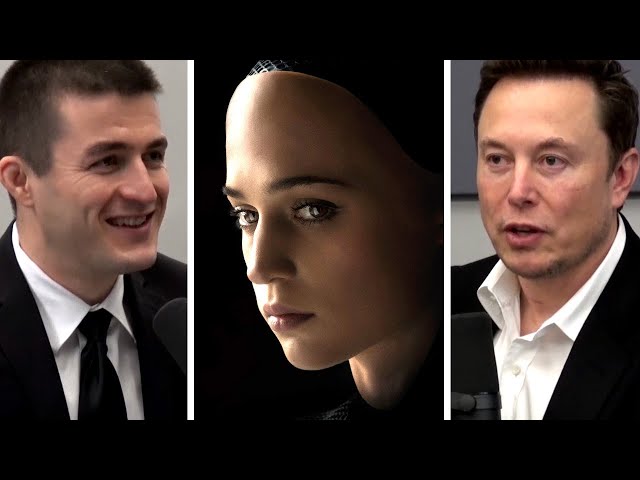
Elon Musk: Consciousness
Lex Fridman
In this discussion regarding consciousness, Elon Musk firmly rejects the notion that it permeates all matter like a fundamental force of physics or is something unique solely to humans in an untestable way. He emphasizes his adherence to the scientific method as the only valid framework for determining truth, arguing that any hypothesis which cannot be tested fails to yield meaningful conclusions.…
EN
Jul 30