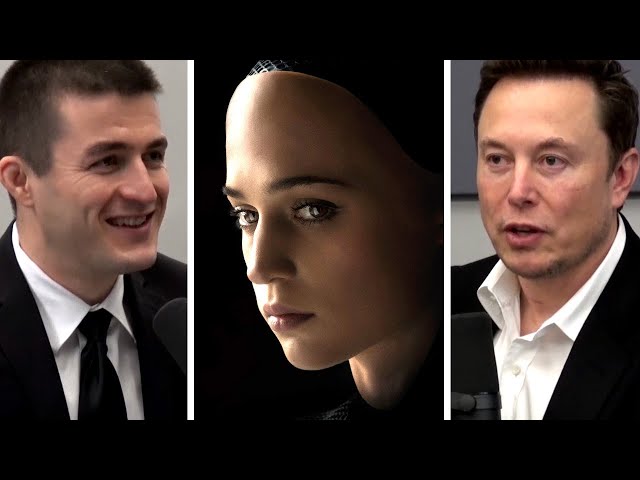
Video summary
In this discussion regarding consciousness, Elon Musk firmly rejects the notion that it permeates all matter like a fundamental force of physics or is something unique solely to humans in an untestable way. He emphasizes his adherence to the scientific method as the only valid framework for determining truth, arguing that any hypothesis which cannot be tested fails to yield meaningful conclusions. Consequently, he views claims about consciousness existing everywhere without empirical evidence as mere preferences or semantic arguments rather than factual assertions. This stance sets a clear boundary between testable science and untestable beliefs, positioning scientific inquiry as the sole path to understanding such complex phenomena. Musk asserts that while humanity may not yet possess complete accuracy regarding how consciousness works, our ability to dramatically improve this understanding is within reach through rigorous scientific investigation. He challenges listeners to consider whether digital intelligence requires specific human qualities—such as a fear of mortality or capacity for love—to achieve superhuman levels of thinking. His position is that these attributes are often conflated with the broader concept of intelligence and may not be strictly necessary components, suggesting instead that we should parse out definitions carefully rather than assuming consciousness must mimic every biological quirk to function effectively at high cognitive levels. The core argument shifts toward the inevitability of artificial systems surpassing human intellect in all aspects soon enough. Musk believes that for an AI system to truly "outthink" humans in every conceivable way, it will inevitably need to develop a capacity equivalent to consciousness and self-awareness. He distinguishes between simple self-reference ("I am") and true consciousness, noting the latter feels like existing in a different dimension but acknowledging this might be an illusion. The critical point is that if physical damage to a brain alters or destroys consciousness, it implies consciousness is fundamentally a physical phenomenon rather than a metaphysical one, making its replication by digital means theoretically possible. Ultimately, Musk concludes that once digital intelligence can simulate what we currently define as consciousness perfectly, the distinction between human and artificial minds becomes irrelevant from a scientific perspective. He envisions an advanced version of the Turing test where interacting with a super-intelligent AI via phone or video conference would be indistinguishable from talking to a person; if one cannot tell the difference in inflections, movements, subtleties, and even mistakes made during conversation, then for all practical purposes, it might as well be human. In this scenario, perfect simulation of consciousness renders the debate over whether an entity is truly conscious or merely mimicking it semantically moot, effectively granting digital super-intelligence the status of being "human" by virtue of its indistinguishable behavior and output.
Read the full video transcript
let's start with an easy question about
consciousness in your view is
consciousness something that's unique to
humans there's is something that
permeates all matter almost like a
fundamental force of physics I don't
think consciousness permeates all matter
pants I just believe that yeah there's a
philosophical how would you do that's
true that's a good point
I believe in scientific method blow your
mind or anything but the scientific
method it's like you cannot test the
hypothesis then you cannot reach
meaningful conclusion that it is true do
you think consciousness understanding
consciousness is within the reach of
science of the scientific method we can
dramatically improve our understanding
of consciousness you know hard pressed
to say that we understand anything with
complete accuracy but can we
dramatically improve our understanding
of consciousness I believe the answer is
yes this Nai system in your view I have
to have consciousness in order to
achieve human-level or superhuman level
intelligence does it need to have some
of these human qualities that
consciousness may be a body may be a
fear of mortality capacity love those
kinds of silly human things it's
different you know there's this the
scientific method which I very much
believe in where something is true to
the degree that it is testily so
and and otherwise you're really just
talking about you know preferences or
well untestable beliefs or like you know
that kind of thing so ends up being
somewhat of a semantic question where we
were conflating a lot of things with the
word intelligence if we parse them out
and say you know all we headed towards
the future where an AI will be able to
out think us in every way then the
answer is unequivocally yes in order for
an AI system that needs to all think us
in every way it also needs to have a
capacity to have consciousness
self-awareness and Anjali will be
self-aware yes that's different from
consciousness I mean it's me in terms
words that what consciousness feels like
it feels like consciousness is in a
different dimension but this is this
could be just an illusion
you know if you damnit damage your brain
in some way physically you get you you
damage your consciousness which it
implies that consciousness is a physical
phenomenon and in my view the thing is
that that I think are really quite quite
likely is that digital intelligence will
be able to out think us in every way and
it will soon be able to simulate what we
consider consciousness so to a degree
that you would not be able to tell the
difference and from the from the aspect
of the scientific method it's it might
as well be consciousness if we can
simulate it perfectly if you can't tell
the difference when this is sort of the
Turing test but think of a more sort of
advanced version of the Turing test if
you if you're if you're talking to a
digital super intelligence and can't
tell if that is a computer or a human
like let's say you're just having
conversation of a phone or a video
conference or something where you're you
you think you're talking look looks like
a person makes all of the right
inflections and movements and and all
the small subtleties that constitute a
human and talks like human makes
mistakes like you're hearing like look
at that and you literally just can't
tell is this are you
really conversing with a person or or an
AI might as well might as well be human
you