YouTube Transcript Downloader and AI Video Summaries
Paste a YouTube video URL to extract its English transcript, download the subtitles as text, or create a concise AI summary.
1. Paste link
Enter a YouTube video URL.
2. Find subtitles
Automatic English subtitles are detected.
3. Download
Save clean subtitles as a TXT file.
Recent summaries
1954 videos · Page 32 of 66
Max Tegmark: Life 3.0 | Lex Fridman Podcast #1
Lex Fridman
In this episode of Lex Fridman Podcast #1, MIT physicist and professor Max Tegmark explores the intersection of cosmology, artificial intelligence (AI), and consciousness. Tegmark argues that while there are billions of Earth-like planets in our galaxy alone, we may be the only civilization capable of building advanced technology within our observable universe due to a "Great Filter" likely located behind us or ahead of him.…
EN
Jul 30
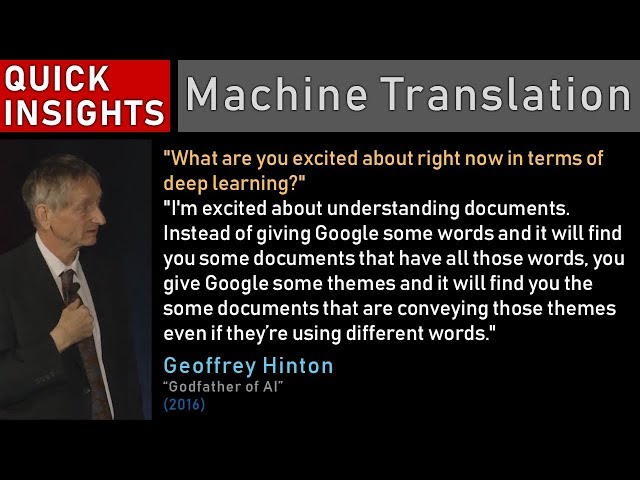
Geoffrey Hinton: What are you excited about in deep learning?
Lex Fridman
Geoffrey Hinton expresses significant enthusiasm for recent advancements in deep learning, particularly within the realm of machine translation. Although he notes that he has not made direct contributions to this specific area himself, he highlights that some of his students are actively working on it.…
EN
Jul 30

Ilya Sutskever: OpenAI Meta-Learning and Self-Play | MIT Artificial General Intelligence (AGI)
Lex Fridman
Ilya Sutskever, co-founder and research director of OpenAI, delivered a comprehensive overview of deep learning's theoretical foundations and its practical applications in artificial general intelligence (AGI). He began by explaining why deep neural networks work so effectively: they function as circuit search engines that find the shortest program capable of generating specific data.…
EN
Jul 30

Christof Koch: Consciousness | Lex Fridman Podcast #2
Lex Fridman
Christof Koch, a seminal figure in neurobiology and president of the Allen Institute for Brain Science, argues that consciousness is not merely an emergent property of human intelligence but likely pervades all biological life through natural evolution.…
EN
Jul 30

Steven Pinker: AI in the Age of Reason | Lex Fridman Podcast #3
Lex Fridman
In this episode of the Lex Fridman Podcast, Steven Pinker addresses fundamental questions regarding human nature and the meaning of life, arguing that while propagating genes is a biological imperative for our DNA, attaining knowledge represents a primary aspect of what humans consciously value.…
EN
Jul 30

Yoshua Bengio: Deep Learning | Lex Fridman Podcast #4
Lex Fridman
In this episode of Lex Fridman Podcast #4, Yoshua Bengio explores the profound differences between biological and artificial neural networks, highlighting a critical mismatch in how they handle credit assignment over long time spans. While current recurrent neural networks can manage sequences with dozens or hundreds of timestamps, humans effortlessly assign credit to decisions made years ago based on new evidence, effectively updating past interpretations without catastrophic forgetting.…
EN
Jul 30

Black Belt Speech | Lex Fridman
Lex Fridman
In this profound reflection, the speaker articulates a transformative realization gained through years of rigorous mathematical study and academic pursuit. Despite holding a PhD and identifying deeply with the label of being a nerd, they acknowledge that their most significant lessons regarding life and the human mind were not found within traditional school settings but rather in the quiet introspection following those experiences.…
EN
Jul 30

Vladimir Vapnik: Statistical Learning | Lex Fridman Podcast #5
Lex Fridman
In this episode of the Lex Fridman Podcast, Vladimir Vapnik, a co-inventor of support vector machines and statistical learning theory, engages in a deep philosophical dialogue regarding the nature of reality and machine intelligence.…
EN
Jul 30

Guido van Rossum: Python | Lex Fridman Podcast #6
Lex Fridman
In this episode of Lex Fridman's podcast, creator Guido van Rossum reflects on his upbringing in post-WWII Netherlands and how early exposure to Dutch literature shaped his worldview before he turned to technology as a teenager.…
EN
Jul 30

Jeff Atwood: Stack Overflow and Coding Horror | Lex Fridman Podcast #7
Lex Fridman
Jeff Atwood, co-founder of Stack Overflow and author of Coding Horror, argues that what primarily motivates programmers is the intrinsic joy of solving puzzles through a brute-force process rather than fame or fortune. He illustrates this with examples like the "shuffle problem" in casinos and the Monty Hall paradox, demonstrating how empirical data can resolve intuitive errors without needing deep theoretical insight; simply running simulations reveals the correct answers.…
EN
Jul 30

Eric Schmidt: Google | Lex Fridman Podcast #8
Lex Fridman
Eric Schmidt, former CEO and chairman of Google, reflects on his lifelong passion for technology which began in the 1960s with model rockets before evolving into a fascination with programming during the 1970s. He describes the transformative moment when he realized that coding allowed him to build things that did not previously exist, creating something unique bearing his own name.…
EN
Jul 30

Stuart Russell: Long-Term Future of Artificial Intelligence | Lex Fridman Podcast #9
Lex Fridman
In this conversation, Stuart Russell reflects on his early work in artificial intelligence during high school and university, where he developed chess programs using limited computational resources like punch cards to run meta-reasoning algorithms that could beat him at games like backgammon and checkers.…
EN
Jul 30

Pieter Abbeel: Deep Reinforcement Learning | Lex Fridman Podcast #10
Lex Fridman
In this episode of the Lex Fridman Podcast, Professor Pieter Abbeel from UC Berkeley and director of the Berkeley Robotics Learning Lab discusses the intersection of robotics, deep reinforcement learning (RL), and artificial general intelligence.…
EN
Jul 30

Juergen Schmidhuber: Godel Machines, Meta-Learning, and LSTMs | Lex Fridman Podcast #11
Lex Fridman
In this conversation with Lex Fridman, Jürgen Schmidhuber recounts his lifelong ambition to build machines capable of recursive self-improvement and solving universal problems. His journey began in adolescence when he realized that building a machine which learns to become a better physicist than himself could multiply human creativity infinitely. This vision led him to propose "meta-learning," or learning-to-learn, where an algorithm inspects and modifies its own structure to improve itself recursively.…
EN
Jul 30

Tuomas Sandholm: Poker and Game Theory | Lex Fridman Podcast #12
Lex Fridman
Tuomas Sandholm, a professor and co-creator of Libratus—the first AI system to defeat top human players in heads-up no-limit Texas Hold'em—discusses how this game has become the premier benchmark for imperfect information problems in artificial intelligence. Unlike perfect information games like chess or Go, poker involves hidden cards that create uncertainty about opponents' states, making it significantly harder for algorithms to solve.…
EN
Jul 30
Deep Learning Basics: Introduction and Overview
Lex Fridman
Welcome to an introduction and overview of deep learning, a field dedicated to extracting useful patterns from data with minimal human effort through automated methods. The course highlights that while machine learning news often focuses on methodology published in prestigious conferences or blogs, the true challenge lies in applying these techniques to solve real-world problems by asking good questions and organizing appropriate data.…
EN
Jul 30

Deep Learning State of the Art (2019)
Lex Fridman
The lecture outlines the state of the art in deep learning as of 2019, emphasizing significant breakthroughs that occurred between 2017 and 2018 rather than just benchmark results on standard tasks like ImageNet or NLP. The speaker identifies 2018 specifically as "the year of natural language processing," comparable to the Imagenet moment in computer vision driven by AlexNet in 2012.…
EN
Jul 30

Tomaso Poggio: Brains, Minds, and Machines | Lex Fridman Podcast #13
Lex Fridman
In this conversation with Tomaso Poggio, a professor at MIT and director of the Center for Brains, Minds & Machines, the discussion centers on the profound challenge of understanding intelligence as both a biological phenomenon and an engineering goal. Poggio reflects on his childhood fascination with physics and Einstein, noting that while time travel is likely impossible due to physical constraints, creating machines capable of thinking remains a viable objective.…
EN
Jul 30
MIT 6.S091: Introduction to Deep Reinforcement Learning (Deep RL)
Lex Fridman
Deep Reinforcement Learning (RL) represents a convergence of deep neural networks' ability to comprehend complex data with reinforcement learning's capacity for sequential decision-making, aiming to create intelligent agents that can understand and act upon their environment through trial and error.…
EN
Jul 30

Self-Driving Cars: State of the Art (2019)
Lex Fridman
The podcast explores the state of autonomous vehicles in 2019, emphasizing a mission to improve mobility access for all ages and locations while increasing traffic efficiency and, most critically, saving lives by preventing fatalities. The speaker highlights two major milestones from 2018: Waymo reaching ten million miles with fully autonomous driving on public roads and Tesla achieving one billion miles using its semi-autonomous Autopilot system powered primarily by computer vision cameras.…
EN
Jul 30

Kyle Vogt: Cruise Automation | Lex Fridman Podcast #14
Lex Fridman
Kyle Vogt, co-founder of Twitch and Cruise Automation, traces his fascination with robotics back to building BattleBots in high school using scavenged parts like winch motors run at triple their rated voltage. His journey from programming on Apple II computers to writing code for autonomous vehicles began during a long drive across Kansas where he realized a computer could steer the car by detecting lane markers, sparking his interest in solving this problem despite existing technology dating back decades.…
EN
Jul 30

Drago Anguelov (Waymo) - MIT Self-Driving Cars
Lex Fridman
Drago Anguelov, a principal scientist at Waymo and former researcher at Google, presented his work on taming the long tail of autonomous driving challenges during a talk titled "MIT Self-Driving Cars." With over 10 million miles driven autonomously to date, Waymo has evolved from an experimental project initiated by Sebastian Thrun in 2015 into a commercial service operating fully driverless fleets in Phoenix.…
EN
Jul 30

Oliver Cameron (CEO, Voyage) - MIT Self-Driving Cars
Lex Fridman
Oliver Cameron, co-founder and CEO of Voyage, shares an unconventional origin story for his self-driving car startup, tracing its roots back to his early entrepreneurial experiences in high school and a pivotal moment taking Sebastian Thrun's 2013 online course on artificial intelligence. This experience led him to join Udacity, where he spent four years helping build the company's machine learning and robotics curricula before launching Voyage with Eric Mackey and Mac McCauley.…
EN
Jul 30

Karl Iagnemma & Oscar Beijbom (Aptiv Autonomous Mobility) - MIT Self-Driving Cars
Lex Fridman
Karl Iagnemma and Oscar Beijbom from Aptiv Autonomous Mobility discuss their transition from academic research at MIT to industrializing autonomous vehicle technology within a massive global organization like Aptiv, which spun off from Delphi Technologies in 2014. The conversation highlights the evolution of self-driving cars from early experimental setups involving blade servers running hot in trunks during the DARPA Urban Challenge to robust commercial deployments today.…
EN
Jul 30

Leslie Kaelbling: Reinforcement Learning, Planning, and Robotics | Lex Fridman Podcast #15
Lex Fridman
Leslie Kaelbling, a roboticist and professor at MIT, traces her passion for artificial intelligence back to reading *Gödel, Escher, Bach* in high school, which sparked an interest in how simple primitives combine to create complex behaviors.…
EN
Jul 30

Eric Weinstein: Revolutionary Ideas in Science, Math, and Society | Lex Fridman Podcast #16
Lex Fridman
In this episode of *Lex Fridman Podcast*, mathematician and economist Eric Weinstein, a founding figure in the intellectual dark web alongside figures like Sam Harris and Jordan Peterson, explores profound intersections between science, society, and artificial intelligence.…
EN
Jul 30

Greg Brockman: OpenAI and AGI | Lex Fridman Podcast #17
Lex Fridman
In this episode of the Lex Fridman Podcast, Greg Brockman, co-founder and CTO of OpenAI, explores his journey from writing a chemistry textbook in high school to leading research into Artificial General Intelligence (AGI). He posits that while mathematics represents timeless truth found in libraries, programming offers massive leverage by allowing ideas to scale instantly across the planet.…
EN
Jul 30
Elon Musk: Tesla Autopilot | Lex Fridman Podcast #18
Lex Fridman
In this episode of Lex Fridman Podcast #18, Elon Musk outlines his vision for Tesla Autopilot, which he characterizes as a fundamental revolution in transportation comparable to electrification. Conceived around 2014 with hardware installed in vehicles like the Model S and Model X, the system was designed from the outset to eventually achieve full autonomy, rendering non-autonomous cars obsolete much like horses are today.…
EN
Jul 30

Ian Goodfellow: Generative Adversarial Networks (GANs) | Lex Fridman Podcast #19
Lex Fridman
Ian Goodfellow, author of the seminal textbook *Deep Learning* and coiner of the term Generative Adversarial Networks (GANs), outlines current limitations in deep learning while discussing its potential evolution into reasoning systems. He identifies data efficiency as a primary bottleneck, noting that despite advances in unsupervised and reinforcement learning, models still require vast amounts of labeled or unlabeled data to generalize effectively, unlike human beings who learn from limited experiences.…
EN
Jul 30

MIT 6.S093: Introduction to Human-Centered Artificial Intelligence (AI)
Lex Fridman
The lecture introduces Human-Centered Artificial Intelligence (AI) based on the premise that while deep learning methods will continue to dominate real-world applications, purely data-driven systems face fundamental limitations regarding safety, fairness, and explainability because they cannot be provably safe or fair without human supervision.…
EN
Jul 30