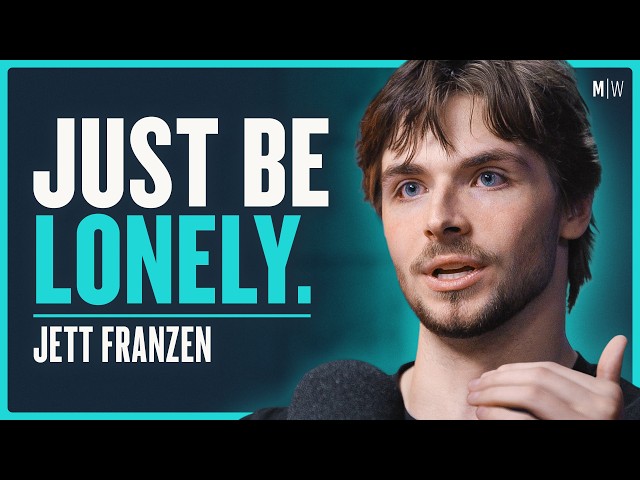
Video summary
The video explores deep psychological traps that prevent individuals from achieving their desired lives, centering on how people often use "releasing" techniques in meditation as a way to cope rather than developing true emotional conductivity. Drawing on Carl Jung's concept of the shadow, the speaker argues that denying one's flaws allows them to subconsciously control us, leading many to pursue extreme achievements in wealth or competence merely to mask feelings of inadequacy; this projection of an idealized self is described as a form of psychological suicide. To break free from imposter syndrome and victim mentality, he advocates for the strategy of "making it until you believe it," where consistent action accumulates enough evidence to convince the brain that success is possible, emphasizing agency over waiting for motivation or relying on fake confidence.
A critical theme throughout the discussion is the danger of blaming external factors like gender, race, or past abuse, which only empowers those circumstances and creates a self-fulfilling prophecy of restriction; true empowerment comes from controlling oneself rather than retreating into an "inner citadel" where virtue is redefined to justify resentment. This mindset often leads to the arrival fallacy, where achieving goals fails to fill internal voids because desire requires the perpetual absence of its object, and satisfaction must be found in the journey itself rather than deferred happiness at a future destination. The speaker illustrates that suffering arises from the gap between expectations and reality, suggesting that lowering these expectations allows for greater contentment, while warning against "suicidal empathy" where excessive sympathy reinforces destructive behaviors instead of encouraging growth through constructive criticism out of love.
Success is further framed as requiring healthy narcissism or self-belief rather than blind humility, using the metaphor that leaning into one's own potential acts like a jetpack to climb life's mountain while doubt weighs us down with rocks. The speaker highlights the paradox of content creation and authenticity, noting there is a narrow window for genuine emotion where excessive vulnerability can be perceived as incompetence; true differentiation comes from being uniquely oneself rather than copying others, which limits one to being second-best in someone else's craft. He also advises on managing growth by protecting core habits like dedicated reading time against distractions such as travel or social obligations, ensuring that opportunities multiply without eroding the competitive edge built through relentless dedication and preparation before seizing chances.
Ultimately, the journey out of a victim mindset involves recognizing that past feelings of moral superiority over peers were often signs of psychological immaturity rather than valid conflicts, leading to a more nuanced understanding of truthfulness versus social decorum as discussed in Sam Harris's essay on lying. While absolute honesty has philosophical merit, ignoring social nuances can cause existential discomfort for others who simply seek kindness or flattery, suggesting that wisdom lies in balancing integrity with empathy. The video concludes by urging listeners to stop deferring happiness to a future "real life" and accept the present moment, finding peace not as an end goal but as an ultimate good pursued instrumentally through authentic action and self-acceptance rather than waiting for duties to clear out so one can finally live fully in the now.
Read the full video transcript
I'm sorry it's taken so long, but merch
is nearly here. This Friday, the 31st of
July at 12 midday central time or 6 p.m.
UK time, the brand new Modern Wisdom
merch goes live. Head to mwmerch.com now
to sign up. You'll get first access and
once this is sold out, it's gone. Never
to be printed again. You've only got 6
days to be able to buy. So, head to
mwmerch.com now. I just did a 7-day
silent meditation retreat. Um, one of
the, uh, pitfalls that people tumble
into when you're doing that much
meditation, like multiple multiple like
big sits per day for 7 days without
talking, is when difficult emotions come
up, they use the releasing technique
inside of meditation to not engage with
the emotion as opposed to embodying what
they call conductivity. Conductivity is
allowing the emotion to move through
you. And if it makes you want to laugh,
if it makes you want to cry, if it makes
you feel great, if it makes you feel
horrible, like if it arises and then you
sort of release it from you by kind of
it's a kind of pushing away. It's a sort
of prophylactic. Um
>> that's I'm sitting, I'm working on my
mind. This is me being with my thoughts.
I'm not being distracted. Yeah, but
there's still little penicious ways
>> that you can use even the most positive
habit as a coping mechanism to get away
from something.
>> 100%.
>> Yeah,
I'm sure you're familiar with the work
of Carl Jung and I just think every
person needs to read some of his work at
some point in their life, but
specifically about like sort of
confronting yourself and you know your
own shadow. And I think that's kind of
related to what you're saying because
Carl Young was was believed that for a
lot of people the the real danger in
humans was not the evil that they're
capable of but the evil that they're
denying in themselves. And evil is kind
of there's kind of like an ambiguous
meaning there in the sense that evil
could just be a bad habit. But if I go
to the gym, that is allowing me to steer
myself away from that bad habit or it's
or it's becoming a mask. And it's this
is all happening subconsciously. So it's
very hard to diagnose it. But I think
one of the most important things that
people need to go through in their life
is constantly confront themselves. Like
I very very recently and trying to start
this and it's almost like psychological
suicide in a way. That's why it's so
scary and dangerous is because you're
basically trying to expose yourself to
yourself, which potentially is harder
than exposing yourself to other people.
>> Correct.
>> And you're like, "Hey, I have X, Y, and
Z issue now. How am I trying to avoid
addressing these issues?" And it's like,
if you can't confront that shadow and
then embrace that shadow, then it's
gonna control your life subconsciously.
You won't even realize it. Think about
how uncomfortable it is to have done
something that you have praised yourself
for that was hard to do.
>> To then have to face the realization
that that was maybe a very sophisticated
coping strategy.
>> Yes.
>> Like it's not a surprise that people
don't really really want to face it. I
had this conversation last night. You
know, you ask people what's your why?
Why do you do why do you work so hard?
Why do you build this business? Why did
you start to do content? Why do why why?
And there's always a kind of PR answer.
There's like a publicly acceptable one.
It's usually quite positive some. It's
uh even if it's negatively
uh origined, it's got a positive
outcome. It's like the underdog story.
>> Yeah.
>> Um but for a lot of people, it's like
>> I didn't feel love as a kid unless I
performed. And I now fear that people
are going to abandon me if I'm not
working as hard as I can all the time.
>> Yeah.
>> Or I was terrifying, terrified in my
loneliness and I realized that if I'm
useful, that's kind of the same as being
loved because people want me. They don't
need me. They want me and that's a good
good enough proxy. So even in your wise
you can kind of get to a level of
awareness which is like ah I like to do
this thing and I felt this way in school
and now this is what I'm doing with my
life. You go okay what if we take it
just at a level or two deeper than that.
The same thing about going to the gym
why do you go to the gym? But almost
everybody I think now when you look at
someone who is an extreme in anything uh
an extreme in terms of wealth an extreme
in terms of beauty an extreme in terms
of competence an extreme in terms of
smart and intellect
I would guess that almost in every
situation the reason that those people
have developed that is because they feel
the opposite. The person who's made
themselves very beautiful feels ugly on
the inside. The person that has made
themselves very wealthy always feels
like they're not enough. The person
who's made themselves very competent
often feels like they're powerless. The
person who's created all of this skill
and these connections often feels like
they're alone.
>> Yeah.
>> Like you are that shadow and it just
some people turn it into something
beautiful and alchemize it and obviously
they get praised by everybody externally
and they can kind of kid themselves and
also as you said it's psychological
suicide. Like who wants to? It's like
dude I'm living in [ __ ] bliss. You're
telling me I already overcame this thing
that [ __ ] sucked and now I've turned
into something that's great. And you're
asking me to like go deeper, reveal this
[ __ ] veil from myself to now make
this thing that is undeniably and
objectively good. My physique, my money,
my intellect, my beauty, and the way
that I bring my skills to the world. And
you're asking me to go deeper and kind
of completely remove that comforting
like disbelief.
>> Yeah. I mean, it's it's a story as old
as time with you projecting the opposite
of what you are in the sense that, oh,
if I lack this thing, I must let
everyone know that I have that thing.
>> And it's interesting because I I don't
even I don't know if it was on your
podcast, but Naval Ravicon was talking
about you should live life like a lion.
You know, lions when they're hunting,
they are 110% effort really viciously
going after it, and then when they're
not, they're they're resting. they're
not really do they're kind of lazy for
lack of better terms.
>> And the interesting thing about that is
I think that's what a lot of
viciously ambitious
entrepreneurs or whatever endeavor you
have in life. That's what a lot of
people are doing. It's like you have the
one side that is the it's like yin and
yang balance of the world. Like we
different cultures over time have sort
of established this sort of reality of
the world that we live in where you know
it's stark contrast. So there's
certainly a psychological aspect of that
and it's just so the the problem is with
everyone is it's so hard to to go deep
into your subconscious and like really
grasp what you believe. Uh thing that I
talk a lot about on my YouTube channel
is the concept of self-belief. I think
self-belief is perhaps the most
important thing especially for a young
person when they're trying to pursue
whatever goal they have in life,
whatever career, even in finding
romantic partners, in friendships,
whatever it is, you have to believe in
yourself because if you don't believe in
yourself, no one else is going to
believe in you.
>> And the problem is you're trying to
convince yourself when you're the one
that is the most critical of yourself.
So you are the most aware of all your
flaws and all of a sudden it's like now
I need to almost brainwash myself into
I'm capable of doing XYZ. I really like
Alex or Mosy's advice on that where it's
like self-belief is not going to just
spawn out of nowhere, right? You have to
do something which creates evidence
which then not tricks your brain but
convinces your brain that you're the
type of person that's capable of doing
that. Once you establish the identity,
once you actually have the identity,
that's all the momentum that you need.
Like with me with social media, it's
really straightforward. You start it,
you suck at it. I posted 1,62 videos
before I got 1,000 followers. I sucked.
The month after I got 1,000 followers, I
got 100,000 followers. So, it was just
this huge like I was really a student of
the game. Like I was genuinely trying.
>> And the problem was it was like didn't
have that identity. Didn't have that
identity. I'm like I just got to keep
throwing stuff at the wall. That's my
only that's the only thing I could think
of at the time. So, I keep throwing
stuff at the wall. All of a sudden, you
know, it's law of averages, chance
something's going to hit. Okay, that
hits. Okay, maybe it's somewhat
possible. Then slowly but surely, things
start to hit. They hit at a higher
percentage. All of a sudden, I'm like,
wait, I'm the type of guy that could go
and record a video in my parents'
basement and it gets hundreds of
thousands, millions of views. And that
just changed my identity and now I'm
like, oh, that's I can totally do this.
Now, the interesting thing is people
want to speedrun the first thousand
videos that get no plays. Same thing on
the show. It took
400 episodes and three and a bit years
for us to hit 100,000 subs.
>> Wow.
>> And then in the next 400 episodes, we
did like 3 million subs.
>> Yeah. Exponential growth.
>> Yeah. Um and everybody wants to just get
to the point where the growth is already
exponential. Something I've kind of come
to realize is the opportunity. You don't
want the opportunity before you're ready
for it. And you're ready for it far
later than you think you are. I got to
go on Rogan's show the first time the
back end of 2022. And I think I'd done
about 600 episodes at that point and we
were maybe at
million and a half subs, something like
that. And I was saying for a long time
to myself like, you deserve to be in the
room with the big boys. I think that the
show adds something to the world that's
really beautiful. I think that you're
having conversations that aren't being
done elsewhere.
You should be in that room, but I
shouldn't have been. And if I'd been
given the opportunity before I was given
the opportunity, I wouldn't have been
ready for it. And the desire for people
to want to speedrun it and to not have
what Jack Butcher calls latent leverage,
like you've just accumulated,
accumulated, accumulated. And that skill
that you do, like staying ready, meaning
that you don't need to get ready, uh
that is what unlocks it when something
finally hits. Cuz if it hit 30 videos in
and your next video was at the quality
of someone that had done 31 videos, like
>> that was your chance. You blew it
>> because you weren't ready.
>> Good point.
>> Speedrunning that. Interesting point on
the on I guess like fake it until you
make itish approach. Uh, I had this idea
for a while that I'm kind of the poster
boy for uh, imposter syndrome and there
is a fake it until you make it thing.
But there is an alternative which is
make it until you believe it. And that
is just developing the stack of proof so
high that no matter how much you don't
believe in yourself, it just crushed
under the weight of evidence.
>> Yeah.
>> Does that make sense?
>> Yeah. 100%. Well, I think those things
go hand in hand. I don't think it's one
or the other. I think you do. You're
faking it till you make it. You're just
trying to get up so many shots to then
create the evidence. The whole goal is
to transition nothing to something and
you're like, "Can I do this? I don't
know if I can do this." And you just
show up every single day. Something has
to hit. Eventually, it has to hit. You
know, I was helping some people trying I
was trying to encourage my friends and
people that I met online that were
smaller creators. Like I'm not any giant
creator by any means, but I was like,
well, this is what I learned. It's that
you're not going to know what you're
doing. I still don't know what I'm
doing. But you start to pick up the
pieces. It's kind of like Socrates
philosophy. I know that I know nothing.
You have to accept that there's so much
that you don't know. But then you also
need to accept that there's so much that
you'll never know. That's just the human
condition. So, I'm going to try the best
that I can anyways and see what happens.
And then all of a sudden the winds start
to pile up and all of a sudden like you
said you're just crushed by the weight
of it. So in a way you are faking it
till you make it and in a way you are
>> making it until you believe it.
>> Yes. It's kind it's kind of like both.
And you know more you're right. I think
>> the reason that I wanted to say it I
said it
>> the day that I did the biggest live show
I've ever done which was the event in
Apollo in London. That was three and a
half thousand people and I was [ __ ]
myself. And before I went on, this guy
at the meet and greet that we do
beforehand for VVIP ticket people said,
"Do you ever think that you would be
here?"
Like, "No." Like I'm just the poster
child for imposter syndrome. But the
reason I wanted to that felt quite
exposing to me is I was about to like
supposedly go out on stage with a guy
that's got it all together and the show
went amazing and Standing O and all the
rest of it like it was brilliant. But
>> I feel like for some people
>> believing that you need to have
self-belief
stops you from actually just doing the
thing. And it would be easier for you to
go, I can just show up with no
self-belief. Yeah, I can do it when I'm
tired, when I don't know what I'm doing,
when I'm sure that it's going to go
wrong, when no one around me believes in
me, when everybody's mocking me for
trying it. Like, I can just show up and
do it anyway.
And eventually the wins come. Yeah, I
think at some point the the self-belief
when people are like, you need
self-belief, I think it's true, but it's
not doesn't have to be true at the
beginning. It's a journey. It's a
character arc. Every TV show movie that
you watch, every book you've ever read
>> always starts with the main character in
somehow someway being a little bit shaky
with their confidence, not knowing
what's going on, and then over time they
just develop into that. I'm curious,
what are your thoughts on destiny and
fate? Like, do you think that you have
sort of a a path that you're meant to
follow and that you're going to get
there? I'm I I'm always interested to
hear people's opinions on it because
I've heard people that are religious,
people that are not religious, people
that have grown up in different
cultures, and it's I can't really find a
a trend or like a pattern there where,
oh, I'm religious, so I don't believe in
fate or I'm not religious. I do believe
in fate. It I'm always curious. So, what
do you think about that?
Fate's an interesting one because
the personality trait that I care about
most is agency,
>> sovereignty over my own experience.
>> Yeah.
>> The ability to choose.
>> Yeah.
>> I happen to life. Life doesn't happen to
me.
>> But then there's times when you're
happening to life, but it feels like
you're kind of dancing to the wrong tune
a little bit. you've branched off into
some other universe that wasn't quite
right and things aren't flowing as
easily and your gut and your heart and
your head don't feel as aligned in the
same way. And there's three areas I
think that don't remove agency but are
interesting to think about. So victim
mentality, life happens to me, agency
mentality, I happen to life. And
resonance mentality, life happens
through me. and that like being able to
open yourself up to what happens like it
comes with a degree of releasing as well
and I know you talk about having fun
with the process not being not gripping
things too tightly because I happen to
life causes you to take things very very
seriously and that's great and
especially in the beginning you need to
do a thousand videos you need to study
>> all of the other creators and I'd be
obsessive
>> but after a while you actually because
of the accumulation of all of your
experience the tool that got you here
isn't the one that gets you your blue
belt or your Purple belt isn't the one
that gets you to black belt. And after a
while, you actually need to learn to let
go. I'm sure you've seen the videos of
Harland walking around the pitch. Like
just like like a lion. Lazy. Like
straight up lazy. Like distracted
[ __ ] riding rodeos and stuff before
he goes on. But when he needs to turn it
on, he turns it on. And
>> I don't think you can turn it on that
much if you're gripping too tightly.
>> Yes. So when it comes to fate, uh
there's certainly
there's certainly times where stuff
happens in life and like there is no way
that I actually made this happen. Like
the convergence of the confluence of all
of this stuff is way too serendipitous.
>> Yeah.
>> And then there's other times where you
go, I need to swim into the stream here.
Like I'm brushing up against the grain
of life and it requires me to like steal
myself. and the ability to move between
those two to kind of like dance when you
need to and like I'm feeling my rhythm
here a little bit here and things are
sort of moving nicely and I can release
a little bit more and it's like I need
to batten down the hatches and go in
full [ __ ] demon mode and that balance
between the two I think is is like it's
a skill and all of this sounds
incredibly fluffy and kind of
unobjective
>> and yet almost everybody has a sense of
what it feels like to be in flow with
life to be in resonance with life. So
call it what you want. I'm aware that on
the internet it's not as rational and as
provable and as derivative from metrics
as you would like it to be.
>> Yeah.
>> And yet everybody's felt experience
knows that this thing can be true.
>> Yeah. I mean metaphysics are
fascinating. But it's I I really like
what you were talking about agency. I
really like what you said about Erlene
Holland cuz I literally just made a
video about about him and I don't Do you
know the Olympic skater Alyssa Lou?
>> No. She was she's got like the different
colored hair like the pattern. She went
insanely viral over the Olympics. But
her whole thing why everyone was so
drawn to her and attracted to her was
she's just fun maxing as they would say
like she literally
>> Oh, I remember she wasn't she the lady
somebody asked her did she win before
and did somebody ask her like how is it
going to feel like? Do you feel a
pressure to win again?
>> And she was like I'm
>> I'm just lucky to be here.
>> She was like I'm lucky to be here. I'm
detached from the outcome but attached
to myself or I think I'm I'm
paraphrasing that but she did figure I I
I think she did figure skating for many
years was obviously really high
performer and then she quit and I think
the the nar the narrative online is that
she didn't like it anymore and then she
came back to it and then like within a
year or two goes to the Olympics wins
gold and in all of the videos she's just
really soaking like I don't think you
can fake her joy like she's just
enjoying it so much. So I I just made a
video that I'm going to post where
Erlene Holland is very similar to Alyssa
Lou and like he's having fun. He had an
interview and they were like oh what
like some question about France and he
was like oh to be honest I think France
will win the whole thing and then he
he's like I'm just happy to be here
whatever. That's not really what you'll
hear from a competitor. Normally
competitors are supposed to be like I
believe in myself and I'm going all the
way. But he's just authentic and he's
just like having fun. And it's
interesting you talk about Yeah.
gripping. I mean, I I almost I call it
suffocating the experience to death.
>> So, when you want something so badly to
happen, it's simply not going to happen
because what you're doing is and and
once again, this is getting into that
metaphysical. There's not really an
objective. It's hard to prove it.
>> But the best way I can describe it is
that you're operating from a frequency
of abundance. You are not forcing
anything to come to you. It's flowing.
That's why people talk about the flow
state. It's like your brain's on
autopilot. You're not you're not really
like
>> it's not that you're not intentional,
you're just not like hyper focused on
one specific thing all the time cuz as
you said, you can't be 100% all the time
because you have a finite amount of
resources, right? So time, energy,
effort, mental capacity, whatever you
want to call it. It's interesting
because I used to be when I started out,
I was recording 12 to 14 videos a day
and I would get up, I would do my
schoolwork, I would go to gym and the
rest of the day, my goal is, okay,
research, read books, figure out what
videos I want to make, and I would make
videos until 4:00 a.m. And I did this
every sing I was so dedicated to it.
>> But the thing that sucked was the more
time that would pass, the more I felt
like, okay, now I'm growing a little
bit. There's more stakes. Now I got to
somehow perform better. All of a sudden
there's pressure involved. All of a
sudden I really need to make this work
right now. And my videos started to suck
a little bit more. And I was like, "Wow,
this sucks." And then one day, it's 3:00
a.m. It's the middle of winter.
>> And I hadn't recorded a single video. I
was doom scrolling. And I would kind of
use the excuse, "Oh, I'm just trying to
find inspiration and research." Yeah.
>> And I was like, you know what? I'm going
to go outside cuz it's freezing and the
snow is falling and I'm just going to
record videos cuz I know I can't stay
out there forever because I'm going to
have to go with my bare hand. I record
eight videos and I'm like, you know, I'm
just going to do these in one of two
takes tops. Every single one of those
videos got hundreds of thousands. Most
of them got millions of views. And I put
almost no effort into it. And I was just
sitting there like, "Wow, like this is
just sort of undeniable." Like I was
like, "I just need to hit that quote of
getting my 12 videos for the day."
>> And then it just happened. You do
understand though that people who see
that and think, "Wow, all I need to do
is just speak stream of consciousness,
that doesn't work unless you've got the
reps beforehand."
>> The only way that you
>> can only break the rules of the game
once you've learned them,
>> right? You can't leapfrog
>> the
>> I need to learn you. Do you know what
woowoo is? You come across this. So,
it's a confusion idea of trying not to
try. It's effortless action,
>> right?
>> Yeah. This episode is brought to you by
Whoop. According to my Whoop, I've
tracked nearly 2,000 days of my life.
And the thing that still gets me is that
I could have predicted almost every bad
day before it happens. That's because
Whoop gives you a complete picture of
your health every single day. Your
sleep, your workouts, your recovery,
your breathing, your heart rate, even
your steps. And over time, you get to
see what's working and what isn't. And
the Whoop 5.0 is the best version yet.
It's 7% smaller. You get more than 2
weeks of battery life from a single
charge. It's got health span tracking to
see how your daily habits affect your
pace of aging. It's even got hormonal
insights for the women that are
listening. I'm a huge fan. This thing
rules. It's been a huge part of my
health journey. And it's why it's the
only wearable that I've ever stuck with.
Best of all, you can join for free. Pay
nothing for the brand new Whoop 5.0
strap. And you get your first month for
free. And there's a 30-day money back
guarantee. So you can buy it for free,
try it for free. If you don't like it
after 29 days, they just give you your
money back. Right now, you can get the
brand new Whoop 5.0 and that 30-day free
trial by going to the link in the
description below or heading to
join.woop.com/modernwisdom.
That's join.woop.com/modernwisdom.
There's this line that uh was in uh a
book that I found about it. In the early
stages of training, an aspiring
Confucian gentleman needs to memorize
entire shelves of archaic texts, learn
the precise angle at which to bow, and
learn the lengths of the steps with
which he is to enter a room. His sitting
mat must always be perfectly straight.
All of this rigor and restraint,
however, is ultimately aimed at
producing a cultivated but nonetheless
genuine form of spontaneity. Indeed, the
process of training is not considered
complete until the individual has passed
completely beyond the need for thought
or effort. And the kind of summary of
this is the next stage of your
development might not be more effort but
more ease, right? It might not need more
grind but more grace. And it sounds
great to hear that dude you can just
like stream of consciousness [ __ ]
Michael Smoke wellness your way to just
like like yapmax this stuff. But it's
like if you haven't spent a long time
removing your filler words and
understanding what sort of ideas work
well and understanding a good speaking
cadence and realizing the sort of flow
that you need to have, you're not
breaking the rules of the game to level
up mastery. You're just not playing the
game at all.
>> Yeah.
>> And there's a an interesting analogy
with the uh the skate ice skater lady
that you talked about, NovakJovich
nearly quit the he did quit the sport
and same thing. too much pressure,
didn't enjoy it, and then when asked uh
how he got his uh passion back, just
said, "I like hitting the ball. I just
like hitting the ball." And that I just
like hitting the ball thing only works
when you've learned how to hit the
[ __ ] ball.
>> Yeah. Well, that's why I like to say
putting your brain on autopilot, right?
Because we'll we'll you'll we'll
continue the sports metaphor, right?
Literally what happens when
if you ever played sports when you're
younger and you've gotten really
nervous. I played baseball. I would go
to the plate and I would just be really
tense. And what happens is there there's
a lot of blood flow to your brain and
then it doesn't function as it would if
you were just chilling in your c on your
couch or something and then you sort of
now have to be consciously aware of what
you're doing. But the problem is all
your training and everything like that,
it was developing skills for your brain
to run on autopilot. So that's why
people mess up or the choke. That's like
the art of the choke.
>> The yips.
>> Yeah. And you're absolutely right. It's
like you need to first develop that
skill for it to almost become second
nature to your brain to allow it to
happen. And it is a very dangerous
talking point when you tell people,
especially when really successful people
like entrepreneurs that make a bunch of
money or athletes that have spent
literally blood, sweat, and tears for 20
plus years of their life dedicated to
something when they're like, "Oh, I'm
just um Sheay, he has this one uh the
MVP of the NBA, Shay Gilchrist
Alexander." He's got this one like I
It's kind of corny because I think he
was just trying to be nonchalant, but
he's like I feel like the game's just
coming to me. I'm flowing. I'm It's just
all natural, but it's like like you're
saying, if you're a kid, that's not just
going to happen for you. You have to
develop the skills. And most people,
they don't have that agency to then go
and do that thing. A lot of people have
asked me, what do you think is the one
thing that has differentiated you when
you started doing social media? And the
truth is, I always told people it was
agency, but specifically because a year
ago from today, I was literally sleeping
on the couch of some guy's apartment in
Iowa. Like I was doing and I would get
and I would get up every day and I I was
doing streaming. I I started clipping. I
started doing these random things. And
it's like all of a sudden I start to
build myself up and I started to
realize, okay, I really want this. Like
I really like this is not I feel like
when people say they want something
95 maybe even more percentage of the
time it's a bluff. Like sure every I
want the hottest girl in the world. I
want to be a millionaire but wanting
something is being willing to pay the
price that it requires to get it.
>> And I realized that I was willing to pay
the price. And so that was it was go
mode. Like I was constantly go I was
doing it so much that my parents were
literally begging me not to work.
They're like, "Jet, what are you doing
just sitting in this basement? I got no
sunlight like ever. I was just so
dedicated to what I was doing." And then
people will see me now and I see hate
videos about me every day where it's
like, "Why is this guy Jet? Why did he
find a way to like hit the algorithm to
do this?" Like, he's doing the same
thing as everyone else. I was like, "You
literally never saw you're not
acknowledging the 1,62 videos it took me
before I got 1,000 followers. you're not
acknowledging the sheer amount of times
where I posted something and I was wrong
or I got embarrassed or what like all
that stuff and then got up the next day
and said I don't I don't give a [ __ ]
I'm just going to keep doing it again.
And what I'm realizing now, especially I
just graduated college. I'm realizing
that
it's talk or action. It's you do or you
don't. You know what I mean? There's
there's no like, oh, I'm thinking about
doing this cuz I had I I don't know who
said this, but the most dangerous people
are ambitious, lazy people. people that
will lead you to believe that, oh, I'm
down to to go and start this business
idea with you and I'm going to go knock
doors to to get leads or do whatever it
is. I had a I had an old friend of mine
who was just like that and he was
constantly, oh, I'm down to do this and
that with you, Jet. And I'm always like,
I'm going to do it. And I'm like, all
right, come to my house. Let's let's set
up the plan. He would come to our house.
He would set up the plan. And then
slowly but surely the conversation goes
towards girls, random stuff that that is
not and and I sort of fell into that
trap because you you act like the people
that you're around. And then I realized,
wow, that like the difference between
the people that make it and the people
that don't are you dedicated yourself
for a ridiculous amount of time and and
I'm not even including myself in that
category, you know, like I I I have way
bigger aspirations. cuz I'm nowhere near
where I want to be. But I really saw
after I put in the work, I was like,
"Okay, it takes this much to get to that
point and I am only, you know, a
centimeter down the p down my path of
where I want to be." And so then I look
at someone like Alex or Mosie, like a
Naval Robcon. I'm like, "Oh yeah, these
guys, they put in their due time for so
many years, probably got clowned on.
Probably everyone that was in their
previous life was looking at them like,
"What is this guy doing?" you know,
maybe he's like 25 years old and he
doesn't have any job or he doesn't have
anything going for him, but really
behind the scenes he's relentlessly
trying on this entrepreneurial endeavor.
He's starting a business. No one really
respects you. And so you have to be
like, okay, do I have the agency to say
screw their opinion, I'm going to do
this and give it a shot or do you not?
And honestly, that percentage is like
may it's it's probably more than 95% of
people are on the they think they want
it, but they don't really want it. And
then, you know, two to 3% 5% are like,
I'm actually willing to do it. And and
that's what I realized when I when I
started the whole social media thing. I
was like, okay, this is going to have to
be a daily thing that I want to do.
Right.
Before you win, everyone will ask you
why you're working so hard, and once you
win, everyone will tell you how lucky
you are.
>> Yeah.
>> It's so [ __ ] true, dude. And and
talking about the thing and doing the
thing v for the same resources, so you
need to allocate yours appropriately.
Like literally if you talk about the I'm
sure you've come across this in
neuroscience. If you talk about the
thing it gives you pings of reward in
the same way as if you've done it.
>> Mhm.
>> And yeah so few people are operators.
Like this is what I learned in nightlife
like club promo.
>> Mhm.
>> So few people can actually do what you
need to do in order to become
successful. And that's not some
unbelievable level of talent. It's just
actually doing the [ __ ] work on a
consistent basis. It is so rare. And
that's why people tend to be serial
successes and people tend to be serial
failures because the transferable skill
of here is a thing that needs to be
done. Here are the ways to do it and I
show up and do those things. Like
>> when I think back to the start of Modern
Wisdom, there was days in 2018 where we
did zero plays. Like we done multiple
weeks of episodes and we had zero like a
full day with no plays. And then I
ruptured my Achilles at the back end of
2020 and constructed a special recording
setup where I could have my foot still
elevated above my heart so that I could
still and then a mic that came in like
this so that I could still record
podcast episodes with my foot like
behind the guest. It's like [ __ ] cam
like straight from my crotch. And uh
that was the level of that was the level
of dedication that I had to this. So, I
remember I spoke to this girl at a
breath work class back end of last year
and she hadn't seen me since I first
moved to Austin like 4 years ago and she
said, "It's so great to see you. Are you
still are you still doing those ads?"
What do you mean? He says, "Well, we we
were talking a few years ago, and I
remember we used to invite you on nights
out to to like come and meet new people
in in this city and country that you
just moved to, and you'd send me these
like photos of some audio software, and
you were saying, and it was like 11:00
at night, and you were saying something
about ads, and I was like, "Oh, [ __ ] I
forgot that I recorded a fresh ad read
on audio three times per episode for
every episode."
>> Wow. for 600 episodes like before we had
dynamic insertion where you can
pre-record it and then slot it in.
>> Yeah,
>> I did like 2,000 ad reads. That was the
finished ad read. Think about how many
times I failed. Like 75 vitamins,
minerals, and whole food sourced
ingredients, including a multivitamin,
multi-mineral pro, pre and probiotic,
plus all the green super. It's like
[ __ ] seared into my brain. And that's
because at 12:00 at night, even though I
was getting invited to go out, I was
like, if I want to afford to live in
this country that I've said is my dream,
I need to do the ads. And the ads aren't
that expensive, which means that I need
to do three of them. And I need to make
sure they perform well. So, I'm going to
re-record them each time so I keep the
sponsors happy. So, I have a great
relationship with the sponsors. And I'm
going to do it at 12:00 at night because
I don't have anyone else to do it. It's
me, my editor, and a Mormon assistant in
a Facebook Messenger group chat. And
that is like 600 episodes and [ __ ] 2
million subs. I'm like, "Okay, that's
just what it needs. That's what needs to
happen in order to get there."
>> Yeah.
>> The one thing that I wish that I'd done
and I know that Alex feels the same like
like I can give a nod to this like
member of royalty over the far we um I
know that Alex feels the same is I wish
that I'd captured more content in the
beginning. I wish that I'd captured more
stuff in the first one year, two years.
And it's I guess in some ways it's kind
of cool because every thing that you
make is put out online. It's not the
same like if you're an artist like you
should have your first pieces of art
that was [ __ ]
>> Um but more of the behind the scenes of
what it was like of what the the shitty
rigs recording setup and the
>> like the sleeping on the couch because I
you know Maisie Williams from Game of
Thrones. I heard this interview with her
and I think she was uh Arya Stark at
like 10 years old or something in season
one of Game of Thrones. Super young. So
it was her basically all of her
childhood is her being in this
incredibly complicated production.
>> Yeah.
>> And somebody asked her, "What do you
wish that you'd done?" She said, "I
started journaling in season 4, but I I
can't remember what it was like in
season 1, 2, and three." And I really
wish that I had I really wish that I had
that for myself. I wish I had those
memories. And I also wish that I was
able to sort of show other people what
it was like in the beginning. That's
interesting because with me, I do have
the documentation. Um I at least I have
the documentation of what I posted. I
didn't document when I would say the
same thing a 100 times before I would be
cool enough to post it. Um, but yeah,
specifically on my on my YouTube, I have
videos that it's funny while I was
making it, I would tell myself, I was
like, 10 years down the line, this is
what I'm going to look back and I'm
going to be showing people on like a
yacht or something. Like, guys, this is
where I started from, you know, cuz like
my YouTube videos, they're they're so
like it's so like, okay, this guy's on
the bottom right now just literally
trying to work his way up, being
consistent every single day. But yeah,
it's interesting the cope that people
have specifically as it relates to
success or you know sort of leveling up
in life. Doesn't matter what you're
pursuing. But I've been I think that's
the one of the top things I've been
getting flack for online is I truly
believe if you live in America, it does
not matter how far on the bottom you
are. I believe that anyone is capable of
clawing their way up the ladder. I'm not
saying you're going to go all the way to
the top, but you can go from the
absolute bottom to at least bare minimum
middle if you really have the agency to
do it. There's a there's like a old I
don't know if it's like a news interview
with Morgan Freeman and he do you know
what I'm talking about? And he was like
the interviewer was I think it was like
a white person telling him something
about black people can't
>> how oppressed they are
>> like how oppressed they are like how
they can't get to his position and he he
literally goes [ __ ] and they're like
what do you mean he's like he's like
[ __ ] look at me like look at look at
Denzel look at Obama look at all these
people and I started to realize I was
like you really have to
just be viciously consistent and it's
going to take a very long period of
time. And granted, I I was fortunate
growing up. I grew up in a working-class
family. You know, I I never had to worry
about paying the bills. So, I 100%
recognize the privilege that I've had.
But then I was out on my own sleeping on
a carpet, literally not even a couch, a
carpet a year a year ago today. And now
I'm on this podcast. Did that happen out
of thin air? Like I'm I'm a little bit
confused there. But I I do have sympathy
for these people, but I think this is a
very it's a pain point that people don't
like to be called out on if you in any
way sort of and for me it's not even
necessarily criticism so much as I
believe in them. I wish they believe
would believe in them as much as I
believe in them. You know, people are
like I'm not capable of doing this.
There there's an old study that was done
where they took a bunch of women and
they said, "Hey, we want to we want to
test or figure out whether or not that
people with facial disfigurements get
any type of oppression." Are you
familiar with this study?
>> Yeah. The Dartmouth scar experiment.
>> Exactly. Yeah. So, they basically put
makeup on them and they said, "Yeah, let
us know if if you felt in any way
discriminated discriminated against in
this interview you're going into." And
they had like high-end makeup. They put
it on their face and these girls saw in
the mirror. They're like, "Oh, yeah, I
have it." And then right before they go
in, they're like, "Hey, we just need to
touch it up a little bit." They take it
off. They don't know that. They go in
and, you know, at the end they reported
that they felt like they were
discriminated against. And more than
that, they could, you know, point out a
specific thing that the interviewer said
that they thought was referencing, you
know, the scar on their face. And it
really shows you the power of belief.
Like, I'm not saying oppression doesn't
exist, but what I am saying is a lot of
it can be self-inflicted for sure. Like
people genuinely are told by the media
and this is what's so dangerous. It's so
dangerous if everyone in the media is
telling you that oh because you you
aren't an epo baby that you can't make
it. You're going to believe that. You're
going to internalize that and
subconsciously that's going to dictate
the way that you move about the world.
And that's such a dangerous talking
point. And I understand why it exists
because they're trying to be
sympathetic. And I I get that. But you
you once again you got to have the
agency. You got to have the discipline
to be like, "Fuck that. I'm going to bet
on myself and I think that I can do it.
And I wish these people would have a
similar view about that. Granted, not
all of them. I mean, how many examples
are there of people that have gone from
nothing to something? There there's
simply too many, at least in America,
that you could sit here and say it's
literally impossible. I'm not It's very
difficult. I'm not denying that. But you
can't say it's impossible. This episode
is brought to you by Gym Shark. If
you're going to spend an hour in the
gym, you might as well look hot and feel
comfortable while you're doing it. Gym
Shark makes the best men's and women's
training gear on the planet. And here is
something I realized a few years into
training. When you actually like what
you're wearing in the gym, you show up
differently. You train harder. You stay
longer. You get way more high fives.
Their hybrid shorts are unreal. They're
the perfect length. They're super
lightweight. They're easy to wash and
dry. And their sleeveless t-shirts are
basically what I've trained in every day
for a year now. They're the ideal fit.
They're breathable. And they hold their
shape perfectly. So, no more looking
like Adam Sandlers, your stylist.
Basically, everything they sell is
unbelievable, well-designed, high
quality, and you get 30-day free returns
globally with global shipping, plus a
10% discount sitewide. Right now, you
can get 10% off everything by going to
the link in the description below by
heading to gym.sh/modernwisdom
and using the code modernwisdom10 a
checkout. That's jim.sh/modernwisdom
at modernwisdom10 a checkout. If you had
disadvantages, I agree with you. You are
right. It's harder to be successful if X
happened to you. Replace X with gender,
race, birth, deformity, different
language, different country abuse, etc.
The main point of the longer
conversation is that despite the
disadvantage, you only have one choice.
What are you going to do about it?
Number one, take action anyway and
become proof to other people like you,
your people also born into or abused
into this tragedy that you were that
they too can overcome it. Number two,
blame and complain. And to be clear, you
can do whatever you want. I support your
choice, but only one of those decisions
will make you better. And I wish I could
say this without getting attacked. But
you know who wins by you not being
successful? Whoever or whatever you
blame. And [ __ ] them or [ __ ] that. You
can lead a rebellion of one and blame
the one thing that you can control,
which is you. In your mind, redefine the
word blame as give power to. And when
you do that, there's only one person
you're going to want to give more power
to, and that's you. For everyone who's
had shitty circumstances, I'm on your
side. Your long-term side, the side that
wants you to win. So do it anyways with
all the disadvantages. And still tell
them to shove it and win. I want to be
clear again. If you had tough [ __ ]
happen to you, it sucks and it's not
your fault. But now what? Why do we go?
My two cents. win anyway and prove that
you can win even when the chips are
stacked against you or you're dealt a
lousy hand because we can't get dealt a
new hand. We've got to play the cards
that we've got rather than hoping the
dealer rules in our favor. So again,
what are you going to do with your [ __ ]
hand? The only thing possible. You play
the best you can
[ __ ] slam it, dude. So
>> that's almost like that's almost like a
modern day Marcus Aurelius quote. It
sounds like
>> yeah it's a little bit it's updated for
2026 but um yeah I mean that's I
understand that there is this line that
needs to be walked which is if
somebody's been through a lot of [ __ ]
not recognizing that feels callous
>> and uncaring and unempathetic
and yet if you look at what the real
world impact of that is do those people
really want to be coddled if they want
to get out of this thing probably not
and when you realize that there is a
self-fulfilling prophecy
in telling people that because of your
ex disadvantage, you're not going to be
able to do this thing,
what is meant as empathy
ends up being restriction.
And
I don't know, I I again like you like
not cubrious but perfectly fine
upbringing. Uh but no, like given no
objective advantages,
the fact that there are people who have
had it worse doesn't negate the fact
that most people most people exist in
the middle of the bell curve.
>> Yeah.
>> Like they didn't grow up with extreme
abuse, in extreme poverty, with the
birth disfigurement. Like most people,
and this is what becomes really
penicious,
you can use look at these people at the
bottom end of the tail.
you're not sufficiently recognizing
their level of disadvantage and that
gets like concept creeped out to include
earlier parts of the tale as well and
then actually bits of the bell curve in
the middle. Does that make sense? Well,
like people who haven't had those
disadvantages pattern match themselves
with the people who have.
>> Yes.
>> And they they take on board that
sympathy as a self-fulfilling prophecy
of restriction.
>> You're like, "Oh, that's me." And this
is one of the reasons that for a long
time everyone's been real worried about
pedestalizing victimhood because it
turns the value system upside down. It
says that being the most oppressed is
actually the position that you want to
try and be in because success is
something that is only achieved through
oppression and victimhood is more noble
in some ways.
>> Yeah. uh which is it's it's
incentivizing people in this very
penicious like
presenting as pro-social
but functioning as like a speed governor
on a car.
>> Yep.
If you're a parent and you have a kid
and your kid does something that isn't
good,
do you say, "Oh, that's okay." like
you'll you'll get in next time or it's
okay like you're a kid or do you tell
your kid, hey, that's not how a good
human operates and we need to do better
than that. And and and do you give them
constructive criticism? Well, if you're
a good parent, you give them
constructive criticism. Now, at that
time, is the kid going to like it when
you tell them they can't do it?
Absolutely not. But why do parents do
it? Because they love their kids and
they're going to do the thing that's
going to make them uncomfortable and
maybe they're out in public and their
kids's going to throw a fit. but they
have to do it because they love their
kids. And the only way that you can help
someone grow is by unfortunately
pointing out a lot of their faults. It's
not the only way, but it's essential.
And so I look at it's like I I call it,
and this isn't my original phrase,
suicidal empathy, where people are like,
"Oh, I'm going to empathize with this
person who is has self-destructive
habits." And I'm going to say that it's
okay. Why? Because that's the culture.
That's the narrative that we live in.
Everything everyone does is okay. there
there's there's nothing that is not
allowed except for you telling me that
there's something not allowed and then
all of a sudden, you know, 10 20 years
goes down the line, this person doesn't
have the life that they want. They still
have these self-destructive habits that
are causing to some extent their
inability to succeed. And then they're
like, "Oh, it's the system. It's let me
let me place the blame on everyone
else." Again, if you were a parent, you
loved your kid, would you not criticize
them out of a place of love?
I think that you would. I think that you
would. And you have to do that as a
friend. You have to do that as a peer.
You have to do that as a member of
society. But the problem is it's a story
as old as time. Everyone's going to hate
you. Everyone's going to hate you. No,
everyone wants to live in their own
little world that you know everybody
else is against them. And are you
familiar with Nichzche's idea of
resenting man the slave and master
morality?
>> No. Tell me.
>> So Nietze basically believed and I agree
with him that
pe like we we'll apply it to modern day
context. poor and middle class people,
not all of them, but some of them, they
seem to be obsessed with the concept of
morality and virtue. And it's not that
morality or virtue are bad, but they
weren't able to get external success.
They weren't able to get money. They
weren't able to get the good wife,
whatever, the the nice house. So, they
don't really have the life that they
want. And so what they do is they move
the goalpost from external success to
internal virtue which they conveniently
get to define. So now I don't have to
win in life. Instead what I can do is I
can just say oh but I'm a good person.
Who defines what a good person is? You.
Because it's subjective to you. So it's
almost like a free copout. Now I'm not
saying by any means that you shouldn't
want to be a good person or that virtue
and character aren't I feel like my
dad's going to listen to this and he's
going to be like, "Oh my gosh." Yeah.
What are you saying? Like
>> shout out shout out Jet's dad to
>> Yeah, shout out shout out my dad. But
>> you have to understand that like the
people are constantly coping. It's
subconscious. It's they're not even
aware of it. And then I for me I just
can't stand these people because they're
so obsessed with morality and virtue and
they're like I hate all these people.
When it's like I don't think you're
aware that what you're doing is just co
because you couldn't get the external
success. I'm not saying external success
is everything in life, right? There's
nuance to this, of course, but Nietze
recognized this. He realized that it's
like, hey, these people, they're kind of
just making up some [ __ ] to make
themselves feel better. And that's what
happens. And I mean, I'm a Christian
myself, but a lot of Christians do this
where they're like, oh, you know, people
online say that Jesus is the
personification of slave morality. You
know, the person, they have resentment
built up against the people that are
successful, then they switch. They they
get to choose what's actually right. But
the thing is is that Jesus is not slave
morality at all because slave morality
comes from a place of resentment and
Jesus didn't have resentment. So I
really hate that narrative online. But
it's like you'll you I will admit that
you see this a lot in Christian
communities or whatever where they'll
kind of be like h like you know it's
it's harder for surely I tell you that
it's harder to get into the kingdom of
heaven than for a camel to walk through
a needle whatever that Bible verse is.
And they're like you shouldn't get
money. Like that's anti-Christian. And
it's like, well, you could do amazing
things with money. You can help people
with money. It's not inherently. Yeah.
It's cope. It's cope. So
>> hope. So the problem is you go online,
you say that you are. It's funny because
I I've posted a few videos on this over
the over my time on social media and
every time I get stitched a hundred
times, everyone's like, you know, [ __ ]
this guy, Jeff.
>> Out of touch.
>> Yeah. And it's funny because they'll be
like, you know, you'll get a comment, he
actually thought we were going to agree
with him. No, I I didn't think you were
going to agree with me. I was just
willing to say what needed to be said.
But these people are it's just
everywhere you go you see cope co cope.
I used to be that guy. That's how I
know. Right. And I'm not saying everyone
does this. I'm not saying everyone that
is concerned about being a good person
is doing it out of resentment for people
that have external success. Not saying
that at all. But a very large percentage
of them surely are.
>> It's such a cheap shot as well.
>> It like it's so predictable. Before you
look at the comment section, you can
already see like this is out of touch.
He doesn't understand. And he thinks
that the only thing that matters is
materialism. And yeah, there's this idea
idea from Isaiah Berlin called the inner
citadel. Familiar with that? Very
similar to what you're talking about. So
he says um when the path to human
fulfillment is blocked, we retreat into
ourselves into a kind of inner citadel
where we're walled off against all of
the fearful ills of the world and we
make our own laws. So, an example of
this would be um your leg gets injured
in a battle and you have the choice to
either try and rehabilitate the leg, but
if you can't rehabilitate the leg, then
you cut your leg off and denounce that
the desire for legs is misguided and
must be subdued.
>> Yeah. Yeah. Like this. We see it
everywhere. People that say weight has
no bearing on health because they've
struggled to lose weight. People who say
that jobs are for suckers because
they've struggled to hold one down and
they turn to a life of crime. people who
have been uh cheated on and found it
difficult to get a relationship to work.
So they turn to polyamory or they become
incelss. Like at each of these different
I guess it would be volells. Uh at each
of these different junctures what
somebody is doing is saying the world's
denied me that which I want. I'm going
to rewrite the rules, retreat into
myself so that I no longer need to face
the reality that I could get it if I did
something different. And again, like
this is there's two very very unpopular
things to talk about online. There's
many, but like two that are kind of
reliable philosophically. One of them is
that and the other is the arrival
fallacy. If you say the view from the
top of the mountain that you're climbing
up is not going to be as satisfying as
you think it is.
>> You sound like a fat guy at a buffet
telling someone who's starving that food
doesn't taste that good. Yeah. Like you
suck the engine out of them and the
oxygen gets pulled out of the room. it
it's seen as uh like a bourgeoa. It's
seen as judgmental, as opulent, and
rightly so. You, a person who has the
thing that I want, are telling me, a
person who doesn't have that thing and
wants it, that the thing I want won't
satisfy me. But how many people that
have got a problem with their selfworth
or a scarcity mindset reach some level
of success or fame or monetary notoriety
and then go man
>> all my inner problems were solved. It
was so great. Like so one of two things
is happening with that which is the
first one it is true
>> that when you achieve something that you
try to fill an internal void with an
external success it's not going to
reliably work.
>> Yeah.
>> The other one is that everybody that
reaches a level of success is part of
some weird cult cabal that's all
cartelling to convince other people to
like pull the ladder up after them so
that they it's like
>> no one else can win.
>> Exactly. Exactly. It's like oh it's not
that good. [ __ ] idiots. Like, no,
that's obviously not the case. It's
obviously the case that people can't
fill internal voids with external
accolades.
>> Yeah. And this is like you were saying,
it's
>> any time that you'll see an interview
with a really successful person, this
seems to be a common trend. Well,
they'll say, you know, the favorite days
of my life were when I was going through
the struggle, when I was, you know,
building every single day, was unsure
whether or not I was going to make it
because that made me who I am. or you
know they'll say like wow like it really
was the journey the whole time. I' I've
said this before. I think winning a
championship as a professional athlete
has to be literally one of the most
underwhelming feelings ever because you
just worked
however whatever percentage of your life
this was your main goal or so so at
least they say and all of a sudden you
have it but now you have this thing and
it's
okay my life is the same. It's like, are
you familiar with Lan's theory of
desire?
>> So, in order to desire something, the
object of obsession must be perpetually
absent. You can't have that thing
because the moment you have it, you can
no longer want it. This is this can
apply to anything in life. Relationships
is the biggest one. This is why it's
people are always talking about why is
it that like right when I express to
this girl that I'm interested or or tell
this guy that I like him, it seems like
they pull away. Well, because now they
know they have you and it's not really
they don't have that fantasy in their
head. Well, the same concept sort of
applies when you have this big goal and
you want it and you're convincing
yourself like that's going to be the
thing and it never is. And this is I I I
I've never really seen an interview
where I felt like the successful person
was being genuine where they didn't in
some way, shape or form acknowledge that
if they were asked. But it all goes back
down to Albert Kimu has this quote. It's
the end of the myth of Seisphus. I'm
paraphrasing it here, but he says the
struggle towards heights uh is enough to
fill any man's heart. And he's basically
say like it it's literally the journey.
It is Seephus
relentlessly pushing that boulder up. He
knows he's never going to get it to the
top, but it's the process of pushing
that boulder up. That's everything. When
you think about life, if you if your
life is a timeline, right? But let's say
you start
going towards your goals when you're 18
years old or maybe 22 when you graduate
college. So you have like 22. If you're
lucky, you live till 75, 80, but
probably you're going to tap out at like
60. So 99.9%
of like actual time, the metric of time
is going to be chasing the thing and
then you're going to get it. So why in
the world would it make sense to just be
like, "Oh, I can only enjoy myself once
I'm there." Cuz you won the cosmic
lottery to be alive, right? It's like
one in 43 trillion or something. Like
you're winning the lottery multiple
times to just be alive. And so why would
you then be like, "Oh, I'm only gonna do
what I have to do to enjoy a 0.0000001%
of my life to be like, ah, I did it."
And then probably after that, you might
be underwhelmed or depressed or
something like that. I think you need to
enjoy that 99.9%.
And and that is enough to fill a man's
heart. From the meditation retreat, one
of the biggest takeaways I had was for
many of us, goals are contracts to
self-criticize until we succeed. like
running away from a monster that never
gets tired. This contract makes
permanent success necessary to avoid
being swallowed by misery. Like desire
is a contract that you make with
yourself to be unhappy until you get
what you want. And yeah, you're right.
Almost all of your time is going to be
in the pursuit. And and what that means
is
you are going to be underwhelmed. Before
we continue, most people in their 30s
are still training hard. Their protein
is dialed in. They sleep better than
they did in their 20s. discipline is not
the issue, but recovery feels somewhat
different. Strength gains take a little
longer. The margin for error starts to
shrink. And that is why I'm such a huge
fan of timeline. You see, mitochondria
are the energy producers inside of your
muscle cells. As they weaken with age,
your ability to generate power and
recover effectively changes even if your
habits stay strong. Mitoure from
timeline contains the only clinically
validated form of urethylene A used in
human trials. It promotes mphagy, which
is your body's natural process for
clearing out damaged mitochondria and
renewing healthy ones. In studies, this
supported mitochondrial function and
muscle strength in older adults. It's
not about pushing harder. It's about
actually supporting the cellular
machinery underneath your training. If
you care about staying strong into your
30s, 40s, and 50s and beyond, this is
foundational. Best of all, there is a
30-day money back guarantee, plus free
shipping in the US, and they ship
internationally. And right now you can
get up to 20% off by going to the link
in the description below or heading to
timeline.com/modernwisdism
and using the code modernwisdom at
checkout. That's
timeline.com/modernwisdom
>> and modern wisdom a checkout. Have you
ever seen uh Scotty Sheffller the golfer
talk about what happens when he won the
championship? That's one of the few
pattern breaks in somebody winning.
>> I know exactly what you're I made a
video on it. I know I know exactly what
you're talking about.
>> [ __ ] awesome. So yeah, I mean he wins
the masters or a grand slam perhaps some
huge illustrious title and he gets to do
the press juncture at the end and he's
sitting down and everyone's going dude
like how's this going to be like how
does this feel and yeah he he has a
slightly surprising response
>> end of the day was like I'm not out here
to inspire the next generation of
golfers I don't I'm not here to inspire
somebody else to be the best player in
the world because what's the point, you
know? This is not a fulfilling
life. It's it's fulfilling from the
sense of accomplishment, but it's not
fulfilling from a sense of like the
deepest, you know, places of your heart.
You know, there's a lot of people that
make it to what they thought was going
to fulfill them in life, and then you
get there and all of a sudden you get to
number one in the world, and then
they're like, "What's the point?" And,
you know, I I really do believe that
because, you know, what is the point?
Perhaps
if you could be satisfied simply by
hitting the goal, you would kill
yourself.
>> That's the mo most Jet Franen response
to that video that I could ever but
you're not far off, right? Like the
reason that the arrival fallacy exists
and the reason that we have adaptation
is that if the first time you had sex,
you were done with sex for the rest of
your life or the first time that you
killed uh a deer, you would be satisfied
with that. we wouldn't be chasing
>> the next piece of progress. It's like,
>> yeah,
>> there's this uh dooka d u k k h a uh
it's this line from the Buddha and a lot
of people here um uh life is unhappiness
uh like is one of the translations of
this but dooka can actually be
translated as uh unsatisfactoriness
uh so it's not sorry uh life is
suffering like life is suffering is a
line from the Buddha but it can also
duka could also be translated as life is
unsatisfactory iness like
>> Morgan Hel has this story about when him
and his family went away on holiday and
he'd been planning this trip for ages
and it was the first one him and his
wife had got to do with the kids and
they they knew exactly where they were
going to sit at this resort. They they
they looked at the menu in advance. They
knew what drinks they wanted to get.
They' done everything. And they arrived.
They sat down the first night and he
thought about
what the experience was like and he's
like, "Well, the drink was nice, but
there was like a little bit too much ice
and I probably should have got it
blended as opposed to as opposed to on
the rocks." And like it was really
beautiful. The table that we chose was
great, but like there was some sand
between my feet and that that sort of
was irritating a bit. And I I I look,
the ve was lovely, but the salmon also
could have been a little bit better. And
then he walks out onto the balcony and
he has this thought like as they've
arrived the first day that they're
there. He's like, "This is so great. We
should come back here next year." Like
immediately in the process of enjoying
the thing, he's already moving the
goalpost to the next thing. The
experience is unsatisfactory and the uh
enjoyment of the thing is primarily
based around recreating the anticipation
of it again during the experience of it.
It's kind of deranged. You know, I was I
a couple months ago I went out to eat
dinner and I ordered a steak and they
gave me a chicken and
I was happy that they gave me the
chicken because I was like, "Wow." I was
like expecting the steak and I just got
a chicken which is like a curveball. And
I started to realize that this is like
your the ability my my uh my sophomore
year AP US history teacher always had
this quote roll with the punches. You've
probably heard that before. Roll with
the punches, guys. roll with the
punches. But truly, that's one of the
best skills to develop or personality
traits. I I don't know if it's,
>> you know, genetic, but your ability to
just go with the flow
>> is makes things so much better. My f I
come from a very anxious family. My
family's very anxious. They like to plan
everything in advance and love them to
death, but like sometimes it's like,
wow. Like we're I feel like like we're
suffocating the experience. And it's one
of those things where it's like if you
just kind of let it happen, then you're
going to like it more. My brother is not
a very anxious person. And I always find
that like being just in the presence of
my brother when you're like going and
doing things relaxes you and it's just
like better. It's like if I could have
anybody on a road trip with me, it'd be
my brother cuz he's just let me just go
with the flow. It's not too serious.
>> He just he's very practical about the
way that he approaches things. And yeah,
I think life you just I don't know the
expectations and wanting something to be
a certain way. It kills it and suffering
lives. So you have the expectation of
how the world should be and which is
personal to you and the reality of the
world, the delta between those two
points. That's where suffering lives
>> because you're like, well, it was
supposed to be like this and it wasn't
like that. And so in other words, if you
can just eliminate the expectations,
which in all fairness, you probably can
eliminate expectations, but you can at
least lower your expectations,
you'll be pleasantly surprised a lot of
time.
>> It's only suffering for as long as
reality underdelivers on your
expectations. Exactly. If reality
overdelivers on your expectations,
>> that's that's pleasure. Yeah. Exactly.
But so yeah, I mean low low expectations
are kind of the key to a good life, but
also it's a revolutionary thing to say
in the modern world, I'm good with that
or I'm satisfied. That's good enough for
me. Like satisfaction is kind of seen as
surrender.
>> Mhm.
>> And
that's again creating this like inverted
motivation.
>> It's not biological to us. I'll tell you
that much. Are you familiar with the
hyonic treadmill? Yeah. So, it's like I
I was always when I found out about the
Hy hadonic treadmill, I like so much of
life just made sense to me right there
because I was like the moment like
everything has to regress to the meat.
It has to. So, think about our
ancestors, right? A lot of our ancestors
lived in tribes and they would hunt for
game to get the food that they would
need to survive. Let's say you fought a
bear. You and some of the other men of
the village went out, fought a bear.
This that's a huge achievement. That's
like awesome. You're probably you
probably have you're high on life at
that point, right? You just killed a
bear and now your village has meat or
whatever and you're feeling really good.
It's like so what? You're just going to
put your guard down now? Like you're
just that's it. And so then you would
not care and then all of a sudden you
know there's infinite amount of
predators out in the world and then they
would just
>> next comes along and [ __ ] you up.
>> Exactly. And so you you literally have
to regress back to the me like so many
people I'm sure people ask you this.
It's like oh what's it like having so
many followers? And it's like, dude, I
don't know why, but when I had less than
a thousand followers and I gained two,
three followers in a day, that almost
felt better than right now where I'm,
you know, getting thousands of followers
a day. And it's like that's just how it
goes. It it has to rest. I mean, it's,
you know, the easiest metaphor, whatever
you want to call it, is like developing
tolerance for drugs. Like eventually
you're just it's not going to be enough.
You just need to keep pushing it more
and more. Well, the ruthless thing I
think about people that are competent
and that drive themselves is that every
new level of success becomes the minimum
level of acceptable performance moving
forward. This is the curse of
competence. Yeah.
>> Right. If you're good at things and you
regularly do well, then success doesn't
become a cause for celebration. It's
simply the minimum baseline entry that
you're allowed to pursue.
>> Like anything less than success would be
failure and success itself becomes
nothing more than acceptable. like that.
There's a line from a John Bellian and
Luke Holmes song which is uh if the
higher I climb is the further I fall
then why love anything at all? And he's
talking about falling in love with
somebody and opening himself up. But I
think the same thing is true for a lot
of people in pursuits and it sounds very
morbid. Like I'm aware that this sounds
morbid but it's good because you do
existentialism and I'm British so it's
kind of the same thing. Um
>> but a lot of the time the I I realized
this last year. This podcast is the
eighth biggest podcast in the world.
Eighth biggest in the world. Spotify
chart last year. [ __ ] unbelievable,
right? Spotify wrapped. I wake up one
day. We found out one day before and I'm
like, "Holy [ __ ] that is
>> insane." The just so [ __ ] insane to
be this guy who's not been a part of a
network, who's never taken money from
outside investment, who started it in
his bedroom and still does it with the
same editor he had 8 years ago. To get
to that point is so [ __ ] phenomenal.
And that lasted for about half an hour.
And then this thought crept in which
was, dude, if I'm if I'm not in the top
10 next year, I might as well kill
myself.
>> Yeah.
>> Like eighth would be just about okay.
Seventh would be good, but presumably
only for about half an hour before I
realized that was the new baseline. And
if I'm not in the top 10, then it's a
failure.
>> Yeah. And that's the same way other
people will perceive you as well.
>> Of course. Yeah. Yeah. Yeah. Jimmy
Carr's got this [ __ ] wonderful line
where he says, "Trajectory is more
important than position." So if you are
number 300th in the world but last year
you were number 600th people are like
wow dude you're on the things are moving
right but if you're third in the world
last year being first that is almost
toxic and I think a big part of it is
that we have such recency bias we can
only really remember what's going on. We
also want to be someone that's moving in
the right direction has to be popular in
the moment. And there's always this
sense there's a kind of like nepotism I
suppose or like inheriting daddy's
money. There's this sense that if it
hasn't happened recently maybe the
underlying signals that are supposed to
be the reliable uh indicator that you're
good at doing the thing maybe they've
fallen away. I've been fascinated
obviously because of this this number
eight in the world thing last year and
and that creates a new kind of
>> pressure a different kind of pressure
but I've been fascinated about the
difference between having never made it
and having fallen off
>> the perception of those two things and
the gold medalist syndrome is exactly
that. Gold medalist syndrome is
>> having fallen off and I think I'm sure
you've seen the studies that say uh
bronze medalists are happier than silver
medalists. Yeah.
>> Which is just [ __ ] hilarious. Like
just about nearly being there and not
getting it.
>> Yeah.
>> Is worse than being a few a few steps
away.
>> Exactly. Yeah. Well, first off, congrats
on number eight in the world, bro.
That's like ridiculously impressive,
especially like you were saying, you
started on your own. You didn't take
money from outside investors, which is
huge.
Are you familiar with author
Schoenhower's The will to live, the will
of life? So the will is basically it's
almost like this metaphysical
part inside of you that it creates your
desires. He he argued that you're not
the one that creates your desires. It's
just created by the will and then you
sort of recognize those desires or or
you realize that they exist and then
this sort of subtly dictates the
decisions that you make in your life.
And the will is not concerned about you
being happy at all. As a matter of fact,
he almost argues he does argue that
happiness is a temporary state. You
cannot always be happy. And happiness,
even when you do get it, it's it's very
short short-lived happiness. And it's
really because the will just wants more
and more and more. And the des the the
desire of the will, it just wants to
replicate itself. So that's like drawing
you to have sex and reproduce. And
basically, the will is just telling you,
oh, you got to do all these things. And
it just relentlessly pushes the goalpost
more and more. And that's why author
Shopenhau is widely regarded as, you
know, a pessimist. People say if you're
going to get into philosophy, don't
start by reading him.
>> That's a very interesting talking point
to me. It seems like the internet hates
pessimism, which I understand why. You
don't want to be around negativity.
>> It's a boner killer.
>> Yeah. But they you you got to
acknowledge that to some extent there's
a lot of truth behind some of the
talking points in relation to pessimism.
And that's what I tried to I I tackle
that idea on my YouTube channel. But
yeah, even people will be like, "Oh, Jet
France and he's he's he's a doomer. He
hates all this stuff." Even though at
the end of my videos, I'll try to, you
know, be like, "Okay, but
>> have an uplifting uncle."
>> Exactly. Exactly.
>> Have you looked at instrumental goods
versus ultimate goods?
>> Maybe.
>> That stinks of a video that you should
do. Uh that's I'm putting a request into
the DJ for you to do a So, uh
instrumental goods doing something for
something. ultimate good's doing
something for itself. And if you ask the
why do you do that thing for any
pursuit,
>> eventually you get to an ultimate good,
>> right? And typically it's something like
to feel peaceful, to feel happy, to be
loved, to be enough, to be able to rest.
But instrumental goods are uh why do you
get up and go to the gym? Well, to have
a good body. Why do you want a good
body? It makes me feel fit. Well, why do
you want to feel fit? And you just keep
on going down, down, down, down, down to
something close to an ultimate good. And
my concern for a lot of people,
including myself, is that we live
instrumental lives. Our entire lives are
instrumental.
>> Yeah.
>> We are doing the thing to do the thing,
to get the thing, to do the thing, to
get as opposed to
a radically revolutionary belief, which
is maybe I can just sidestep all of this
and go straight to the ultimate. like
what is the what is the feeling that I'm
trying to get? And typically it's a
feeling. And this is another
idea that I've been so [ __ ] obsessed
with and it came out of the it came out
of the meditation retreat last week that
if as a guy you pray at the altar of
[ __ ] your feelings, just work harder,
how can you be surprised when you
achieve but you don't feel?
>> Yeah. Like the route that has gotten you
there, the fuel that has arrived you at
the destination has robbed you of the
satisfaction of being there.
>> Yeah.
>> And that to me is just
it's this game. It's this game that's
always going to be played. And what
we've done, I'm going to sound
incredibly leftwing here, in modern
society with a meritocracy and
capitalism, is we've encoded,
we have uh like canonized and and and
created an architecture of pushing the
hyonic adaptation button as much as
possible. It's a it's an instrumental
life. It is an instrumental life. Why do
you want a the next rung on the job
ladder? Why is it that you want that? Or
a bigger paycheck. I'm going to get more
respect from people. It's like, well,
what are you sacrificing? Oh, I'm going
to be home less with my kids and my
relationship might suffer and I'll sleep
worse and my health might degrade, but
like you know the thing, like what about
the thing?
>> And yeah, it is radically revolutionary
to just go, "Fuck it." Like, I'm good.
I'm good. I like I like this. I like
where I'm at.
>> The scariest place to be, and this is
what this is my biggest fear. I I I'm
absolutely horrified of it is waiting
all day for 5:00 p.m. all week for
Friday, you wait each summer for the
winter and so on and so forth. It's like
you've probably heard those people say,
"Oh, you know, once I once I graduate
high school, then I'll be away from my
parents, then I can do what I want." Oh,
well, now I'm in I I just got I just got
to finish college. I finished college up
and then you know what? I'm going to go
travel the world. But you know what?
Then then they graduate college. I I got
to work on my career right now. I just
And it's there's always something.
There's always something and that you
never live your life. And there is a
talking point online where people will
say happiness is just not wanting any
moment to be anything other than what it
is.
>> Things to be different.
>> Yeah. You're you're not stuck in the
past. You're not anxious about the
future. You're fully accepting the
moment. If you go outside and there's
construction and it's like really loud,
this goes back to what we were talking
about before. It's like you had the
expectation that there was a world that
existed that there wouldn't be
construction. And the fact that there is
construction, the delta between those
two points, that's where you're
suffering. You're getting pissed off.
>> You know what's an interesting
indicator, early indicator of this, how
much somebody complains.
>> Somebody who complains a lot is
basically admitting that they have a
poor model of reality.
>> Yes.
>> Why is there all of this traffic? It's
because reality has traffic. Yeah.
>> And your model of the world was a
reality that didn't have traffic. Your
model of the world is wrong. Reality is
undefeated.
>> Yes,
>> it's a million and0 a million knockouts,
right? Reality is undefeated. Most
people don't realize how much being
dehydrated impacts their performance.
Which is why for the last 5 years, I've
started pretty much every morning with
Element. Element is a tasty electrolyte
drink mix with everything that you need
and nothing that you don't. This orange
salt in a cold glass of water is like a
sweet, salty, orangey nectar. And I
really tell the difference when I take
it versus when I don't. It plays a
critical role in reducing muscle cramps
and fatigue. Helps to optimize brain
health and regulate your appetite while
also curbing cravings. Best of all, they
have a no questions asked refund policy
with an unlimited duration, so you can
buy it and try it for as long as you
want. And if you don't like it for any
reason, they'll just give you your money
back. Plus, they offer free shipping in
the US. Right now, you can get a free
sample pack of Element's most popular
flavors with your first purchase by
going to the link in the description
below by heading to
drinklnt.com/modernwisdom.
That's drinklnt.com/modern
wisdom. There's this uh little essay
that I want to read to you. Don't wait.
Life is happening right now. I become
obsessed with the belief that life's
duties will one day be out of the way
and then you can finally start doing the
thing you want to and living your life.
It's a myth. It's a lie. Marie Louise
von France talks about the provisional
life. She says there is a strange
feeling that one is not yet in real
life. For the time being one is doing
this or that. There is always the
fantasy that sometime in the future the
real thing will come about. Similar to
another idea called deferred happiness
syndrome. The common feeling that your
life has not begun. That your present
reality is a mere prelude to some idilic
future. This idil is a mirage that'll
fade as you approach. revealing that the
prelude you rushed through was in fact
the one to your death. It's strange. I
regularly have this sense of foroding
and guilt about time slipping away, that
I'm not making enough of my days,
especially when I look back on a week
and I know that I've done things and
dedicated myself to pursuits and working
hard, but I can't fully recall how I
spent my time. So, I worry that this is
just a one week microcosm of how I look
back on my entire life as time having
passed but me not really noticing it. of
existence occurring but living not
actually having got going.
>> Wow.
You know, I when I was in later years of
high school, I was trying to save up
money for college. So, I picked up all
these jobs. One of the jobs I picked up
was, you know, that stereotypical
factory job. And I was in Chicago. It's
middle of winter, freezing. I'm working
the graveyard shift, so middle of the
night. And I worked this job and I
remember I would sit there and I'd be
like pissed off because all my peers,
all the people that I knew, none of them
were working a fraction as hard as me
>> and I knew their parents were going to
pay for their college or whatever it is.
They they were living life up.
>> That's the temptation of the victim
mindset.
>> Yeah. Exactly. And so, well, I fell in I
was the victim mindset because I would
be it would be 1:00 a.m. and I'm in this
trailer lifting heavy boxes. It's like
30° in this cuz they literally don't
have heaters and I'm like life just
sucks man. Like I'm I'm just like
sitting there. I'm like why why does
this got to happen? Whatever.
>> And there was every once most of the
time you'd be alone but every once in a
while you'd work with another person and
this I became friends with this other
guy and me and him it was like the
double the victim mindset but he was
kind of playful with it which I liked.
He was like you know life is so [ __ ]
and then we'd joke about how [ __ ] it
was or whatever. And you know, I
remember like sitting there and I and I
built up resentment cuz I was like, man,
these other people, they're not working
as hard as me. I'm I'm just trying so
much more than them. And yeah, and that
went on for for years. And that wasn't
the only job I had. I was working three
jobs over the summer. I was just
constantly doing stuff. And then we get
to college and these people, I had
better grades than them and they would
go to a nicer school because they could
afford it. And I'm like, "Ah, man.
>> I really keep drawing the short end of
the stick." Joe Rogan, he has this this
one clip. I don't think it's like viral
or anything, but he's like he's like
those people that always say I can't
catch a break. He's like you need to get
away from those people. I can tell you
as someone who used to be that person,
you need to get away from those people
cuz like you're saying if you complain
that this is all of a sudden you're just
making your life worse. And then I
eventually I ended up it was super
cliche but ended up reading meditations
by Marcus Reelis and I was like wow like
this is this is incredible.
>> The ancient clean your room by Jordan
Peterson.
>> Yeah, exactly. So, it's like, okay. Um,
and then event like, you know, and and I
sort of was that way for a while. I
mean, it it was years. It wasn't like I
just flipped a switch and boom, now I'm
not victim mindset anymore. It was,
well, let me take a hard look on my
life. I have no friends. I have nothing
going for me. I'm just going to school,
minding my business, and that's it.
Okay, we need to make some some sort of
change. And to amplify this, what makes
everything so much worse is that for
millennia, the only people you compared
yourself to were the other people in
your tribe, right? You couldn't you
couldn't know what was going on with
Kelsey when she was studying like you
you didn't know you didn't we didn't
have any was going on in the [ __ ]
valley over there a 30 person pod in 150
person Dunar group that's
>> exactly and so what's happened is social
media just rapidly hit us our brains
have not psychologically adapted to
under to comprehend this. So, a guy like
you, you get millions, potentially
billions of views every month. It's like
all of a sudden all these people have
opinions on you, but more than that,
what do you do? You doom scroll.
Everyone doom scrolls to some extent. Or
you're going online. And what does what
does online feed you? The top 1% of
everyone. You're you you're seeing the
most attractive people, the funniest
people, the richest people, the most
well spoken, articulate people, and on
and on. And then you're like, "Wow, my
life sucks." Like I like I was sitting
down there and it would be like Andrew
Tate starts getting popular like like I
see the Milk Boys like everyone just
seems to be living this amazing life and
it would really piss me off because you
you see these degenerates and and I was
why do they get that? That's not fair.
Like they're not doing anything that's
worthy of, you know, making all this
money or having all this attention and
being in the public eye. And I wanted
that and I wanted it bad. And it
literally wasn't until I actually let
all of that go that I was like, you know
what, I don't have resentment. I can
accept that I am who I am. All of a
sudden, all those things started to fall
into my lap. And it's like that's really
how it works. You you I feel like you
have to let go. Kind of like what we
were saying before because otherwise in
a way you're paralyzing yourself. You're
not going to take action. You you're
just going to feel bad about yourself
and have pity. And that's uh if you
carry that on through your 20s, through
your 30s, all of a sudden you're going
to be 35 years old and look back and be
like, "Wow, I wish I would have had the
ability to just accept who I am." But
you can't really blame I mean, we're the
first generation that's had this. So,
can I give you a bit of advice for what
I think is going to come next for you,
>> please? So,
you've got yourself to the stage now
where the wheels will start to spin on
their own and there will be a lot of
opportunities that will come your way,
different things. Maybe I'm going to
start a business. You've already got an
app, right? Well, I need to run the app.
Like, that's important. I need to have a
dev team. Like, well, we need to do
marketing. Like, maybe we need to take
some outside investment. and you'll
start to take investor calls and you
maybe look at acquisition and you'll
start to pay a little bit of more
attention to well there's a competing
app that's just started and well you
know I I I need to make a little bit
more money because my lifestyle should
inflate because I'm I'm growing up and
like I worked at this like I worked
hard. Do you not remember when I was
doing the thousand videos and nobody
watched like I should start to do some
sponsors. you take sponsor calls, those
will begin to rack up a little bit more,
but they'll be worth money and you'll do
the just connect with me dinners and
you'll start to make more impressive
friends. And one of the things that you
need to be incredibly cautious of is not
doing the thing that got you here. Now,
you shouldn't hold on to the working
modes that don't serve the principal
output. So that's you don't need to uh
play the game the way that you used to.
But there are a few key uh areas of
contribution that if you let those
slide, all of the competitive advantage
goes and that for you is likely going to
be reading. It's like if you don't
protect your reading time, if you're not
constantly feeding yourself with new
ideas, you're going to become stale and
you're not going to have new stuff to
talk about. And what it's going to feel
like is growth. It's going to feel like
growth because all of the objective
metrics are going to continue to expand
and continue to get better. But what
made you differentiated
was this very particular kind of
obsession with learning interesting
ideas, scrutinizing them, and then
communicating them. Right. That's kind
of it. Like that's the engine. That's
the engine that both me and you have
used.
>> Yeah.
>> And maybe you'll get some staff. You
need to manage the staff. Like that's
kind of you've got an editor. Ah, [ __ ]
The the edit wasn't quite right on that
thing, so I need to negotiate with him.
And like, he needs his motivation jing
up, so I I'll take him out for dinner.
And well, the editor needs an assistant,
so like I might as well get him. Before
you know it, you've built this very
unwieldy spaghetti monster. And that's
fine as long as you protect what the
main thing was. And the reason I say it
is I've noticed as I've sort of swung to
and fro on the show, when I've protected
the first couple of hours of the day,
which is typically when I'll sit and
when I'll read, when I'll think about
stuff, and I might do a little bit of
writing. If I just get a few hours,
maybe even just one hour of that, like
I'm nourished for the day. I'm
continuing to have new ideas. I'm
continuing to come up with stuff.
Everything feels fresh on the pod and I
go, "Oh, that's Scott [ __ ] Shefflla
video. Like, isn't that good? That
that's something to pull out." Yeah.
>> Uh that will be a temptation of growth.
It's a strange kind of paradox that the
more leverage you have, the more
distractions you have. That sounds great
because it allows you to not need to
focus on things, but it can tempt you to
not focus on the main thing. And the
only thing that matters is keeping that
that little flame, that sort of kernel
that was the beginning of the
inspiration. Like that's what's
important. And if you do that, dude,
you're going to continue to [ __ ] rip.
But that's the thing that you need to
protect. You have to have to have to
protect your reading time. You have to
protect your new idea time.
>> Yeah, I appreciate that. I think that
that's makes a lot of like you just
saying that I'm like, "Yeah, I think
you're right." And the the the reading
and in the researching was that was what
I think is allowed me from the get-go. I
mean, obvious like I was reading and
researching well before I started making
videos. And even when I started making
videos, I was making more feel-good
comedy videos. I wasn't doing philosophy
or societal commentary or talking about
the implications that X Y or Z event has
on your life. I was just genuinely a kid
that was interested in in these things
more so classic books, not even
necessarily philosophy. And all of a
sudden, it's like,
okay, I'm going to talk about this.
Let's see if people like it. And then it
happened. And so, yeah, that's
definitely my roots. So, I think you're
right. I definitely do need to save
time. And it's hard cuz I've been, you
know, started to make a little higher
value friends, started to do a little
bit of traveling, not a lot, but I'm
like, hey, it's easy for me to no longer
read or I'm tired on the flight, so I
just going to put my head down when
that's like a prime opportunity where I
can't really do anything else. So,
>> and that's what you would have done in
the past as well. Exactly.
>> And the limited amount of
>> motivation that you have, which
everybody does have, uh that becomes
degraded by having to do things that
aren't the main thing. Yeah,
>> last year I did 100,000 miles, so it's
like three times around the world. This
year so far, we're not even we're just
about halfway through the year and I've
done like 70,000 miles on flights. And
like that was not what I was doing when
I first started the show, which means
that I need to be even more aggressive
at protecting some areas of my time at a
time when there's more
compelling seductions that are going to
pull you away. So, Alex talks about, you
know, the scene in the Matrix where Neo
is first brought into it and he's
walking down the street and there's a
woman in the red dress.
>> Yeah.
>> And Morpheus says, "No, were you paying
attention to me or were you paying
attention to the woman in the red
dress?" And he says, "Look again." He
turns around. It's Agent Smith with a
gun.
>> Says, "Okay, being able to say no, your
capacity to say no is not looking at the
woman in the red dress." But now imagine
as you get more successful that it's not
a hypothetical 10. It's a thousand
hypothetical 1000s.
>> Yeah.
>> Your capacity to say no needs to scale
more quickly than your ability to be
successful. And if you don't get out
ahead of it, you're going to be seduced
by all of these new pulls on your time.
That's fine. And that's cool. All right.
It affords you the opportunity to go to
the Super Bowl and and and hang in this
special box because someone loves your
videos or whatever it is. But if you do
that too much, you will lose the thing
that kept you sharp. And I think that
that's why
a kind of monastic lifestyle that you
see a lot of sports stars have. Like
even Harland, for all of his fun, when
it comes to preseason training, I bet
that guy's a [ __ ] monk. Yeah.
>> Like there will not be a stone that's
not over like that's not turned over and
locked underneath. and uh if he was
having all of this fun but not looking
after his sleep, not looking after his
diet. He's loose when he's able to be
loose, but he's not distracted. There's
a difference between those two things.
>> And uh yeah, it's it's another curse of
competence as you get more effective and
there are more opportunities in front of
you,
>> you need to learn to be able to say no
to something that you would have begged
to have had the opportunity to say yes
to only two years ago.
>> It's crazy. Yeah, it's a trip and and
I've seen I've gotten a little bit of a
taste of it already, you know? It's like
everybody wants to
>> I don't know like leech is not the right
word because a lot of these people that
I've become friends with are much
bigger, much more successful than me.
>> Associate,
>> but yeah, it's like they
the moment that people see that you have
some sort of momentum, that's very
attractive
trait. You know, everyone everyone wants
to be your friend now. You know, I was
very much I wasn't even wouldn't even
say antisocial cuz I tried to be social,
but I never necessarily fit in in my
like my later years of high school
through college. And that has been my
biggest advantage ever. I would not be
sitting here right now if I did not
spend all that time alone
>> just really trying to confront myself,
trying to be honest with myself and
figuring out what I wanted to do and
then having the balls to to go and start
doing it. And that's been my biggest
advantage. But now all of a sudden this
guy that I looked up to when I was a kid
slid into my DMs and he's like, "Yo,
let's go hang out. Let's go do this
trip."
>> Yeah. Heroes become rivals and then
rivals become friends.
>> Exactly. And so it's like, "Wow." Okay.
But yeah, for me, like I said, I've just
I gotten so used to being alone that I'm
very comfortable with it. But yeah,
you're right. It's going to be tempting
if someone's like, "Jet, do you want to
go to the Super Bowl?" Yeah, I want to
go to the Super Bowl. Like
>> Yeah. And that happens to a state at a
frequency that can end up sapping a lot
of what it was that you used to do. But
yeah, it's uh the it is one of the
reasons for solace that anybody that's
alone should rely on, which is you have
an opportunity now to focus on
developing yourself in a way that you
can't if too many people want you. One
of the weird things I talking as a
horrendously unpopular kid and an only
child and someone that basically started
to learn how to become a human at 18
when I moved to university. Uh
I wonder whether it's giving you the
realization it did for me which is kind
of the fickless of sociality.
>> Yeah.
>> That well I'm the same person y
>> as I was before. The difference is the
trappings and the trimmings that are on
the outside. And sure, I'm sure you've
developed yourself into a more uh
socially fluid person. You've got
interesting things to say and you've
become more self-conscious and
self-aware and that brings a kind of uh
authentic sincerity and earnestness to a
conversation and that's kind of
compelling, right? Like that's beguiling
like oo like there's something going on
here that's cool which you wouldn't have
had before if you were posturing and you
were having to play a role and let
people kind of have a bit of a version.
So, some of it will be the development,
some of it will be the understanding and
the information, but a good bit of it is
Jet's [ __ ] like he's ripping at the
moment. Should we invite He should come
to the thing with And you go, well, you
didn't [ __ ] want me before.
>> Yeah,
>> you didn't want me before.
>> Yeah.
>> Kanye West's got this thing. It's like
there's a metro boom in edit which I've
never been able to refind again. But um
it's Kanye West talking about how
uh people say that they loved the work
that I did in the beginning,
but they didn't love it back then
though.
>> Yeah.
>> Yep. Like uh every time like I'm
cracking you a smile in 2023, but I'm
giving you a frown for 2013. And um it's
just he you know Yay's
vacasillated somewhat over the last few
years. Uh but yeah, I mean growing up
North Chicago
always been the biggest Kanye West fan.
Always like that dude that his concept
of self-belief. I would literally go to
I'm not I'm not even making this up. It
sounds cringy. I would go to sleep with
a compilation of Kanye West basically
being a narcissist. I just I just loved
it. I just love the way this guy would
talk about himself. I'm curious what
your thoughts are on that because man,
everybody hates
so narcissism. The way that I look at
this is that I think everybody's a
narcissist, but it's a spectrum and
there's a healthy side of it and there's
an unhealthy side of it. And what
society calls narcissism or that
person's a narcissist. They're
specifically referring to the more
extreme end of that spectrum where it's
dangerous, where you negatively impact
other people's lives. But innately,
humans are selfish creatures. We always
have our own best interest at hand with
the exception of maybe, you know, you're
a parent, so you're looking out for your
kids or a loved one.
>> But I've made videos on this, very
unpopular, as you could assume. And I
just think if you lean into your
narcissism in a healthy way, which
sounds crazy, but that is the ultimate
propeller to where you want to go. So
imagine you're climbing a mountain and
you know very metaphorically the
mountain is where you want to go in
life. You're wearing a backpack. You
could either have an empty backpack
which is just having a neutral sense of
self. You could have rocks that are put
in the backpack which is self-doubt or
any way that you think that maybe a
little bit of imposter syndrome. Oh, I'm
not I'm not that guy. Or you could have
self-belief. You could lean into your
narcissism in a healthy manner and that
backpack turns into a jetpack and then
it propels you up that mountain. And so
I've recognized that like growing up
people have always always been like,
"Jet, you got you're a little bit of a
narcissist." Not that I would ever
negatively impact other people, but it
was more like you're very self-absorbed.
Very self-absorbed. And I said, "Well, I
have to bet on myself that's the only
workable solution. I think
>> it's the only workable solution. You
have to lean into every aspect of
yourself. Build up that belief system."
Not that you should walk around saying,
"Wow, I'm more valuable of a human than
that person." Not that's not what I'm
talking about at all. But you need to
just relentlessly try to increase your
self-belief because everything regresses
to the mean in life and the mean is your
identity, right? And your like your
self-belief creates that identity. And
so I think that
you have to figure out, okay, what is
what is the healthy narcissism and how
do I accomplish that? Because these
people that try to be,
it's kind of what we were saying before,
the the really humble ones, a lot of
them are coping. A lot of them are
coping for the fact that they didn't go
where they wanted to be. This is a very
unpopular opinion within my family. They
don't like when I talk about this cuz my
I I come from a humble family and I'm
not really like them. But you ha you
have to bet on yourself. You have to
think that you're capable of doing this.
I told my my best friend when I was
going to do the social media thing, I
said, "I don't know what it is about
this. I've failed at all the other
things that I've tried in my life, but
there's something about this. I just I
believe I could I can do it. I just know
if I don't quit, I can do it." It's
funny. Once I started gaining two to
three followers a day, I was 100%
certain that I was going to hit 100K
because I told myself I literally would
not quit until I hit 100K. And there's
enough days that I'm going to live to
hit that. Well, the interesting thing
about survivorship bias is that
survivorship bias assumes that you die
before you win.
>> Yeah.
>> And if you just don't stop,
eventually you've rolled the dice enough
times to have something that hits.
>> Yes.
>> Uh on the ego humility thing, it's
interesting. Ego is quite antisocial and
humility is quite pro-social in a way in
the way that it's interpreted
interpreted that um ego
causes people around you a lot of the
time to have their own shortcomings and
self-criticism thrown into harsh
contrast. Uh, it also is quite
confronting because people think, "Wow,
he's going to go do that thing that
leaves me behind. I don't want him to do
that thing. If I can claw him back or if
I can behind his back sort of vent about
[ __ ] who does Jet think he is?"
>> Yeah.
>> Talking about himself like that, dude.
That's not even going to work. Like
that's [ __ ] lame or whatever in the
hopes that that might just slow it down.
Whereas humility, even performative
humility is seen as, "Oh, he's got his
feet on the ground. It's it's nice that
he's got not got too big for his boots.
This is very much a a British concern
that someone who thinks too highly of
themselves is really not liked. Like
it's very very a rigid class structure
in the UK. You know, it's this oified
country that's not been [ __ ] invaded
for a thousand years. Like that's a long
time for these power structures to start
to drop in. Like you can tell, I don't
know whether the same thing is true in
America. I don't think it is. I can tell
just by hearing somebody speak what
class they were from, like underass,
working class, middle class, upper
class, and have a good a good indication
of what sort of school they went to
because it's it's had time
>> to like segment out like stratified like
[ __ ] sedimentary rock or something.
And um it's determined a lot of the time
by the way that somebody speaks and the
way that they dress and stuff like that.
But yeah, humility is pro-social because
it doesn't it it binds the group
together by not making anybody be
confronted by a differential in the in
in the power structure. And ego is
confronting
for the exact opposite reason. What's
what's interesting is I I do believe
strongly in the idea that you need to be
rooable for you want to be a person that
other people want to see win. A perfect
example of this over the past year or
so, Timothy Shaé went from this guy that
everyone was like, I love this dude and
he's so there's something about him.
He's just got that swag. He's in the way
that he walks and then all of a sudden
he goes on one of those award shows
after he wins and he says, "I'm really
on the pursuit of greatness." Which to
me, I loved. I was like I like when when
>> [ __ ] yeah. Timothy Sham.
>> Yeah. It's like it's like it you you
have a goal and clearly you're on the
path to do it. So yeah, like go up there
and say what you want to do. And I felt
like he still did it in a humble way.
>> But you'll find a lot of insecure people
or non-confident people, they really
don't like that even if it like they
don't want to have the nuance. They
people believe what they want to
believe. And so if they listen to that,
they'd rather believe that Timothy
Shalomé is a narcissist than someone
that's betting on himself and is like
really putting himself out there and
trying.
>> Have you looked at ascending in the
incel community? Do you know what that
word means? ascending like like just
getting better in life
>> getting laid typically or getting
attention from women on the sort of
lower end. So if you're inside of some
of the incel communities, I think most
of them, uh, ascending would be getting
attention from maybe even as little as
the barista in Starbucks. Her eyes sort
of lingered on me a little bit longer
than I think maybe she was flirting with
me. And ascending is you're seen as
persona non grata if you do that inside
of the insel community. And the reason I
think that's the case is that if
somebody that I saw as my equal who was
afflicted with the same uh issue that I
believe that I have is able to bring
themselves out of this issue
that now makes it the potential for hope
for me becomes
uh it's brought into reality and that
means that now maybe
the fact that I feel like I'm afflicted
with this thing is not a life sentence,
but it's actually inside of my control
and I have agency over this. And the
fact that I haven't gotten out of this
problem. So they're seen they're
literally seen as fake cells as somebody
who ascends is say, "Well, you weren't
truly an insult. You weren't like us."
So there's an immediate othering of
somebody who doesn't comport with the
same issue that everybody else has. It
couldn't be that everybody has the
potential to do this. it has to be that
that person wasn't a part of our group
in the first place. And uh yeah, I I
when you think about the
how much people are held back by the
fear of others judging them for having
self-belief, I think that far more
people fail due to a lack of support
than a lack of competence. And if you
just had a couple more people in your
life that believed in you, you'd
probably be able to get 10 times
further.
>> Yeah. There's a line from George Mack,
my housemate, that says, "There is a guy
out there with half your talent and five
times your self-belief making 10 times
the money."
>> Yep.
>> And it's just Yeah.
>> Well, I think
the way that I look at it in in the the
support side of things is honestly, [ __ ]
support. Like, it'd be not it's nice to
have it, but I'm going to go to where I
want to go regardless. and all all those
nights, those consecutive nights where I
would stay up till 4:00 a.m. just
grinding.
>> Mhm.
>> Whether or not my friend who lives on,
you know, my family moved out of my
hometown and I don't live I haven't been
in my hometown in years and I don't talk
to those people that much anymore. So,
if they support me or not, I could give
a [ __ ] And then I have no friends where
I moved. And so, it's like, okay, I'm
just going to do this on my own because
like you were saying, like we were
talking about before, it's like optimal
game theory. Okay, you got dealt [ __ ]
cards. I'm not saying I got del [ __ ]
cards, but you're not in the optimal
position now. So, what are you going to
fuss about it or do you going to like
just do something? And it's interesting
you talk about the idea that, oh, if you
see someone else doing it, then it's
like, oh, you know, I have agency, I can
do it. People really don't want to
support you if you do well because
especially if they grow up near you
because you you you become a mirror to
them, right? If I come from the same
place as other people and then more or
less got the same opportunities, we go
to the same school, but now they go on
Instagram, they see that Jet is getting
some views, he's getting recognition,
get put in the public eye, whatever.
That's going to tell them, well, I'm
really no different than Jet. We came
from the same place. He's there. I'm
not. So now they get, you know, pissed
about it and they're projecting and
they're like, "Oh my gosh, I hate this
guy." because you were talking about the
incels and I have I had a YouTube
channel. I started at the beginning of
this year and it gained traction pretty
fast. I got like 200,000 subscribers in
the first two and a half three months
and I became
very popular amongst that sort of
underground people that felt like the
system was against them community
>> and a lot of that community is incelss.
And of course, I never went on these on
my YouTube videos and said, "Oh, I'm an
incel." I never claimed that or anything
like that. But what happened was
long and and in my videos, I would talk
about I mean, yeah, like naturally, if I
have a lot of followers on Instagram,
yeah, girls are going to slide into my
DMs. I wasn't being cocky about it, but
I there's really no good way to address
it because they'll be mad if you don't
address it because then they're like,
he's lying. Yeah.
>> And if you do address it, then you're
seen as cocky. So you got to, you know,
>> if you addressed it and had said that
there were no girls in your DMs, that
would have been fine.
>> Well, it would have been fake. It would
have been a lie, but it would have been
fine. That would have been like, oh,
actually, yeah, okay. I'm not thrown
into
>> Are you familiar with the term laring?
>> Yeah. So, everyone's like, "Oh, Jets
Jet's like the biggest LAR ever." Cuz
what ended up happening was, and I
never, this is what I hate. I never lied
about it. I was always truthful about my
life. I become friends with this big
influencer, very wealthy. I end up going
to um his birthday party. It's on the
east coast. I go there and some I there
were some girls there. I don't know if
they were Instagram models or whatever.
They wanted to take a picture of me. It
it it was not that deep at all. Goes on
social media. And then I posted a video
where I was like, "Oh, it was like kind
of like a motivational video." If you
work hard at a specific thing, you have
to be smart about what you work hard on
because if you work hard in corporate,
yeah, maybe life is not you're you're
not going to be rich because you're
selling your time for money. You can
never get rich off doing that. You need
there needs to be the potential for, you
know, an increase in an appreciation
over time. But I went and I posted that
video and, you know, my entire community
turned their back against me. They they
they had a they were throwing a [ __ ]
show. They were mad about it and they
were like, "Oh, this jet guy, he's
faking it. He's laring. He's too
good-looking to have been socially
excluded growing up." It's like there's
not a picture of like I I'll I'll give
you my life savings right now. If you
can find a picture of me going to any
school, dance, prom, I didn't go to
graduation. I didn't go to anything. I
truly was isolated. But these people
could not comprehend the fact that now
that I started to level up in life, it's
like you either die here or you live
long enough to see yourself become the
villain. And they just came after me.
And they were like, "This guy, he's 65."
Like I never even lied about my height
online. and they just when you go online
and just like you're 65 that's like oh
that's cocky or they would say I'm
lying.
So I was like so I just like wouldn't
mention it. I I was on a very popular
looks maxer stream and they were like
asking me how tall I was. I was like I'm
6'5 and everyone thought I was
bullshitting. Everyone on the internet
was like this dude's not 6'5. And then a
picture came out with me working out
with some fitness influencers and
they're like dude this guy's 6'5. Like
there's no way that he has life heart.
It's like what do you like? So you can't
win with these people. But anyways, they
really were mad about me basically
leveling up and they're like, "Yeah, he
always had friends." It's like, "So this
guy was an influencer. Why would you
think that I would be friends with them
before I ever started doing content?" Or
like, I don't know. But like you were
saying about that whole like incel
community. It's kind It kind of the same
thing happened for me, but I've never
been a part of the incel community. I've
always been a part of the okay like male
loneliness epidemic. That that was more
my target audience.
>> Well, it's the narcissism of small
differences, right? If you go to the
same school as somebody else and you
have ostensibly similar skills, the
difference in your outcomes is on them.
It's on their like imagine a split test
universe in which one of them you end up
being a real success and in another one
you end up being a real failure. The guy
that was the failure would feel really
bad because he had all of the raw
materials to become the guy that was the
success. Like true hell is when the
person that you are meets the person
that you could have been. And yeah, a
lot of the time people feel like, well,
I grew up with that guy and he was no
more special than I was. This is one of
the things I think is kind of
interesting about uh content creation
generally and the fact that lots of
people consume lots of podcasts,
YouTube, Instagram. And the issue that
you have there is the talent delta is
not as obvious as doing something that
is more refined like playing a musical
instrument or being great at basketball.
Most people I mean if you sat anybody
down with two microphones they have
technically recorded a podcast no matter
how big of a car crash that could be. If
you give somebody a saxophone they
cannot reliably make a note come out of
it especially if they're untrained. So
because the
expertise skill delta doesn't feel as
inaccessible,
the small differences become even
smaller. Like very few people are
looking at Steph Curry and going [ __ ]
Steph Curry, dude. Like the only reason
that he got that is because his dad was
in the NBA. It's like no, the dude's a
generational talent who literally
changed the points game of NBA of of of
basketball the way that that game's
played regardless of whether his dad was
great or not, which he was. But Steph
went and did his own thing. No one's
looking at that and saying the only
reason that he's got that because no one
can do what he does. The more that
people think that they can do what you
do, the less respect they have for you
doing it.
>> Yep.
>> Does that make sense?
>> 100% 100%. Because I I've seen so many
videos
that this one guy made a video and it
got like 300,000 views and he, you know,
said he was going to sexually assault me
in a more graphic using more graphic
terms.
>> Okay, cool. And he he literally
>> like video is a statistical outlier on
his channel. You know, all of my haters
are going to go watch that video.
>> And then he makes another one, another
statistical outlier. And he's not really
making any points. He's just like, I
hate this guy. And then eventually he
makes a video and he goes, you know, the
real reason why I hate this Jet guy is
because I make the same content as him.
And he's like, I do the same. And it's
like you go, it's not the same. This guy
is completely delusional. It's object.
Like he's recording on it if it's like a
android from like 2010 or something. I'm
like first off your camera quality
sucks. But he's like yeah this guy he he
he's just as basic as everyone else. He
just has better face. So that's why
everyone and it's like okay first off
holy cope. But second off it's like
if people assume that they can do what
you're doing but you're getting big off
it. They're hitting you more. Like you
said do you know who the streamer Rakai
is? Oh, is that the dude that did the
Beast thing and was kind of the villain?
He was like the the He's like a bit of a
villain dude.
>> Mr. Beast?
>> No, Rakai. He did a a 100 streamers
compete for cash. I swear he's like kind
of a bit of a nuisance. Or
>> he is he Well, he Okay,
>> I swear he was I'm not like super
familiar with him, but he's very young.
Very young. I don't even think he's
graduated high school yet. and he's just
kind of
hollowheaded trying to find like he's
he's he's not the sharpest tool in the
shed
>> and but he just he acts crazy. He
doesn't really speak English so he he
like he speaks English that's his
language but you can't understand him
and that's the joke about him online but
anyways this kid is he has a
>> it is the one that I meant streamer
Rakai participate in the highly
publicized Mr. beast $1 million streamer
challenge video. His intensely
competitive, aggressive play style and
interaction with other the creator has
made him one of the most talked about
and controversial figures in the event.
Yes, I do know what you mean.
>> Yeah. So, so this guy is one of the most
hated people on the internet. And just
the reason to sum it up and people are
they don't understand they don't
understand this. They don't consciously
know that this is why. But this guy
doesn't even talk good English. He
doesn't
do anything necessarily exceptional. But
so they look at that and they're like,
"Well,
>> I could do that.
>> I could do that, but not only that, I
could do it better. I'm smarter than
him."
>> But
>> yeah, you don't I I have feel no
negative way towards that guy. I'm not
trying to knock him in any way,
>> but yeah, of course. So people are like,
"Oh, I can I can easily be that type of
guy." Like with the streamer stuff, I
have a I have a friend of mine who is
trying to make it as a streamer. And the
thing about it is all these underground
streamers, these people that are trying
to come up, it's just copy paste, copy
paste, copy paste. And I was telling
him, I was like, respectfully, how in
the world are you ever going to make it
if you are the product and there's no
product differentiation? How in the
world are you going to make it? You
know, he went to streamer university.
I'm not sure if you're familiar with
that, but Kai, one of the biggest, not
even just streamers, content creators in
the world, does this thing once a year
now where he invites out all these
streamers to this like school for like a
week or something and it's like class.
It's just an entertainment thing. It's
nothing too serious, but people
literally quit their jobs. They drive
across the country to go to these
auditions. But the thing is, Kaisenat
only lets in already known people.
>> Y
>> and all these other people, it's like
you you you watch the videos and the
footage and you know, the cops had to
shut it down. It's just copy paste, copy
paste, copy paste. These people have the
same personalities. And I was telling my
friend, I was like, I'm I'm obviously
going to support you and I've always
been like, "Hey, you need to keep doing
this thing." But it's like, if you're
doing the same thing that everyone else
is doing, how do you how in the world do
you think at some point there's going to
be like a a switch that's flipped?
Because back in the day, you could
record you could get three viral videos
and all of a sudden, you're a known
person on Vine. Nowadays, you record 50
and you're still and then you don't drop
something for a week and you fell off.
So, like things have to you just have to
keep on relentlessly getting these viral
clips, but what makes clips for the big
people go viral is the fact that it's
the big people in the clip, not that
they're necessarily entertaining in and
of itself. So, you have to push your
time in the game. And yeah, people are
just really mad because they're like, I
don't understand why I can't be where I
want to be. Well, you have to find a way
to product differentiate. And you know,
maybe the the reason that you're not
succeeding as much as me or as much as
someone else is simply because you're
you're not that person. Like you you
didn't do like you think you are, but
you're not that person. And that's the
biggest issue. Everyone is just
projecting, oh, I deserve to be X, Y,
and Z. When I was at the bottom, I would
when I when I had, you know, less than
10,000 followers, I would find other
creators in a somewhat similar niche as
me that had around a little bit more
followers than me. And I would literally
look at their videos and be like, that
is [ __ ]
>> I would be like, I am so much better.
Like, I would convince I'm like, my
videos are so much better. And slowly
but surely, I start getting past them
and then I'm like, all right, the ne
who's the next one? Who's the next one?
And like we were talking about before,
that goal post never ends. There's
always someone else.
>> Correct. But I was like I would get I
would get mad at it and I thought I was
better. But I didn't really do nothing
about it. I did something about it. And
that's sort of the difference. Well, the
difference is between
simulating what somebody else does and
learning inspiration that can help you
improve, right? The the best that you
can hope for if you're trying to be
somebody else is to be the second best
in the world.
>> Yeah.
>> Right. At being them.
>> Yeah.
>> And you are the zeroth in the world at
being yourself. Naval Ravicon. He said,
"You escape competition through
authenticity." Yeah.
>> And what's h what's that? There's Peter
Teal has a quote where he what is it? I
made a video about this. I'm trying to
think about it. He he said um
competition is for losers.
>> Mhm.
>> And so, in other words, you're a loser
if you're not being authentic. If you if
you correlate that with what Naval Robin
said, because you know, you're it like
you beat competition by being authentic.
So you be being a loser by being
authentic.
>> And so I I was like, "Wow, that's just
it's such a basic simple thing, but
people don't really internalize it. They
don't understand it."
>> Authenticity is an interesting one
because what everybody likes the idea of
is seeing a person who is just being
themselves. There's no filter. They're
not playing a game. They're not trying
to perform. They're not trying to
finesse me into believing that they're
something that they're not or pretend
that they're not something that they
are.
But there's kind of a
there's like a a a window of tolerance
that people are prepared to live inside
of. And as soon as you get outside of
it, what you realize is that the
internet is desperate for authenticity,
but it's allergic to sincerity.
>> Yeah, that's interesting. Like if you
are genuinely sincere, genuinely earnest
about something like you go through a
hard time and you talk about it in with
some beautiful montage over the top and
it it's sort of all fluffy and bubbly at
the end. It's the wise question, right?
Like how deep do you go with the why.
Whereas if you see a dude do an
Instagram video and he breaks down
crying in it. Oh no, that's too much
sincerity. I didn't I wasn't that I have
an aversion to that. And this kind of
just goes to show how limited the
internet's preparedness for empathy is
and also how uh narrow most people's
tolerance for an emotional window is.
It's like you're allergic to somebody
genuinely showing their emotions,
especially when they're out of control.
If it doesn't seem like they are in
control of the way that they're
operating anymore, that seems like a
lack of congruence, a lack of
competence. Uh yeah. Yeah. internet is
desperate for authenticity and allergic
to sincerity.
>> You know, it's interesting. Robert Green
says that authenticity is [ __ ] and
it doesn't exist. And I was thinking
about that and to I think when people
say authenticity or that person is
authentic, it's like let's say there's a
spectrum and they're closer to their
genuine self than the average person and
then you're like, "Oh, that person's
authentic." But they're not truly, if
you take it in the absolute sense of the
word, they're not truly authentic
because I think that would probably be
social suicide, right? Like if you
really just say what you believe.
>> Listen, I was when I was in high school,
this was the whole thing. I wasn't very
wellliked when I was in high school. And
kind of the reason was because I was
part of it was I was resentful. I
started reading a lot of books and and I
got smart. And it's like the Dunning
Krueger effect. I thought I was I was a
lot smarter than everyone else when in
reality I really didn't know much. But
a big thing was I really thought that
honesty was completely virtuous and just
being as raw and as honest with someone
was like the best thing you could do
which now is just not true. Like now I
know that to be not true. To give you an
example, this is going to make me this
this sounds crazy and I do not like
anyone that's listening to this do not
do this, but we were at a one of those
football games on a Friday night and I
went there and this girl probably I
think she was under the influence and
she was like she she just straight up
asked me, "Do you think I'm pretty?" And
I'm like, "Here we go with this like
fishing bullshit." Like I was I was like
I was like no, but I didn't say it in a
mean way. I was just like, "No, in a
very neutral way." And she's like, "What
do you mean? Do you think I'm ugly?" And
I was like, "Yes."
Which is insanely immature, but that was
how I felt. And I thought that that was
okay. And also, I wouldn't go out of my
way to say that to someone ever, but she
asked me, so I thought it was right
away. That didn't go over well. So that
didn't go over well. I got a a bunch of
push back. And I remember I would go
home and I'd be like, "Oh my god, these
these people Yeah. push back for
whatever that means in high school."
and and uh and yeah, I mean, no wonder
these people didn't like me. I think
they were totally valid for not liking
me. But I would go home and I would be
like, I was in the right there. I was in
the right. But it's like, okay, what do
you like, this is such kindergarten,
like what? This is such psychologically
infantile type of activity. I don't
know.
>> Yeah. It's I mean, look, have you ever
read Sam Harris's essay, Lying? It's a
hourong book. He wrote it. He wrote it
with his wife. It's [ __ ] great. It's
like a a a 60-page treatise on why you
should never
>> Wait, is this the one where he says if
your wife is pregnant and she asks you
if she looks good? Oh, yes. I I read
that a long time ago.
>> It's pretty good. People should people
should revisit it. I think you can get
it for free online and there's an
audible version, too. It's like
basically a long podcast. It's just an
essay and he wrote it with his wife,
interestingly enough.
>> Um
>> there is definitely a like philosophical
underpinning where you can say any lie
including a white lie at any time is a
bad idea. Like the an in the attic
thing. It's like just go up and get her,
no worries. But
functionally, it can put you in
situations like this, right? And I think
that you can have a kind of decorum. You
can be classy in the way that you sort
of show. You can say things that don't
fully like look
>> there's a a type of girl for everyone
and I'm sure that I'm not for you. Uh
but you know, I I I don't think that
we'd make a great couple. You're like
whatever the [ __ ] And then you're like,
"Okay, I managed to get out of that
scot-free." Um, but there is like if you
take the like the autism pill and decide
like I am going to completely [ __ ]
tell the truth at all times, you end up
in situations like this where a girl
that's drunk on a Friday night at a
football game just wants to hear from
some boy that she's like cute or
whatever
>> and what she gets is like a existential
kick in the nuts.
>> Um, so dude, you're [ __ ] awesome. I
think everyone should go and subscribe
to your channel. Where should people go
to check out everything you got going
on?
>> Uh Jet Franen with JT2T's
on social media with Instagram, Tik Tok,
and then yeah, if you just search up my
name on on YouTube, it should show up. I
think it's got like a some other
[ __ ] in the name, but just search up
Jeff Frans and and you'll probably get a
50 videos of people [ __ ] on me. So
that's
>> Well, I searched you and it seems to be
your content and your stuff rules. I
think you're great, man. And uh keep
going. I'm going to be I'm going to be
watching. I'm going to be supporting
from the sidelines. Shout out your dad
as well. Shout out.
>> Shout out my dad. Thank you so much for
having me, bro. This is honest. This is
an honor. Seriously,
>> he crushed it, man. He crushed it. All
right. Goodbye, my beauties. See you
next time,
>> bro. Yes. [ __ ] Yes, dude. Sick. Well
done,
>> dude. I enjoyed that.
>> Thank you very much for tuning in. If
you enjoyed that episode, another one
that I know you love is just here.