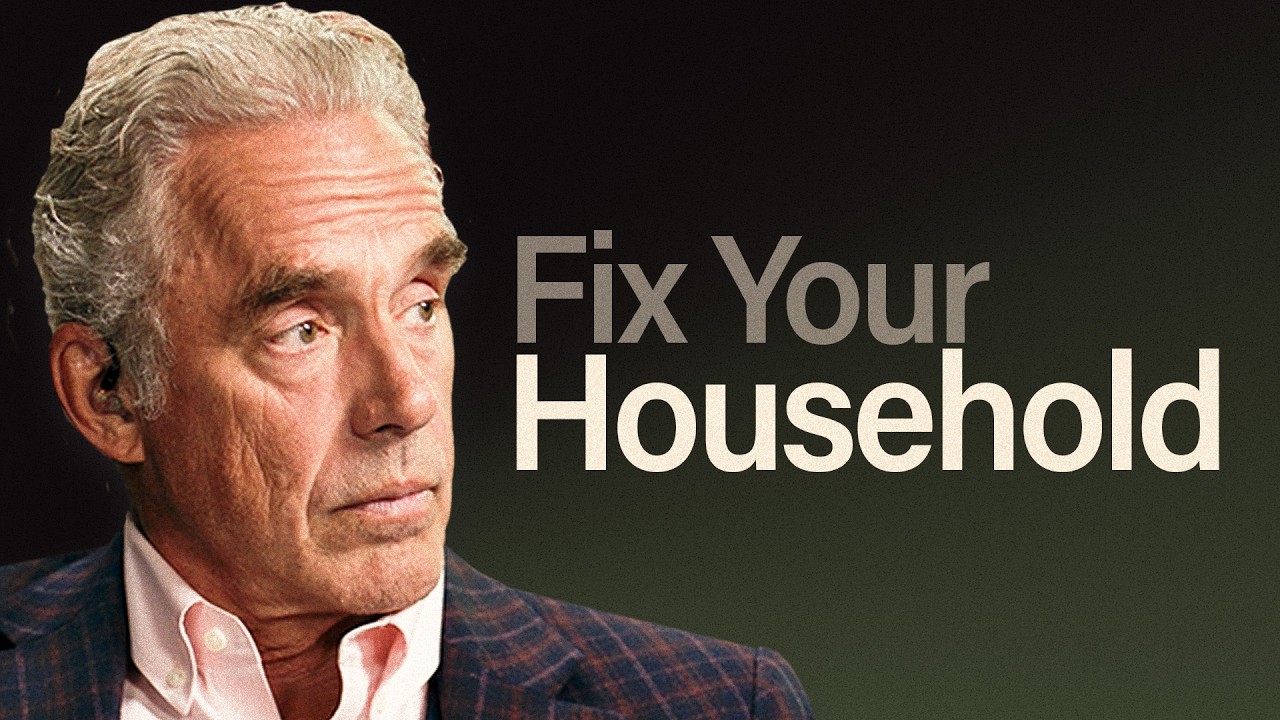
Family Conflicts, Difficult Children & Overcoming Resentment | Answer the Call | EP 569
Watch on YouTubeVideo summary
The episode delves deeply into the complex emotional landscape of parenting, specifically addressing how to manage resentment and navigate family ideological conflicts without succumbing to self-blame or guilt. The hosts emphasize that feelings of resentment often serve as a crucial marker indicating either that one is being taken advantage of or facing immature irresponsibility within the household; therefore, parents are urged to conduct a situational analysis before assuming fault lies with their character alone. Practical strategies for maintaining integrity include handing age-appropriate responsibilities to children so they can learn independence, ensuring a sustainable division of labor between spouses—such as securing help for sleep-deprived new mothers—and avoiding the temptation to perform tasks that children could handle themselves. This approach protects one's soul by encouraging adherence to truth even when facing social pressure or familial disagreement, acknowledging that short-term resistance from others is often a necessary price for long-term integrity and honesty.
A significant portion of the discussion focuses on alleviating "mom guilt," explaining how self-accusation can lead individuals, particularly those prone to negative emotions, to persecute themselves more harshly than they would treat anyone else. To counter this, listeners are advised to write down every accusation against themselves and construct a defense as if arguing for a loved one rather than defending their own ego directly; this exercise helps distinguish valid faults from unfounded fears while granting credit for genuine efforts like keeping children safe without demanding perfection. The hosts note that modern mothers face unique overwhelm due to the loss of extended family networks and neighborhood support systems caused by increased mobility and women entering full-time work, contrasting these challenges with past generations who relied on community childcare swaps or had lower comfort expectations. Consequently, parents are encouraged to accept that feeling overwhelmed with young children is often a situational reality rather than a pathological flaw, unless the feelings persist constantly without cause.
To build resilience against isolation and excessive demands, the episode promotes creating support networks by asking for small favors within one's church community or neighborhood to foster reciprocity, illustrated by the analogy of Moses needing his brother Aaron's assistance despite divine calling. The hosts suggest that having three or more children can actually alleviate guilt because parents realize they cannot devote equal time to each child anyway, and older siblings naturally begin caring for younger ones as families grow. Furthermore, managing temper and avoiding resentment involves organizing the environment sustainably so parents do not become exhausted, communicating openly with spouses about limits, reducing sugar intake in children's diets for calmer behavior, and recognizing that excessive demands often stem from situational factors rather than personality flaws. By using tools like "Future Authoring" to create five-year visions covering family goals, self-care, education, and community contribution, parents can reduce anxiety during identity transitions such as becoming stay-at-home mothers or navigating career changes amidst ideological conflicts.
Ultimately, the central message is one of practical problem-solving over personality blame, urging humility, open dialogue with partners, and realistic expectations for raising multiple young children in a complex modern context. The hosts encourage teaching objective truths to children while acknowledging that political shifts may eventually resolve family tensions regarding sensitive topics like gender identity or diversity initiatives. By listing positive parenting actions as counterbalances to feelings of guilt and invoking the legal principle of "innocent until proven guilty," parents are reminded not to assume fault without evidence beyond reasonable doubt. The conclusion reinforces that seeking help is an act of resource sharing rather than failure, allowing families to navigate difficult transitions with integrity while protecting their well-being against the pressures of isolation and unrealistic societal standards.
Read the full video transcript
Pay attention to your resentment.
Determine whether that's you or the
situation. Sort out the issue. Hand more
responsibility to your kids. Do not do
anything for your children that they
could do themselves. The other
possibility is that you're immature and
you're not shouldering your
responsibility properly. Well, and it's
not it's not I'm not accusing you of
that at all. Do an exhaustive inventory.
Here's all the reasons I'm guilty about
being a mother. The adversary is making
his case. Now you know what you're up
against. Next thing is why might this be
wrong?
>> That was way more intense than I was
expecting.
>> The questions were very high quality and
very deep and difficult. This is where
you make a decision of conscience and
you decide whether you're going to stick
to what you believe to be right. Come
hell or high water, you have to decide
what you're going to stake yourself on.
[Music]
Hi, I'm Michaela Fuller, formerly
Peterson. You may wonder why I'm on my
dad's YouTube channel. Well, I'm
thrilled to announce that given the
response to our last call-in episode
filmed in my studio, and because we had
a great time doing it. I assume you had
a great time doing it.
>> I had a great time doing it. Yeah.
>> Okay, good. We've decided to make this
call-in thing a regular occurrence. So,
I'll be joining my dad for our new show,
Answer the Call, where we answer your
questions live. We're going to be
covering a wide range of topics, and we
both hope this will be useful to a lot
of people. Today, we're focusing on
early motherhood, which is incredibly
special to me because I had a baby about
a month ago, my third kiddo. We have a
great lineup of callers ready to share
their questions today that hopefully
apply to you guys as well. Our first
caller today is Denit in Vermont. Denit,
are you there?
>> Hi. How are you doing?
>> I'm great. How are you doing?
>> I hear you have a question.
>> I do have a question.
>> All right, fire away.
>> Yeah. Yeah. So, I uh just gave birth to
my first child 3 weeks ago, and I have a
very unusual challenge that has to do
with my family of origin. So, um last
year my little brother came out as a
woman and he's 16 years younger than me.
So, I I kind of helped raise him. So, I
really really love him like he's my own.
And um I'm the only one in the family
that doesn't call him by his new name
and pronouns. And honestly, I I don't
really call him anything. I just like
use workarounds to not offend him or,
you know, uh lie to him as per your
advice. So, um he thinks he's going to
be called auntie and I'm not planning on
lying to my daughter about gender. So,
how do I tell him that he's going to be
uncle without blowing up my relationship
with him and maybe everybody in my
family? And how do I protect my daughter
from her um ideologically adult
relatives?
>> Wow.
>> Yeah.
>> Yeah. I guess we're going to start out
with an easy question, are we?
>> Okay. Let me ask you a question. Why
have you decided to take the stance that
you're taking? like you said that you
love your your brother and I'm not
questioning that and you an argument
could be made and people will make this
that if you loved him you know you would
go along with what he is
um acting out but you've decided that
you're not going to do that and so why
have you done that? my intuition and you
honestly like I I think I,
you know, have been watching enough of
your videos and and everything that I am
starting to see I'm starting to see
things
clearly and I don't think it's right. I
don't think what he's doing is right.
>> Okay. How do you know you're you're
seeing things clearly? Like what what
makes you inclined to believe that? I
think because it's the only thing that
feels right. I mean, I was I think if
you took who I was 5 or 10 years ago and
pasted it over this situation,
I
I might still have the same reaction. I
might be a little
more willing to just kind of go with it.
I think I'd be more willing to fall for
the, you know, he's going to hurt
himself if I don't affirm.
>> Yep. Yeah, that's nonsense. That's
that's nonsense. And okay, so let me
Okay, so let me address this issue now
that you've told me that.
>> So what I would say to you
is that the truth is a medium to
long-term game,
right? So it it's the best strategy
because it falls in accordance with
reality, but you can game
reality in the short term, which is why
people lie and why they go along with
false consensus and why they try to
gather things for themselves that they
don't deserve. But that doesn't work in
the medium to long run. It's a very bad
strategy. And so I would say that your
best bet for maintaining your
relationship with your brother over the
long run and that could be decades. And
what would also be in his best interest
is to stick to the truth. Now you're
you're going to pay a price for that in
the short term, right? You know that the
price is going to be the resistance
you're going to get from everybody who's
going along with them. They'll be
annoyed at you because your stance runs
contrary to theirs. and there'll be flak
from him as well. But this is where you
make a decision of conscience and you
decide whether you're going to stick to
what you believe to be right come hell
or high water
in the hopes that that's the best
strategy all things considered over the
longest period of time. That that's what
faith in the truth is. So I could define
it. Faith in the truth is the belief
that whatever happens when you tell the
truth is the best thing that could
happen regardless of how it looks to you
in the moment and maybe to others.
Now the alternative would be faith in
falsehood. You could say well I'll go
along with the illusion. Um that'll make
everyone happy and apparently and it'll
reduce conflict and that's the best
pathway. You don't have any evidence, so
to speak, for either of those because
you don't know how it's going to play
out. And so, you have to decide what
you're going to stake yourself on. And
then you have to pay the price. You're
going to pay a price of one form or
another. So,
>> yeah. Dened, can I take a stab at this,
>> please? Yeah.
>> Yeah. Thank you so much for your call.
Uh, that is that's a a heavy topic. I
think from my perspective, if that was
happening to me, especially after having
a baby,
your baby's so so important that you
want to get everything right cuz you're
going to get a number of things wrong
anyway, right? And I think the political
landscape is also changing enough that
this might only be a problem for another
year or two. That's the hope anyway
because I think people are realizing
that that is a lie and that a bunch of
people got brainwashed. And so I think
maybe hopefully uh the problems with
your family would resolve because of the
political changes in the next couple of
years anyway. But what's should be your
number one priority right now is
teaching your daughter what's true and
what's false. And that is objectively
not true and unfortunately it's confused
a number of people which is just
heartbreaking and terrible and hopefully
it'll resolve in I think it's already
resolving which is the positive thing
but going based on your intuition
especially as a new mom it's so strong
and so I think what you're doing is
definitely the right thing no to that
it's a complicated decision but I don't
think you have an option and it'll just
destroy your soul otherwise.
>> A huge part of what's fallen apart in
the last year is all the lies that the
the gender affirming care advocates have
put forward as scientific data.
>> Yeah. Thank goodness.
>> The large-scale studies indicate with
absolute clarity as was inevitable that
there's no evidence whatsoever that
gender affirming care produces any
improvement in any of the things it was
supposed to magically cure. which is
only to say that radical and often
surgical and hormonal intervention in
someone's life when they're depressed
and anxious and confused
>> and a teenager
>> and and a teenager, right? Is is somehow
not helpful. What a shock.
>> Yeah. It's also ridiculous that this has
happened with the mental health crisis
that's been going on. Like what, one in
five people have a mental illness. How
are you supposed to differentiate that
from this trans phenomena?
>> Yeah. Well, like you said, maybe maybe
we've we've run out the vast uh
>> what?
>> I think so.
>> We've run out the foolishness on this or
at least some of it. We'll see. Yep.
>> We'll see.
>> Yep. We'll see. Right. Right. Just when
you think things can't get any stupider,
you know, they're likely to, but
>> Yeah.
>> Yeah. Well, good luck to her. Yeah. And
that discussion of the truth was
particularly relevant because it is
important to understand that
faith in the truth is a long-term game.
>> Yeah. And it is soul crushing if you
don't say what's true. Like she's out of
options really. What is she going to do?
Sacrifice her soul. Like that's what it
feels like. I think when you know you're
lying or you don't say something
>> just your soul either it it would just
um you you corrupt the social
environment by going along with the lies
right that's why in the story of Abraham
you know when when Abraham is talking to
the angels and to God about the
potential destruction of Sodom and
Gomorrah so the
>> the pathological city
God agrees to save the city if
>> if there's 10 people who still walk the
righteous path. It starts with 50.
That's Abraham's first request. And he
bargains God down to 10. There's this
very specific meaning to that. And the
meaning is that if the society in
question that's headed for predition and
destruction at its own hands is still
together enough to allow 10 people to
say the truth, it there's hope, right?
And so you're supposed to be one of
those 10,
>> right? Well, you're going to pay for
that, but you pay for everything. So
like, what's the point?
>> I think I was really fortunate when I
was a kid. One of my favorite things
that you taught me, probably because I'm
disagreeable as well, was don't listen
to stupid rules.
>> You taught me that when I was, I think I
was in grade two. And that went haywire
for a while as a kid trying to interpret
what on earth does that mean? But don't
listen to stupid rules. But be aware
that there are going to be consequences
for not listening to those stupid rules.
>> Well, we told that's exactly what we
told you. You said, "Look, you have you
can follow your conscience and oppose
the stupid rule, but you have to pay the
price for your opposition." And what
that was was a recognition that a
commitment to rebellion, let's say,
without sacrifice is a lie.
>> Yeah. It's not going to be easy.
>> No. No. If it's easy, maybe you're not
on the rebellious side.
>> Well, it's easy if you get someone else
to perform the sacrifice. You know,
that's what the that's what the the uh
activists do all the time. Someone else
has to change. Now, it's you that has to
you you have to pay.
>> You maybe you should and and maybe
there'll be a benefit to paying, but
>> you have to pay willing to.
>> Yeah. Yeah. Well, that also stops you
from doing it casually.
You know how HIPPA protects your medical
information? Doctors can't share
anything without your consent. Whether
it's diabetes, surgery, whatever, that's
federal law. But here's the problem.
Every time you search online for medical
information, data brokers are tracking
it and building a profile on you. Then
they sell that profile to whoever pays.
And just like that, your HIPPO
protection is worthless. And insurance
companies, they buy these profiles and
then use them to raise your premiums.
And there's no law stopping this. Until
one gets passed, there's really only one
way you can protect yourself.
ExpressVPN. ExpressVPN sends all your
online activity through encrypted
servers. Nobody can see what you're
browsing, not your internet provider, no
data brokers, not anyone trying to
profit off your medical history. Your
information and activity is yours alone.
Both our hosts and production teams here
at the Daily Wire use ExpressVPN to
reroute all their daily activity through
ExpressVPN secure encrypted servers to
hide their IP addresses each and every
day. They can browse freely without
feeling like they're under surveillance.
Plus, all it takes is one easy click and
it works on all your devices. You can
even use it on eight devices at once.
And right now, you can get an extra four
months free when you use our special
link. Head over to expressvpn.com/jordan
and get four extra months of ExpressVPN.
That's expvpn.com/jordan.
>> Are you ready?
>> Ready.
>> Call number two. Wow, that was an
intense one to begin with.
>> Oh my gosh. Okay.
>> Yeah. A lot of people have are facing
this situation. A lot. Yeah. Yeah. A lot
of people. Up next, we've got McKay in
Ohio on the line.
>> Hello, McKay.
>> Hi.
>> How are you doing?
>> Um, well, how are you?
>> Good. Let's hear your question.
>> Yeah. Um, I have five kids. I'm 26. I
have five kids.
>> Wow.
>> Three of those are
>> Good for you.
>> Two of those are foster.
>> Oh, yes. Wow. You're an ambitious You're
an ambitious creature. Okay. Two foster
kids. three of your own kids.
>> Yeah.
>> Okay.
>> And my question is, uh, what are some
tangible ways to regulate your temper
when dealing with young, especially
young kids, and avoid feeling kind of
resentful to them for the demands they
make on your time and attention?
>> Yeah, that's a very good question. Okay.
Are you married?
>> Yes.
>> Okay. And Okay. I have a very specific
reason for asking that. So look,
resentment is an extremely useful
emotion. Okay? It's very dangerous and
it's one of the three things that really
hurt people. Resentment, arrogance, and
deceit are like the evil triad. But
resentment is extremely useful because
it only means one of two things if
you're experiencing it. One is that you
are being taken advantage of and you
have something to say and something to
sort out. So that's one possibility. The
other possibility is that you're
immature and you're not shouldering your
responsibility properly. Well, and it's
not ne it's not I'm I'm not accusing you
of that at all. I'm I'm just saying that
that's what the emotion indicates. Okay.
So now then the question is if you
notice that you're resentful which you
should notice and which is quite likely
if you're an agreeable and
self-sacrificing person then you have to
think okay am I being irresponsible and
immature or or is too much being asked
of me okay now one way of figuring that
out is to talk to your partner your
husband or your wife and say look I
noticed that under these circumstances I
feel resentful and I need to figure out
if I'm not standing up for myself enough
and allowing myself to be taken
advantage of or if I'm if I have some
residual irresponsibility and immaturity
and I'm just, you know, trying to avoid
my duty. And that's a very hard thing to
sort out, but really necessary. And
having a truthful dialogue with your
husband when that happens can be
extremely useful. Your goal should be to
move forward without resentment.
Okay. Now let's put that aside for a
moment. Now the next issue would be know
how old are your kids?
>> So my biological ones are five, three
and one. And then the foster children
are eight and three.
>> Eight and
>> and three also eight and three. Okay. So
you so you have a handful you know there
you have a lot you have a large number
of young children and so you are going
to have a lot of demands on you now
you it's incumbent on you to organize
your environment the environment of your
children the disciplinary environment so
that you aren't exhausted and harried
and and that's going to mean that you
have to determine likely with your
husband and with your children just how
much you can be asked to provide and
give. Now, if you know, you might say,
well, I should give everything to my
children. It's like, hey, fair enough.
But you have to give everything in a
sustainable manner. You can't give so
much that you're exhausted and miserable
and things degenerate, right? That's
just not helpful. And you're going to
have natural limits. And the limits are
being indicated by the resentment.
Okay. So now what that might mean is
that you're inadvertently doing too much
for your kids, right? You're not
requiring them to pick up some of the
load themselves. The situation isn't
sorted out optimally with your husband
in terms of division of child care. You
don't have enough help. You're not doing
enough for yourself. All like any of
those are possibilities and all of them
should be investigated. A good rule of
thumb with regards to children and
caretaking in general is do not do
anything for your children that they
could do themselves,
right? Because and there's a reason for
that. It's not cruel. The reason for
that is it's going to be better for
everyone, including your children and
certainly you if they become competent
as rapidly as possible. And the way that
that happens is by handing them
responsibility. You know, even a
18-month-old can help set the table,
right? Everyone's got to pitch in,
especially with that many young kids and
the complexity of that situation. So,
okay. So, let me just summarize that.
Pay attention to your resentment.
Make a goal of getting rid of it.
Determine whether that's you or the
situation. Now, I would assume that it's
the situation first and you second,
right? So, don't be down on yourself.
Talk to your husband when you get
resentful and and sort out the issue.
hand more responsibility to your kids
and work to work to attain a state where
you're not giving more than you can.
You see, if you're resentful, it could
easily be that you're doing too much for
your kids and that that emotion is a
marker of that.
>> Well, I think also just to step in
there, five kids at that at those ages,
especially with the one and the
three-year-olds,
>> that is a lot.
>> It is. It is a lot.
sane person can handle that if they're
doing 90% of the child care. So, if
that's what's going on for you, that's
not a problem with you. Yeah.
>> Now, the resentment part like um I had
some issues with resentment when I had
my first baby and I only had one baby,
but I was at home all the time. I didn't
have any time for myself. I was very
sleepd deprived and after a number
number of months I wasn't resentment at
resentful at the baby but I was
definitely resentful
and I didn't and I thought I wasn't
trying hard enough that's kind of how it
played out in my mind and that's not
what was going on and that was with one
kid albeit the first kid is like is a
lot for people but I mean I would say
that situation
>> I think primarily you probably need more
help like you need to talk to your
husband and figure out how to get
somebody there for like a couple of
hours a day to give you a breather.
Otherwise, I don't know how you're going
to do it. This isn't some will you can
bring up, especially if you're sleepd
deprived and with five kids. Like, you
need a family member to come in or
>> you need to figure out how to get like 2
hours a day
>> to be by yourself or do something for
yourself even that would be helpful. So,
I don't think it's a you thing, but you
definitely need some communication with
your husband. Like, freak out a little
bit. Be like, "This is a huge problem. I
don't want to be resentful. I'm really
tired. Like, I'm not enjoying myself.
I'm not the mom I could be if I had a
couple of hours to myself."
>> And that's not fair to your kids either.
>> Yeah.
>> So,
>> okay. So Michael the the key
>> wisdom in Michaela's comment is that
>> because you're situ because there are a
lot of demands on you and the demands
are real that the first analysis of your
situation should be situational right
not enough sleep not enough time for
yourself not enough help just too much
now and so that's not a psychological
problem that's a practical problem and
so you should approach this and you and
your husband should approach this as if
it's a practical problem first with the
resentment as a marker for whether or
not the problem has been solved
properly.
>> Yeah.
>> And you want to work to work to not be
guilty about trying to rearrange things
so you're not resentful. That will be
very good for you. It'll be very good
for your kids. It'll be very good for
your husband. There's nothing in that
that isn't positive. And so you're wise
to address it. And and I'll just I'll
just reiterate one more time, resentment
is unbelievably useful if you use it
properly because it it's a marker for
when things are out of harmony.
So don't be guilty at all for fixing
that. You'll do everyone a great favor.
>> Good luck, McKay.
>> Thanks. Thanks a lot for the question.
>> Yeah, thank you. Oh, one thing I forgot
to mention, too. Um, and I'm a huge
proponent of this obviously, but not
feeding your kids sugar and eating whole
foods turns them from little psychos
that are probably driving you crazy into
much calmer children. So, I don't know
how anybody would deal with five kids
who eat sugar all the time
>> and not be crazy themselves. So, that
that's the other thing I would probably
mention is like changed around their
diet so they're not eating processed
foods. It makes so much difference. It's
crazy.
>> Yeah. You're going to flatten out the
insulin drops and spikes by doing that.
>> And the tantrum, the random screaming
fits. Like Scarlet had zero of those
those. George is this little
>> I like I can't even imagine giving him
sugar cuz I think he'd be a complete
monster cuz he's he already like does
what he wants.
>> Yeah.
>> And doesn't really listen.
>> Yeah. And if you take one of those kids
that's already pretty strong willed and
then feed them a high processed food,
high sugar diet,
>> there there's you can't even like
discipline that out of them very well.
>> You're magnifying the effect of their
emotions by putting them in a state
where they're they're having low blood
sugar from insulin over production.
>> Yeah.
>> Yeah. So that's definitely not good.
Yeah. Not doable.
>> No. high carbohydrate, high sugar diets,
a very bad idea.
>> Yeah. And that would help a lot with
just calmness overall in the household.
Yeah. But also getting some help. I
think there's this like kind of
traditional push back
>> which is totally reasonable against the
hyper like
>> boss babe. What's the
>> career focus?
>> The career focused like woman. So
there's a push back to traditional
>> wives, but it's the traditional wife
from the 50s, which was like a decade
period that
>> after a war that I don't really know if
that's particularly replicable
>> across time. Um, and so I think there
are people, especially Gen Z people, in
the situation where they are at home
with a whole bunch of kids and are like,
"This is not doable." And then this is
what I've seen anyway. And then the men
are like, "Well, that's the woman's
job." Because there's this push
traditional push back. But it's not
sustainable with no help.
>> Look, there's a reason that human beings
have the lifespan they have,
>> right? The the reason we have the
lifespan we have is because mothers need
grandmothers
like or mothers and fathers need
grandparents. Yeah.
>> So, so our species is set up so that
raising children is actually a two
generation job, not a one generation
job, right? And so the idea that it can
just I would I'm an advocate of the
nuclear family, the traditional nuclear
family, but only as the minimal
sustainable unit, that doesn't mean it's
optimal. And when you have little kids,
having someone else around to help is
very useful and necessary. And you
shouldn't be guilty about it. And it's
fine for the kids, especially if the
additional people are well, family
members help if they're not completely
out of their mind, but also stable. So,
but the resentment discussion already
has been very um enlightening and
practical because it's the right marker.
How much help do you need?
>> Depends on how much work you have and
how complicated the situation is. What's
the marker? Well, if you're miserable,
frustrated, and resentful, well, then
maybe that's too much, right? Maybe
you're immature as well, and you want to
sort that out, right? Because you can
nurse your resentment. That's what Cain
does in the biblical story. You can
nurse your resentment, and you can fall
in love with it and you can let it
dominate your life. And that's a super
bad idea. But by the same token,
especially if you're agreeable, and so
that's more of an issue with women,
especially child-oriented women, it's
very easy of for them to self-sacrifice
themsel into a state of resentment, and
that's toxic, terrible. Yeah. Yeah. So,
situational analysis before personality
analysis always. Right. One of the
fundamental mistakes that people make
when they're trying to assess each
other's behavior is to attribute to
personality what's actually a
consequence of situation. There's
something to know.
>> Well, that puts all the blame on them.
There's something wrong with you.
Obviously,
>> well, it's also very simple,
>> right? The problem with a situational
analysis is it's complex and it's a lot
easier to collapse it to a single
variable. You see this in couple
disputes often. It's like if there's
tension in the household, it's easy for
the husband or the wife to assume that
it's the personality fault of their
partner. It's like the probability that
there are faults is quite high on both
sides. And maybe you should look to your
own damn faults first. But one of the
practical ways out of this is to learn
before we go at each other, let's look
at what might be contributing to this
situationally, right? And that's kind of
like the presumption of innocence. Yeah.
It's really useful. You have to learn
that because it's a very strong human
proclivity to go to to attribute to
personality. So
>> So you don't have to say this is what's
wrong with you and you were born with
it. You can say this is what you're
doing that's wrong.
>> Well, that's helpful too to say what
>> that was a joke. I don't know if that
would that would like smooth out an
argument at all, but
>> it smooths it out somewhat because it
makes it more situational than than
temperamental. But but I wouldn't even
say this is what you're doing. I would
say this is how we are reacting to the
situation at hand
>> that you've caused.
>> Okay, next question.
>> Shopify powers millions of businesses
worldwide, supporting everyone from
established brands to entrepreneurs just
starting their journey. You can create
your professional storefront
effortlessly with Shopify's extensive
library of customizable templates
designed to reflect your brand's unique
identity. Boost your productivity with
Shopify's AI powered tools that craft
compelling products, descriptions,
engaging headlines, and even enhance
your product's photography, all with
just a few clicks. Plus, you can market
your business like a pro without hiring
a team. Easily develop and launch
targeted email campaigns and social
media content that reaches customers
wherever they spend their time, online
or offline. If that's not enough,
Shopify offers expert guidance on every
aspect of commerce, from inventory
management to international shipping
logistics to seamless return processing.
If you're ready to sell, you're ready
for Shopify. Sign up for your $1 per
month trial period and start selling
today at shopify.com/jbp.
Go to shopify.com/jbp.
Again, that's shopify.com/jbp.
Getting the most out of life means being
prepared for whatever comes your way.
But many of us don't realize that a
simple will doesn't actually cover all
aspects of estate planning. There are
crucial elements that need separate
attention. That's where Trust and Will
steps in to help ensure your loved ones
are fully protected in every situation.
Right now, you can visit
trustinandwill.com/person
to get 20% off their simple, secure, and
expertbacked estate planning services
that cover all your essential bases. The
process is straightforward and free of
complicated legal jargon so you can
complete your estate planning from the
comfort of your own home. Knowing your
assets and final wishes are properly
documented and legally protected can
give you peace of mind so that you can
focus on living your life fully. Knowing
your loved ones will be taken care of
and according to your exact wishes.
Plus, their website is incredibly
userfriendly and simple to navigate,
making the whole process super
straightforward. What's particularly
reassuring is that your personal
information and documents are protected
with bank level encryption for maximum
security. Each will or trust they create
is tailored specifically to your state's
laws and your individual needs, covering
everything from care wishes and guardian
nominations to final arrangements and
power of attorney documents. It's no
wonder they have an overall rating of
excellent and thousands of five-star
reviews on Trustpilot. We can't control
everything, but Trustinwill can help you
take control of protecting your family's
future. Head over to
trustinwill.com/peterson
for 20% off. That's 20% off at
trustinwill.com/peterson.
Now we're going to Kate in Connecticut.
>> Hello Kate.
>> Hello.
>> How are you doing?
>> I'm good. How about yourself?
>> Good. Good. So tell me about your
situation and and tell me and ask me
your question.
>> Sure. So um I currently have split
custody of my 9-year-old son and my
husband and I are currently expecting.
I'm 34 weeks pregnant and I am grappling
with the prospect of leaving my newfound
career that I enjoy to become a
stay-at-home mom. Um, which is daunting.
I'm planning on homeschooling my
children. I was previously fired from
what I thought was my dream job at a
prestigious art museum for questioning
DEI policies and that led me to what I
realized is more akin to my dream
career. But staying at home raising the
children is my true dream job. So, I was
wondering how I navigate this transition
in my life and be the best spouse,
parent, teacher for my children while
also planning for the future of my
family.
>> I have a program called Future Authoring
at self-authoring.com
that helps people develop a vision for 5
years. It it's very inexpensive and it's
very nicely laid out and it will it will
really help you. And I'll I'll tell you
why it will help. Um, first of all, it
doesn't take that much time to do given
its benefit. So, it's very efficient.
But what it asks you to do, and this is
what you need to do in the situation
that you're describing, is to look five
years down the road. Okay? And to make
the assumption that you could have what
you want and you need
if you were taking care of yourself
properly, if you specify it. And then it
asks you to write out a vision for that.
that's kind of general like what could
your life be? What would your life be
like if you had what you needed and
wanted? And you fleshed that out to some
degree in our discussion already. And
then it asks you very specific questions
and helps you strategize. So the
questions would be
what would you want in your family? What
would you want from your friends? What
would you want from your career? How
would you continue to educate yourself?
How would you take care of yourself
physically and mentally? How would you
contribute to the community?
um how we do avoid the kinds of
temptations that often destroy people,
drug and alcohol abuse, sexual
misbehavior, that sort of thing. So it
it differentiates it. And so see the
reason it would be useful for you to do
that is because you're making, as you
pointed out, a radical shift in
identity. Okay? And that leaves a period
of chaos, right? The chaos is well, who
am I? And what am I doing? Where am I
going? And you need an answer to that.
If you have an answer to that, even if
it's a provisional answer, because it
will be because you'll have to learn as
you go. If you even have a provisional
answer to that, you will be less anxious
because anxiety emerges in consequence
of chaos and you'll be more motivated
because you'll be working towards
something that you truly believe in.
So it's not surprising now and you are
making a dramatic shift and so it's not
surprising that you have concerns about
it. That's of course you do because
you've thrown everything up in the air
and you've also pointed out something
that's making your life even more
complicated which is that you had a
social role that you found meaningful
and you ran headlong into ideological
tyranny and it blew up your life. And so
now I suspect that that also has
something to do with your decision to
stay home and and school your kids.
>> So yes, okay. Well, right. So that adds
an additional level of complexity. So
what are you are you envisioning
protecting them against the what the
ideological onslaught that's
characteristic of the school system?
Like how does that enter into it? That's
definitely a concern is making them
aware that there are these things out
there, but there are these ideologies
that they could get sucked into and how
do they educate themselves as well?
>> Yeah. Yeah. Okay. Now, I you you implied
that the job you had was a very good
job, and my suspicions are you wouldn't
have thought that if you weren't good at
it. Is that reasonable to say? I would
say so.
>> Okay. So then you take that professional
attitude that you used in your job and
put it to work in this plan that you
have now. Now, what you're going to find
if you're a person of competence and
commitment is that you'll start working
for your children, but that will morph
into something that's career related way
faster than you think because you're
already wired that way and you have a
proclivity for that. And so if you put
everything that you have to offer on the
professional front into this plan,
you'll solve your profession problem,
too. Not in ways you necessarily
predict. Partly because there are a lot
of women out there, a lot of families
who are facing the same issue you are,
and they're trying to find their way.
And if you figure out how to do that,
you'll you'll have a marketable that'll
be a marketable solution very quickly.
So try the future authoring program. And
and I would say you can do a bad job of
it. Right? Don't assume you're going to
get it right because you don't know
enough about the future to get it right,
but you can lay out a map and then you
can adjust it as need be as you move
towards it. That'll help a lot. It'll
help with anxiety and it'll help with
motivation. And so the goal is to to to
write it to the point where you think I
would really like to work towards all
those goals. Like it's a dialogue with
yourself, right? So don't force
yourself, don't convince yourself, ask
yourself. You get to have what you want,
but you have to figure out what that is.
You have to admit to it, and then you
have to work toward it. And that's a
that's like a that's a process that
involves humility and openness to
revelation and then some critical
thinking and and you know discuss it
with people that you love once you once
you once you flesh it out.
>> Do you think my husband should do it as
well?
>> Um I
it's a very useful thing for people to
do period. It's particularly useful in a
state of transition. The most
productive way of approaching it would
be for him to do his, for you to do
yours, for you to swap, to see where it
matches, to see where there's
discordance, and then where there's
discordance, see if you can jointly
produce a plan that's better than either
of your individual plans, right? That's
the right attitude to have towards it's
like let's say you want A and he wants
B. One way of approaching that is, well,
you compromise and you pursue B, or he
compromises and you pursue A. That's the
wrong way to approach it. The right way
to approach it is to think, well, we're
a couple and one of the advantages is we
have twice the brain power. Let's see if
we can put our heads together and make a
better plan so that we both get more
than we had hoped for from the original
plan. And you can do that. Like and
that's a great way of conceptualizing
the negotiation frame within a marriage,
you know, cuz you could come and say, "I
want this," and he can come and say, "I
want this." And then you could fight or
compromise or tyrannize each other or
turn into slaves. Or you could say,
"Let's do something creative here and
see if we can put our heads together and
figure out how we can both get more than
we wanted." Right? And that's you can do
that. Like the world's full of
possibility there. There are ways of
solving problems that way and that's not
compromise. That's that that's the
production of a joint vision that you're
both thrilled with and that's worth some
you know that's worth some
strenuous discussion but structuring
that way both of you write your plans
swap and be patient and assume that it's
going to you know you're going to work
it out over time. It's a complicated
thing to map the next five years. It's
not going to be without discussion and
discovery and conflict, but man, if you
can get it right, the benefits will roll
in.
>> Yeah. Just in regards to mapping out
plans. So, I think from you talking
about future authoring, when I was a kid
and everything, every year I've done
these like year-long plans to try and
figure out what do I want to accomplish
by next December.
And I usually shoot as high as I can.
So, I miss a number of them, but then
it's something to aim for. Even if you
don't revisit those plans, you can
accomplish a lot of it just by setting
the goals, which I think is how people
who say manifestation works,
>> like that's what they're doing is making
a goal and they're just Yeah. aiming
reality to that goal.
>> Well, look, this is how your perceptual
systems work. This is an unbelievably
crucial realization.
So the world you see
is the pathway to your aim.
You might not even know that. Okay. Well
then
>> that's a crazy thing. People need to
like think seriously think about that
>> you know because this the people I I
don't you know I think there's a lot of
frauds online talking about
manifestation or like these kind of
woowoo things
>> but there really
>> is something to aiming at something cuz
the opportunities that pop up that you
notice guide you in that direction. It's
but
>> you say it so casually though. You're
like
>> but but it's literally the case. Like so
it it all you have to do is think about
how you navigate like your eyes face
forward so you can see where you're
going. Okay. So how do you see when you
look at the world? You look at where
you're going. Okay. What then do you
see? The pathway forward. Things that
get in the way. Things that help.
friends, those are people that help.
Foes, those are people that get in the
way. The other element which I think is
remarkably comical is you also see
agents of magical transformation. Those
are like the dwarves and elves and
wizards in fairy tales. Why magic?
Because they change your aim. So they're
from another world and that's their
magic. And so that's the that's the
landscape of perception. And so you you
structure that landscape of perception
optimally when you aim at the stars,
right? This is there's nothing the least
bit well there's everything and nothing
mystical about that, right? It's
practical as you can possibly be. And
that's actually how the world works.
>> Agreed.
>> Yep.
>> This is why people online tell you
you're nuts, though.
>> Yeah. Yeah. Well,
>> agents of magical transformation. Like,
okay, Dr. Peterson.
>> Yeah. Yeah. Wait till you encounter one.
I know.
>> Especially Well, you have to notice.
>> Especially a dark one, right?
>> Yikes. That's what causes trauma.
>> Yeah, I've experienced enough of those.
We don't have to get into that.
>> Yeah. Yeah. Dark magic that. Yeah. All
right.
>> Up next, Naomi from Texas. You're on the
line now.
>> Hello, Naomi. So, tell tell me a little
about your situation and then ask your
question.
I am a mother of two young toddlers, a
three-year-old, 18-month-old, and I'm
excited to have more children in the
future. But I feel like mothering shows
me the worst parts of me, which is
something I didn't recognize before
becoming a mom, and it leaves me feeling
guilty quite often. So, I wondered how
you don't hate yourself when you're
going through the process of parenting.
I hate that.
>> Okay. So, let's let's do a situational
analysis of that first.
Okay. So, first of all, you're right
because obviously the worst part of you
is going to emerge when you're dealing
with utterly dependent creatures who
want something from you all the time and
need it. Right. So, any flaws that you
have are going to Man, they're going to
come out.
>> Or your parents' flaws.
>> Well, oh yeah. Well, that freaked me
out. Oh, definitely.
>> I was like, "Oh, I just did the thing my
mom I hate that my mom did when I was a
kid." Oh, no.
>> Oh, yeah. Definitely. Oh my gosh. Oh,
definitely.
>> No offense to my mom.
>> Yeah. Yeah. So, so of course, of course.
And then you you Okay. So now now having
said that, well then you think um
make sure that you're not
down on yourself unreasonably
because you're overt tired
or stressed or not taking care of
yourself or hungry. So, one of the
things you want to watch is to see
whether your guilt is
exaggerated
when you're under too much duress. Okay?
Because that's likely. Then the next
thing you might ask yourself is
it's fine to be self-critical, but not
too much. So, you might have a
conscience that's a little on the, you
know, demanding side, and that has to be
rectified. But I would also encourage
you to you could you could write down
this would be helpful. You could write
down everything that makes you a good
mother,
you know. So here here's a rule of
thumb.
It it's instantiated in the law
miraculously because it is a miracle
that this is the case. The so the rule
is innocent
before proven guilty. and you have to be
proven guilty beyond a shadow of a
doubt. Now, so the first thing you might
understand is that just because you
accuse yourself doesn't mean you're
right.
>> So I'm doing like my own jury against
me.
>> You're definitely doing that. And so
>> probably the harshest jury.
>> So So yeah, exactly. So many people are
their own worst judge and jury. Many
people, you know, like a narcissist is
someone who never thinks they're wrong.
The typical person, the typical good
person is much more likely to er in the
other direction, which is to persecute
themselves more than they would
persecute someone that they loved, for
example. So, one of the things you could
do that you might find extremely useful
is write down every accusation that you
levy against yourself
and then write out a defense.
Like imagine that you're and maybe you
have to do that as if you're doing it on
behalf of someone that you love. Like
imagine that you're not defending you,
you're defending your sister, you're
defending your best friend or your
husband because that'll put you in the
right frame of mind. Now, that doesn't
mean the defense is correct
or that the accusation has no merit, but
what it does allow for is that you get
to have a defense. Now, you may find
likely you will find that when you do
that, some of the accusations will
stick.
Many of them won't, some of them will.
Well, fix those, you know, with minimal
force.
But you need to know what you're doing
that's good and you need to give
yourself credit for that and you need to
reward yourself for for that and you
need to develop a defense for yourself.
Now
people who have more of a proclivity to
negative emotion which is a feminine
tendency
there are people who are also more
susceptible to depression and anxiety.
And if you fall in that category, which
makes you kind of a sensitive alarm
system and which is something that has
utility in looking out for threats for
children, for example, if you have that
proclivity, you're going to suffer more
than is strictly useful from recognition
of your own faults.
And so that's particularly
that is a tendency that makes this
ability to defend yourself particularly
useful.
So do an exhaustive inventory. Here's
all the reasons I'm guilty about being a
mother. Maybe there's 20 and these would
be ones that recur, you know. So now
you've got the adversary.
the adversary is making his case. Okay,
so you now you know what you're up
against. Next thing is
why is why might this be wrong? How
could I best be defended? That's a very
useful exercise. That's what a cognitive
behavioral therapist would do if they
were
assessing and helping you restructure
your your kind of automatic assumptions.
So, you know, give yourself some credit.
You've got two kids. You want more.
You're obviously committed to being a
mother. You're not going to be perfect.
And you don't have to be. Like, one of
the things that you want to model for
your children is error, recognition of
error, rectification of error, and
persistence. Like, if the rule is that
you can only be loved when you're
perfect, well,
>> that's not going to work.
>> No. And it's not something that your
kids, you don't want to have your kids
observe that no one will love me unless
I'm perfect.
Part of perfect is improving.
>> So I
>> go ahead.
>> I would also say just to wrap this
question up, I don't know any mom that
doesn't have mom guilt.
>> Yeah.
>> It's horrible. I and it just exists and
I don't know like your ideas are
amazing. I don't even know if that'll
fix the mum guilt thing. I think it's
hormonal
>> and it's just it doesn't matter what you
do. you could be doing better and it's
probably to keep your kids healthy and
safe and things, but it's like it
doesn't matter if you have one of those
days where everything goes well and you
spend all your time with your kids and
you're
>> and you get your sleep, things could
still be improved somehow. And so I
don't think I think you kind of have to
just deal with the mom guilt, have more
kids. You know what I found actually? So
I just had my third.
>> Congratulations.
>> Thank you. And there's something about
the third baby, and I've talked to a
bunch of moms that have had three
babies. There's something about the
third baby where you have one baby and
you're like, "Okay, I have to devote all
my energy to this one baby." Then you
have two and you're like, "Well, I'm
going to do the same thing I did with
number one with two kids, but you don't
have the same amount of time." So then
you're just not living up to what you
did with the first kid. So that's a
problem. And by the time you have three,
you just give up. You're like, "You know
what? No one's getting enough
attention." And I guess that's how it's
going to be if I have multiple children.
And it's just like this weight goes
away. So I when you see those women that
have multiple children, like three or
four or five children, and you're like,
how on earth can you do that? Or do you
have enough time for each kid? They
don't, but it's okay because they do.
Like it's enough time. So you're
probably just holding yourself to a
standard that's too high. And I feel
like another baby might fix that. It did
for me. I was like, well, they're fine.
the first one survived, the second one's
doing well.
>> Also, they also take care of each other
more if you set that up properly.
>> So, you know, it it it is easier in many
ways with more kids because they amuse
they amuse each other then and they
should be encouraged to do that. But,
you know, it could Michaela's comments
are that you have an impossible your
job. It's impossible for you to do your
job perfectly, but you have to.
Well, of course, you're going to be
guilty. Okay. And and that that guilt is
part of that protective instinct. I have
to do this right. Well, of course you
have to do it right, but you also have
to be defended against that guilt
becoming pathological and burdensome and
this this so defend yourself, right?
Assume innocence to begin with and work
out a defense for all of the
accusations.
>> Yeah.
>> And that'll help. That'll help. And then
if you think you've got some things to
improve, well, of course you do. And you
can negotiate a pathway to that, like
with a vision and and in conversation
with your with your husband. So, or
someone close to you and Yep.
>> You're probably doing fine.
>> Yeah.
>> Thank you both so much.
>> Okay, our last caller today.
>> Well, that's been it's been fun.
>> Yeah, I think
>> I've enjoyed this a lot.
>> Yeah. And mom guilt is real. I don't
know what you can do about it. And I
think the more conscientious you are,
the worse it is.
>> Yeah. Well, conscientious people are
guiltrone.
>> Yeah.
>> That's why activists can manipulate
them.
>> Ah,
>> psychopathic activists. It's like, you
might be doing something wrong.
>> Like, I am doing everything wrong.
>> Yeah.
>> Which one is it?
>> Yeah.
>> It's an interesting time for business
with dynamic tariff and trade policies,
squeeze supply chains, and cash flow
tighter than ever. If your business
can't adapt in real time, you're in a
world of hurt. You need total visibility
from global shipments to tariff impacts
to real-time cash flow. That's where
Netswuite by Oracle comes in. Your AI
powered business management suite
trusted by over 42,000 businesses
worldwide. Netswuite stands as the
number one cloud ERP because it brings
everything together, accounting,
financial management, inventory, and HR
into one cohesive suite. No more jumping
between systems or reconciling
conflicting data. With a single source
of truth, you gain the visibility and
control needed to make quick decisions.
The real-time forecasting lets you peer
into the future with actionable data,
helping you stay ahead of challenges.
The AI embedded throughout automates
everyday tasks, allowing your team to
remain strategic while helping you
identify bottlenecks, understanding
their costs and pivot rapidly when
circumstances demand it. In today's
business environment, that kind of
agility is absolutely essential. It's
one system, full control. Transform
complexity into clarity with Netswuite.
If your revenues are at least in the
seven figures, download the free ebook,
Navigating Global Trade, three insights
for leaders at netswuite.com/jbp.
That's netsweet.com/jbp.
>> What's it called?
>> Peterson Academy.
>> It's called Peterson Academy.
>> Peterson Academy. if you want an actual
education
>> with hand selected professors from top
universities around the world.
>> Bringing the best professors together,
making sure they're not censored in any
way, giving them the audience and the
remuneration and appreciation they
deserve.
>> And you were true to your word. You gave
me absolute intellectual autonomy. I
have had it through every course. We
figure we can offer people a highquality
university level education for under
$2,000.
>> Well, congratulations, Jordan. It's
honestly brilliant. Can't wait to enroll
myself. I'll be doing that straight
after this.
>> Fund your pre-bound.
[Music]
>> Our last caller today is Shauna in
Missouri who sent in a pre-recorded
message.
>> Hi, Dr. Peterson. My name is Shauna and
my question is, it seems like mothers
from Gen X or before were made of
sterner stuff and handled lots of
responsibilities really well. And it
seems like to me, I'm a wife, I'm a mom,
I'm involved in our community, in our
church pretty heavily. And sometimes I
feel like I have bitten off more than I
can chew. So my question is how can I
basically assimilate all this
responsibility in a way that's not
overwhelming andor what do we think is
the secret sauce that older women
understood that I may be missing now for
how to juggle or manage all of the
responsibilities that I have
purposefully taken on but that sometimes
can seem overwhelming. Thanks and that's
all.
>> Okay. So, the first thing I would say is
sometimes seems overwhelming isn't too
bad. Um, and that's especially true if
you have really little kids because
that's overwhelming. That the first year
in particular is overwhelming and
anything you do on top of that is going
to be additionally overwhelming. So, one
of the things that you can understand is
that
the first year is going to be
overwhelming and that it will get
progressively less overwhelming, but the
first three years are pretty
overwhelming. And that's particularly
the case if you have multiple children.
However, even though it seems like when
you're in that that that's been that way
forever and it's going to last forever,
it doesn't. And 3 years is not very
long. It's a weird thing because when
you have kids, it isn't very long until
it seems like you've always had them and
it's always just going to be like it is
with these little kids. And that's just
not true. That flies by in a flash. And
so the first thing I would say is that
your proclivity to feel overwhelmed
is probably just accurate. And the fact
that it's only sometimes it's like,
well, congratulations. Because you know
if you were clinically depressed for
example or had an anxiety condition you
would feel overwhelmed all the time and
it would be paralyzing and so the fact
that it's you know phasic that it's
sometimes I would just attribute that to
situational issues.
>> Do you can do do you think that back in
the day so she was saying Gen X before
that.
>> Do you think those mothers had more help
from family? Like you see a lot of
families now that have either moved to a
different city and they're the nuclear
family, but they don't have any friends
with kids, there's no aunts and uncle,
there's there's no grandparents around,
so it's really just them raising their
kids. Do you think if you just look
backwards, there was more help because
that might be what
>> Yes, I do think that. I think that one
of the things that's happened, you know,
I've talked to people like Jonathan
Height about the freerange child idea.
>> Yeah.
>> Yeah. But the thing is is that when I
grew up, for example, or even when you
grew up, but more particularly me, um,
>> are you putting us in the same age group
now? Well,
>> is this cuz I have three children?
>> We're Yeah. Yeah. Fundamentally, and
everyone between 30 and 70 is the same
age.
>> So, um, there were networks of mothers
that were the neighborhood. Yeah.
>> Well, that's all gone. And so, it's a
lot harder. Like it was easy to let your
kids out on the street when every single
person on the street knew who your kids
were or maybe everyone in a fourb block
radius. Well, that's all gone. That's
all fractured. And it's because it's
because it's one of the consequences of
women entering the workforce on mass and
staying there for a long time. Now, I'm
not down on women because of that. I
mean, it's really complicated because
>> grandparents are also missing.
>> Well, there's that, too. And that's
partly because people are mobile, right?
And they move to where the economic
opportunities are. So I mean what we did
when we went to Boston, when we moved to
Boston, your mom mom and I, is we
developed a network of family of of
friends,
other people with little kids quite
quickly. And you know, we we babysat for
each other. And your mom took care of
kids from the neighborhood. That was her
job for a while. You you have to if
you're overwhelmed,
distributing the load is a a worthwhile
aim. And you can certainly do that by
sharing child care with friends. Make
some friends who have children. Now that
that often is difficult for people, too.
When when we were in Boston, we were the
youngest people with the oldest kids
that we knew, and we didn't start having
kids till well, we were in our late 20s.
So,
>> wow.
>> You know, you you don't know how much
the situation has changed. And so, and
were people before more resilient?
>> Probably not. Well, maybe. I'm not sure.
Torn on that.
>> I It's It's very very hard to say. I
think their expectations
for comfort were probably much lower.
You know, like if I think of my
grandmother, she my on my my dad's side.
choose that as an example.
>> Well, you can to some degree. I mean,
she lived in a log cabin that was
uh insulated with cardboard through the
Saskatchewan winter,
cooked for threshing crews, took care of
multiple kids, worked as a cleaning
woman for families in the neighborhood,
and took care of a bunch of animals.
Plus, she split all the wood for the
winter. It's like her expectations for
comfort were
remarkably minimal and that is a form of
resilience, you know,
>> makes you a little mean though.
>> Well, there's a res there might be a
resentment that goes along with that,
you know.
>> Ah, possibly.
>> So, I I would beware of comparing
yourself negatively generically to to
say women in the past like the
situations are very different. Um, if
you're overwhelmed, well, first of all,
you do a situational analysis. Maybe
it's expected that I'm overwhelmed
because I have little kids
>> and that's a three-year problem
fundamentally. And so, just assume that,
of course. And then look for help.
>> Yeah. Help. A lot. A lot of these people
>> trade help sounded like they're
expecting too much of themselves and do
need some help, which I know is tricky
cuz most of the time you have to pay for
help. But
>> I'll close. We can close with another
biblical story. So when Moses is called
upon by God to be a leader after he has
the interaction with the burning bush.
God says, "Okay, you you're no longer
now just a shepherd," which was already
something useful to be. Could take care
of yourself. You could fight off the
wolves. You could protect the innocent.
So you're good man. Now you're a leader.
Moses says, "I can't be a leader because
I can't speak." and no one knows why if
he was had a speech impediment or if he
just wasn't very articulate or whatever
doesn't matter and God basically says
two things three things he says it
doesn't matter what your problem is you
still have to do this so like that's
your problem and then he says and don't
be thinking that I can't operate under
those conditions because I made the
heavens and the earth and so your speech
impediment just really doesn't disturb
me much and then 30 says and like
couldn't you get some help. Like your
brother Aaron, he can speak.
Bring him along. What does that mean?
There's more than enough for everybody
to do, you know? And you're not exactly
asking for help when you reach out to
other people. You're trading help,
right? You're you're engaging in a
Benjamin Franklin said this, for
example, when you move into a new
neighborhood. He said, "The first thing
you should do is ask a neighbor for a
small favor,
a cup of sugar, something trivial." Why?
Well,
because they've done something for you
and you can get the trading game going.
And so, you're not asking for help.
You're developing a community where you
can share resources and that's
beneficial to everyone. It's not a
favor.
>> Churches are probably a good place for
that. Well, that's
>> if you have no idea what to do.
>> Well, probably in hypothetically and in
reality, right?
>> Go to church, find some young families,
and get the ball rolling. You know, if
you have a problem as a mother of kids
of a certain age, you can be certain
that 80% of the mothers have the same
problem. Yeah.
>> Yeah. Yeah. So, that's there's
absolutely no reason to assume. You made
this comment with the trad wife
movement. It's like, well, lone woman on
the prairie taking care of six kids.
Well,
no.
Right. Community.
>> Yeah.
>> Right. Right.
>> And with that, thank you so much for
joining us today. We'll be back with
more episodes. That was fun. That was
way more intense than I was expecting. I
was like, I can interject some things,
but that was intense.
>> Yeah. Well, the the the questions were
very high quality and very thoughtful
and very deep and difficult and so yeah,
that was good. So, thanks very much to
the people who participated. Um, they
put a lot of thought into that and thank
you to the people who did the screening
for the questions as well, the the crew
here, because that that worked very
well.
>> Well, we will be back with many other
shows like this
>> to answer all sorts of questions.
>> That's the plan, right? We're going to
do this on a regular basis and we'll do
a bunch of it if if it works.
>> Sounds like a plan.
>> Yep. Good. Thank you to everyone
watching and listening.
>> Do you have a question you'd like us to
explore? Share it with us at the link in
the video's description and let's face
life's challenges together.