YouTube Transcript Downloader and AI Video Summaries
Paste a YouTube video URL to extract its English transcript, download the subtitles as text, or create a concise AI summary.
1. Paste link
Enter a YouTube video URL.
2. Find subtitles
Automatic English subtitles are detected.
3. Download
Save clean subtitles as a TXT file.
Recent summaries
4622 videos · Page 127 of 155
Vsauce: What Does it Mean to Be Intelligent? | AI Podcast Clip with Michael Stevens
Lex Fridman
In this segment of a discussion with Michael Stevens from Vsauce, the conversation centers on defining intelligence and assessing its current state within artificial intelligence. The primary challenge identified is establishing what constitutes human-level or superhuman intelligence, as there remains no consensus on how to measure it effectively.…
EN
Jul 30
Sebastian Thrun: Flying Cars, Autonomous Vehicles, and Education | Lex Fridman Podcast #59
Lex Fridman
Sebastian Thrun, a pioneering roboticist and computer scientist, reflects on his journey from early experiments with TI calculators to leading revolutions in autonomous vehicles, online education, and flying cars. He addresses philosophical questions about simulations by emphasizing that while the universe may be an information processing system, living "here and now" is what matters most for human action.…
EN
Jul 30
Vsauce: Elon Musk and the Responsibility of a Large Following | AI Podcast Clip with Michael Stevens
Lex Fridman
In this segment of a Vsauce podcast featuring Michael Stevens, the conversation centers on Elon Musk's extensive ventures in space exploration, electric vehicles, autonomous driving systems like Autopilot and Neuralink, and brain-machine interfaces. While the host expresses admiration for Musk's ability to amass such a massive following—a feat rarely seen with figures who share similar scientific dreams—the dialogue quickly shifts to the profound responsibility that accompanies such influence.…
EN
Jul 30

Sebastian Thrun: Autopilot Makes Me a Safer Driver | AI Podcast Clips
Lex Fridman
In this discussion, Sebastian Thrun addresses the fundamental dilemma facing autonomous vehicle innovators: balancing public safety with the drive to innovate. He contrasts two distinct leadership approaches within the industry, noting that while Tesla under Elon Musk often displays an aggressive stance toward innovation, Waymo adopts a more cautious, safety-focused methodology.…
EN
Jul 30

Vsauce: Mortality and the Meaning of Life | AI Podcast Clip with Michael Stevens
Lex Fridman
In this profound discussion on mortality and existence, Michael Stevens addresses the terrifying reality of death as a daily contemplation that sharpens his understanding of life's purpose. He posits that while science offers exciting avenues to extend human lifespan, it cannot yet fully protect individuals from unforeseen accidents or catastrophic events. Even advanced concepts like saving one's connectome for digital recreation carry risks if stored on physical media that could be lost or destroyed.…
EN
Jul 30

Nirvana by Charles Bukowski (read by Lex Fridman)
Lex Fridman
The reading of Charles Bukowski's short story, *Nirvana*, captures a poignant moment in the life of a young man traveling by bus toward North Carolina with an uncertain destination. As snow begins to fall and conditions worsen, the vehicle halts at a small cafe nestled in the hills, offering a respite from the journey ahead. Upon entering, the protagonist finds himself seated at the counter among other travelers, where he orders food that turns out to be particularly good, accompanied by excellent coffee.…
EN
Jul 30

Jim Gates: Supersymmetry, String Theory and Proving Einstein Right | Lex Fridman Podcast #60
Lex Fridman
In this episode of the Lex Fridman Podcast, theoretical physicist S. James Gates Jr. explores the profound challenges humanity faces in venturing beyond our solar system and colonizing Mars.…
EN
Jul 30

Jim Gates: What is Supersymmetry? | AI Podcast Clips
Lex Fridman
Jim Gates introduces supersymmetry using a visual analogy of a pie divided into four quadrants to represent particles in our universe. In this model, one quadrant contains matter particles like electrons and quarks (often described as "corks"), while another holds force carriers such as photons that pass through each other without interacting. The remaining two quadrants are initially empty because the known forces do not interact with matter in a way that suggests symmetry between them.…
EN
Jul 30

Jim Gates: What is String Theory, Its Status, Its Open Challenges? | AI Podcast Clips
Lex Fridman
Jim Gates addresses the ongoing debate regarding the status of string theory, clarifying for a general audience that it does not currently exist as a single, overarching paradigm but rather functions as an enormous collection of mutually reinforcing mathematical facts free from internal contradictions.…
EN
Jul 30

Melanie Mitchell: Concepts, Analogies, Common Sense & Future of AI | Lex Fridman Podcast #61
Lex Fridman
In this episode of *The Lex Fridman Podcast*, Melanie Mitchell, a computer science professor at Portland State University and external professor at the Santa Fe Institute, discusses her new book, *Artificial Intelligence: A Guide for Thinking Humans*. She critiques the term "artificial intelligence" as being too vague to define either the nature of the machine or the concept of intelligence itself.…
EN
Jul 30

If by Rudyard Kipling (read by Lex Fridman)
Lex Fridman
The poem, famously read by Lex Fridman in this context, opens with a profound challenge to maintain one's composure and integrity amidst chaos. It urges the listener to keep their head when everyone around them is losing theirs and instinctively blaming you for the turmoil. This initial directive sets the stage for a broader philosophy of resilience: trusting oneself even when all men doubt you, while simultaneously making allowance for others' skepticism without becoming defensive or arrogant.…
EN
Jul 30
Donald Knuth: Algorithms, Complexity, and The Art of Computer Programming | Lex Fridman Podcast #62
Lex Fridman
Donald Knuth, a towering figure in computer science and mathematics who received the 1974 Turing Award for his contributions to algorithm analysis and complexity theory, recounts his early fascination with computing sparked by an IBM 650 at Case Tech in 1957. Despite its massive size relative to modern standards, this machine was limited by a mere 2,000 words of drum memory, forcing programmers to manage data carefully as the system cycled through instructions.…
EN
Jul 30

Donald Knuth: Alan Turing was the First 100% Geek | AI Podcast Clips
Lex Fridman
In this discussion, Donald Knuth reflects on his own cognitive development and defines a specific subset of individuals he terms "geeks," estimating they constitute approximately 2% of the population. He suggests that for him personally, growing up in an environment resonant with computational thinking shaped his brain structure to align naturally with computers.…
EN
Jul 30
Donald Knuth: Ant Colonies and Human Cognition | AI Podcast Clips
Lex Fridman
In this discussion, Donald Knuth explores the profound implications of ant colonies for understanding human cognition and distributed systems. He suggests that while humans rely on complex neural networks where tracking individual signal transmission is difficult, ant colonies offer a transparent model because we can observe exactly which ants interact via pheromones or physical touch to achieve organized tasks.…
EN
Jul 30

Donald Knuth: Writing Process | AI Podcast Clips
Lex Fridman
Donald Knuth describes his rigorous writing process, which he undertakes seven days a week with intense preparation and dedication. His routine begins in a specific chair designed by a Swedish manufacturer that allows him to sit for hours without discomfort, followed by work at an adjacent standing desk where he types revisions. The core of his methodology involves putting the kernel of every idea onto paper first using pencil and eraser before moving to digital typing.…
EN
Jul 30

Stephen Kotkin: Stalin, Putin, and the Nature of Power | Lex Fridman Podcast #63
Lex Fridman
In this episode of the Lex Fridman Podcast, historian Stephen Kotkin explores the nature of power through a comparative analysis of Joseph Stalin and Vladimir Putin, arguing that while all humans crave security, love, and adventure, some possess an extraordinary drive for unconstrained authority. Kotkin explains that absolute power corrupts because it removes external checks on decision-making, leading leaders to make mistakes without challenge or input.…
EN
Jul 30
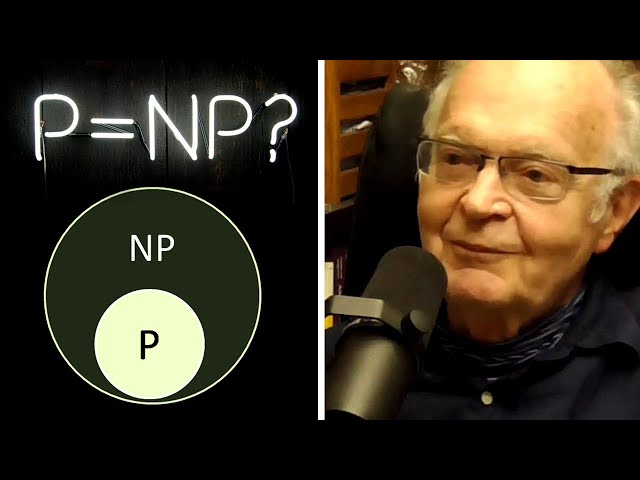
Donald Knuth: P=NP | AI Podcast Clips
Lex Fridman
Donald Knuth addresses the popular intuition surrounding the P versus NP problem, specifically challenging the notion that if a solution exists for difficult problems, it must be simple enough for someone to eventually discover and write down.…
EN
Jul 30

Stephen Kotkin: Stalin's Rise to Power | AI Podcast Clips
Lex Fridman
Stephen Kotkin presents a compelling narrative of Joseph Stalin's ascent to power, framing it not merely as an individual triumph but as a product of specific historical circumstances and contingencies rather than inevitable destiny. The transcript highlights that Stalin was largely shaped by events beyond his control; he spent World War I in exile in Siberia without participating in the conflict or influencing the radicalization of peasants seizing land after the fall of the Czarist regime.…
EN
Jul 30

Grant Sanderson: 3Blue1Brown and the Beauty of Mathematics | Lex Fridman Podcast #64
Lex Fridman
In this episode of Lex Fridman Podcast #64, Grant Sanderson, creator of 3Blue1Brown, explores the nature of mathematics with a focus on notation and its profound influence on human understanding. Sanderman argues that while basic arithmetic concepts like counting are universal across intelligent life, more advanced mathematical structures involve significant choices regarding how we model reality.…
EN
Jul 30

Deep Learning State of the Art (2020)
Lex Fridman
The lecture series opens with a reflection on the origins of artificial intelligence, tracing its roots from ancient philosophical dreams to engineer human cognition back to 1943 and the foundational work of figures like McCulloch, Pitts, Frank Rosenblatt, and Alexey Grigorevich Ivakhnenko. The speaker highlights the conceptual engineering breakthroughs that led Geoffrey Hinton, Yoshua Bengio, and Yann LeCun to receive the Turing Award in 2019 for making deep neural networks a critical component of computing.…
EN
Jul 30

Lex Fridman: Best Way to Understand the Mind is to Build It
Lex Fridman
In this discussion, Lex Fridman reflects on his initial motivations for entering the field of artificial intelligence, tracing them back to a desire originally rooted in psychiatry. As a young person, he envisioned becoming a psychiatrist not merely as a clinician but as an engineer capable of manipulating and exploring the human mind through dialogue.…
EN
Jul 30

Lex Fridman: Recipe for Progress in AI (Hard Work)
Lex Fridman
In this segment of the discussion, Lex Fridman addresses the ongoing tension and skepticism surrounding deep learning within the AI community. He acknowledges that while there is some valid criticism regarding the limitations of current deep learning models, such doubt must be maintained in moderation to remain healthy for progress.…
EN
Jul 30

Daniel Kahneman: Thinking Fast and Slow, Deep Learning, and AI | Lex Fridman Podcast #65
Lex Fridman
In this episode of Lex Fridman Podcast #65, Nobel Prize winner Daniel Kahneman explores his seminal work on human cognition and its implications for artificial intelligence. Drawing from his decades-long research with Amos Tversky, Kahneman introduces the dichotomy between System 1—fast, instinctive, and emotional—and System 2, which is slower, more deliberative, and logical.…
EN
Jul 30

Grant Sanderson (3Blue1Brown): Is Math Discovered or Invented? | AI Podcast Clips
Lex Fridman
Grant Sanderson explores the enduring question of whether mathematics is discovered or invented, proposing instead a cyclical relationship between human invention and universal discovery. He argues that while humans invent mathematical frameworks to make sense of observations from the physical world, these inventions are constrained by genuine discoveries about how reality functions.…
EN
Jul 30
Daniel Kahneman: Deep Learning (System 1 and System 2) | AI Podcast Clips
Lex Fridman
In this discussion on artificial intelligence, Daniel Kahneman contrasts current deep learning systems with human cognition using his framework of System 1 and System 2 thinking. He argues that modern deep learning is primarily a "System 1" product, characterized by rapid pattern matching and high predictive accuracy rather than genuine reasoning or causality.…
EN
Jul 30

Ayanna Howard: Human-Robot Interaction & Ethics of Safety-Critical Systems | Lex Fridman Podcast #66
Lex Fridman
In this episode of the Lex Fridman Podcast, roboticist and Georgia Tech professor Ayanna Howard explores the complex intersection of human-robot interaction (HRI) and ethics within safety-critical systems. Drawing on her background at NASA's Jet Propulsion Laboratory working with surgical robots in the early 1990s, Howard argues that true perfection in robotics is not defined by zero-error accuracy or rigid adherence to rules, but rather by a robot's ability to adapt socially to human imperfections.…
EN
Jul 30

Daniel Kahneman: How Hard is Autonomous Driving? | AI Podcast Clips
Lex Fridman
In this discussion, Daniel Kahneman addresses the complexities of robot-human collaboration, specifically focusing on semi-autonomous vehicles like Tesla Autopilot and general task automation. He argues that in any system where humans interact with advanced machines capable of significantly assisting them, the human role often becomes superfluous within a short timeframe. However, he acknowledges a critical exception: scenarios where the machine encounters problems it cannot solve but which are solvable by humans.…
EN
Jul 30

Privacy Preserving AI (Andrew Trask) | MIT Deep Learning Series
Lex Fridman
Andrew Trask, a researcher and author of *Grokking Deep Learning*, presents privacy-preserving AI (PPAI) technologies designed to solve the critical problem of data scarcity in machine learning. Currently, researchers often cannot answer vital questions regarding sensitive health issues like dementia or diabetes because accessing private datasets is legally restricted and logistically difficult, forcing them to rely on easily accessible but less impactful public data like handwritten digits.…
EN
Jul 30
Paul Krugman: Economics of Innovation, Automation, Safety Nets & UBI | Lex Fridman Podcast #67
Lex Fridman
In this episode of the Lex Fridman Podcast, Nobel Prize-winning economist Paul Krugman outlines his vision for an ideal economic society that prioritizes a robust safety net and strong environmental regulations over absolute perfection or total wealth equality.…
EN
Jul 30

Efficient Computing for Deep Learning, Robotics, and AI (Vivienne Sze) | MIT Deep Learning Series
Lex Fridman
Professor Vivienne Sze from MIT addresses the critical need for energy-efficient computing in deep learning, robotics, and AI applications, highlighting a stark disparity between human brain efficiency and current artificial systems.…
EN
Jul 30